
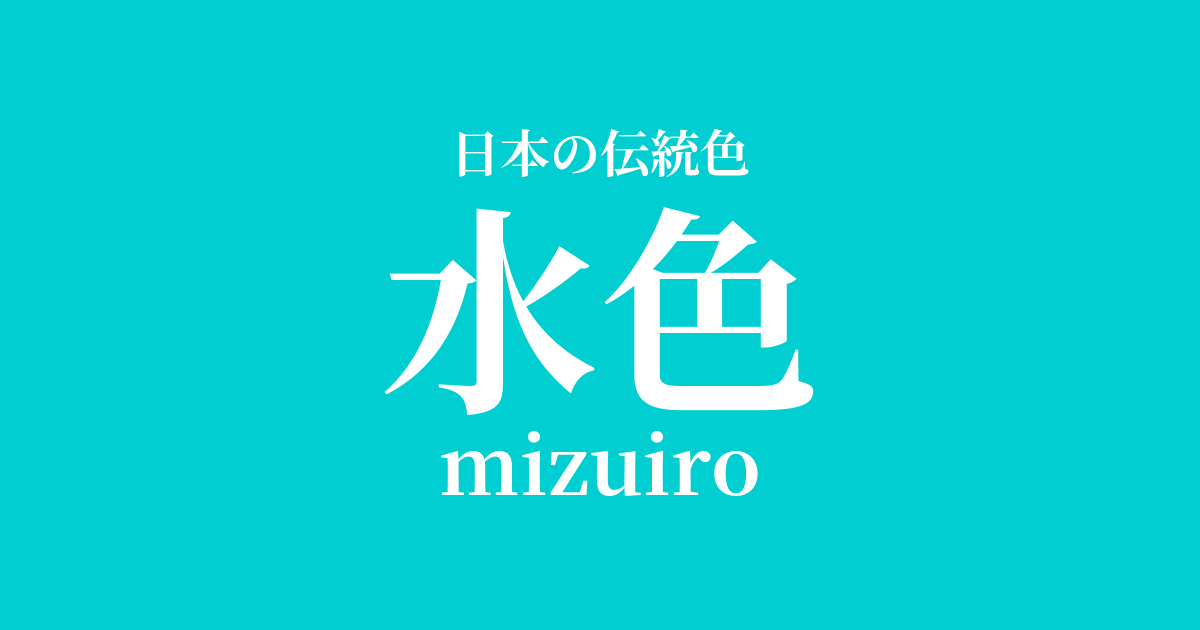
| Japanese color name | light blue |
|---|---|
| reading | Mizuiro |
| HEX | #00CED1 |
| RGB | 0, 206, 209 |
What is light blue? Origin and etymology
The color name "mizuiro" (light blue) literally derives from the color of water. It refers to a pale, bright blue color that evokes clear rivers, lakes, and pure spring water. While actual water is colorless and transparent, the phenomenon of it appearing blue due to light scattering and the particles contained in the water is what is captured in the color name. For this reason, the shade it refers to can vary depending on the era and individual perception, but it is generally recognized as a color that evokes a sense of coolness and purity.
While the use of "water" as a color name is thought to have existed since ancient times, the specific color name "mizuiro" (light blue) is believed to have become commonly used only after the mid-Edo period. Before that, "asagi-iro" (light blue) and "sora-iro" (sky blue) were used as similar shades. As popular culture flourished during the Edo period, more words were created to express subtle differences in color, and "mizuiro" became established as one of them.
Light Blue Historical Background
While literary works from the Heian period contain descriptions of the color "water," the use of "mizuiro" (light blue) as an independent color name was limited. At the time, influenced by the Five Elements philosophy introduced from China, blue-based colors were often collectively referred to as "blue." The aristocracy mainly favored dark purple and red, and light blue-based colors may have been considered relatively subdued.
During the Edo period, advancements in woodblock printing technology led to the immense popularity of multi-colored ukiyo-e prints among the common people. Artists such as Katsushika Hokusai and Utagawa Hiroshige made extensive use of various blue pigments to depict the sky and water. In particular, the introduction of Prussian blue, an imported chemical pigment, enabled the creation of vibrant blues, and bright blues like "mizuiro" (light blue) were increasingly depicted. As a result, mizuiro became a more familiar color to ordinary people.
Related literature, waka poetry, and seasonal words
"Light blue" is sometimes used as a seasonal word for summer in haiku and waka poetry due to its refreshing imagery. For example, it is used to describe the clear summer sky, the flow of a cold river, or the cool color of clothing. In modern literature, "light blue" also appears in the works of Natsume Soseki and Akutagawa Ryunosuke as part of the clothing of the characters or as part of the descriptions of the scenery, giving the works an impression of freshness and transience.
In classical literature, the transparency and shimmer of water are often expressed using words like "water surface" or "shallow water" rather than the direct color name "light blue." The Manyoshu and Kokin Wakashu contain numerous poems about rivers and the sea, and the image of light blue can be evoked from these scenes. These poems demonstrate that the Japanese people have long found beauty in waterside landscapes.
A skylark sang in the light blue sky.
Color scheme preview
This is to check the readability of the text when this color is used as the background.
Light blue color scheme proposal
Coral color (#F88379)
The coolness of light blue and the warmth of coral complement each other beautifully. This vibrant yet subtly Japanese combination creates a cheerful and lively impression. It's particularly effective as an accent color for accessories.
White group (#83CCD2)
Combining light blue with a pale blue-green color like shiro-gun creates a sense of unity throughout. The gradation of light and dark shades gives a gentle and sophisticated impression. It's a refreshing color scheme, suitable for summer kimonos and interior design.
Blue gold (#FABE00)
Combining a vibrant light blue with a bright, powerful turmeric creates a modern and exotic atmosphere. The vibrancy of each color resonates with the others, resulting in an eye-catching and impressive color scheme. This is particularly effective in web design.
Practical Scenes
In the world of kimono, light blue is especially often used for summer yukata, obi, and accessories such as obiage. Its cool hue gives the viewer a sense of coolness and adds a refreshing touch to summer attire. It is a popular color that can be incorporated into kimono of a wide range of ages, from young women's furisode to parts of patterns on more subdued visiting kimonos.
In interior design, light blue is used to bring a sense of openness and cleanliness to a space. Incorporating it into wallpaper, curtains, cushions, and other fabrics can give the entire room a bright and refreshing feel. In particular, combining it with natural materials such as white or wood tones creates a relaxing and comfortable space.
In the fields of web design and graphic design, light blue is a favored color for conveying trustworthiness and cleanliness. It is frequently used as a corporate color for companies and on websites related to healthcare and the environment. Furthermore, depending on how it is combined with other colors, it can create a wide range of expressions, from a modern and sophisticated image to a friendly and pop image.