
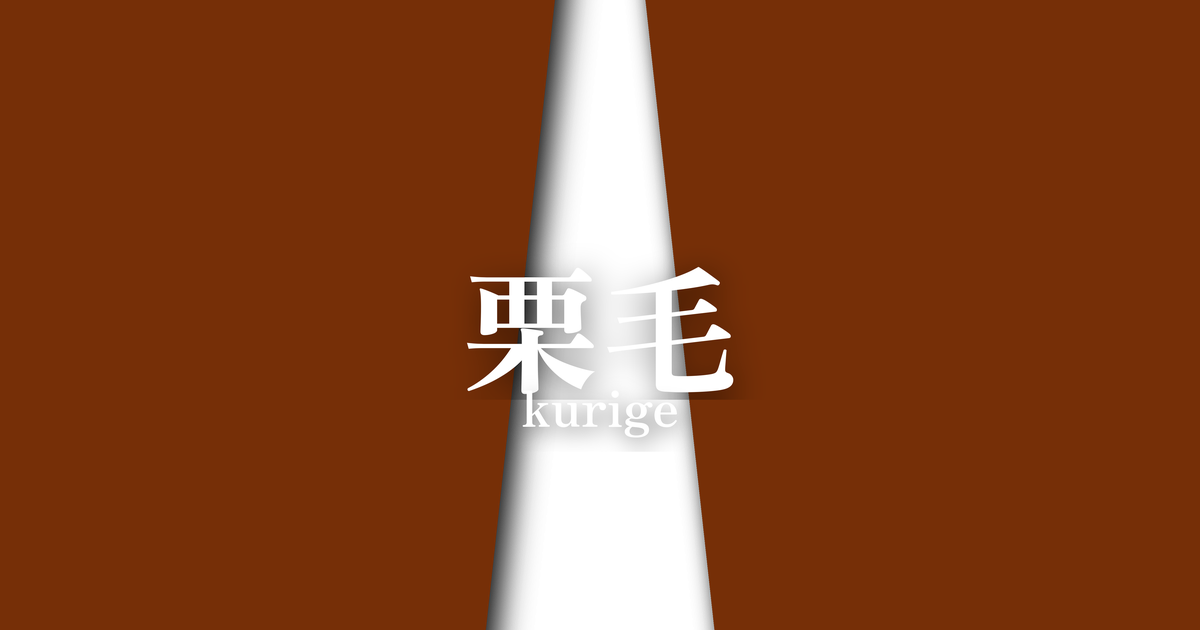
| Japanese color name | Chestnut |
|---|---|
| reading | kurige |
| season | 秋 |
| Color of the table | Chestnut color (kuriiro) |
| Back color | White (shiro) |
What is "Kurige"? Origin and etymology
"Kurige" (栗毛) is a color combination derived from the chestnuts that ripen in autumn, as its name suggests. The deep brown "chestnut color" on the outside represents the hard outer shell of the chestnut, while the "white" on the inside represents the color of the fruit after the inner skin has been peeled off, or the white part inside the burr. This color scheme evokes a sense of the abundance of the autumn harvest and the bounty of nature.
The simple yet warm colors are thought to have been favored by the aristocracy of the Heian period as clothing to admire the deepening autumn scenery.
Historical background of chestnut horses
In the aristocratic society of the Heian period, "kasane no irome," the use of color combinations in clothing to express the changing seasons, was an important cultural practice. "Kurige" (chestnut brown) is said to have been used primarily in autumn attire as a color symbolizing the deepening of autumn. Specific examples of its use include men's kariginu and noshi, and women's uchiki.
Recreating natural landscapes and plants through the colors of one's attire was a way to demonstrate the wearer's refined aesthetic sense and depth of culture, and it added color to life in the imperial court.
Related literature, waka poetry, and seasonal words
Chestnuts have been familiar to the Japanese people since ancient times, and their name can be found in classical literature. In "The Pillow Book," it is written that chestnut trees are inconspicuous when they are in bloom, but when they bear fruit, people enjoy eating them, indicating that chestnuts were highly valued even back then. Although there are not many scenes in which "chestnut hair" as a color combination is directly depicted, it is thought that the color of chestnuts was recognized as an important seasonal color when describing autumn scenes.
Furthermore, "chestnuts" are well-established as a seasonal word for autumn, and continue to be used in waka and haiku poetry as a symbol of the bountiful autumn harvest.
In the deep mountains, an old man gathers chestnuts; he reminds me of people from long ago.
The season and scenery of chestnut horses
"Kurige" is a color scheme worn in autumn, especially from September to November, when chestnuts are in season. The deep chestnut color on the outside evokes the bountiful earth, while the white on the inside is reminiscent of the clear autumn air, morning and evening mist, or the first frost, beautifully expressing the scenery of autumn. This subdued color scheme was favored for occasions where people enjoyed the autumn atmosphere, such as viewing autumn leaves or moon-viewing parties. It is a color scheme that reflects a uniquely Japanese aesthetic, incorporating gratitude for nature's bounty and a gentle, abundant sense of the season into clothing.
Chestnut color scheme proposal
Kutsuha color (#915E33)
By combining it with the withered leaf color, another representative color of autumn, a deeper autumn gradient is created. This color scheme gives a natural and calm impression and richly expresses the feeling of the season.
Persimmon color (#ED6D3D)
By incorporating the color of persimmons, an autumn fruit, a warmth and vibrancy are added, evoking the celebration of a bountiful autumn harvest. The vibrant persimmon color provides an effective accent against the deep brown of the chestnut.
Indigo (#274A78)
The combination with a deep indigo blue reminiscent of a clear autumn night sky gives a quiet and intellectual impression. The contrast between the warm chestnut brown and the cool indigo blue creates a sophisticated color scheme where each color enhances the other.
Practical Scenes
In Heian period attire, this color scheme is thought to have been used for men's court robes (naoshi and kariginu) and women's kosode (short robes). Its subdued colors made it suitable for a wide range of occasions, from everyday life to slightly more formal events. In modern Japanese clothing, incorporating this color scheme into autumn kimonos, obi sashes, and accessories like obi-jime (sash cords) creates an elegant and seasonally appropriate look. It is particularly suitable for occasions that emphasize seasonality, such as tea ceremonies.
In contemporary design, the "chestnut brown" color scheme is widely used as an earth tone. In interior design, combining it with wooden furniture and white walls creates a warm, calming, and natural space. In fashion and web design, it can also be used as a background or accent color to give a sophisticated impression, conveying stability and a sense of luxury.