
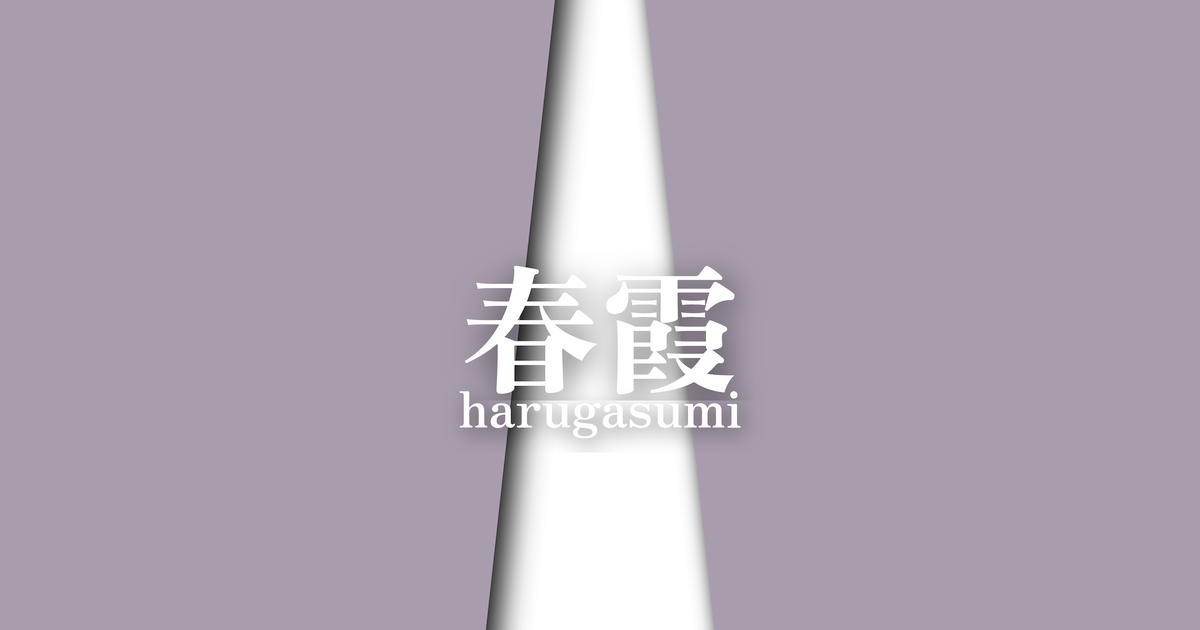
| Japanese color name | Harukasumi |
|---|---|
| reading | harugasumi |
| season | 春 |
| Color of the table | Light purple (usumurasaki) |
| Back color | White (shiro) |
What is Harugasumi? Origin and Etymology
The layered color combination "Harugasumi" (Spring Mist), as its name suggests, is a color scheme that expresses the scene of mist drifting across the spring sky. The light purple on the outer layer is said to symbolize the color of the sky seen through the mist, and the way distant mountains appear hazy. On the other hand, the white on the inner layer is said to represent the color of the mist itself, and the soft light of spring. This combination of light purple and white paints a hazy yet bright, fantastical spring landscape on the garment, giving the viewer a calm and elegant impression.
Historical background of spring haze
In the aristocratic society of the Heian period, being sensitive to the changing seasons and reflecting them in one's attire was an important aesthetic. The "Harugasumi" (spring mist) color scheme is said to have been worn mainly during the spring season, especially from after the beginning of spring until the cherry blossoms bloomed. This color scheme was used in the uchiki (outer robes) worn by women of the imperial court, and its soft and elegant hues added splendor to refined events such as cherry blossom viewing and poetry gatherings.
"Harugasumi," which skillfully incorporates natural scenery, is one of the color combinations that symbolizes the refined sense of color of the Heian aristocracy.
Related literature, waka poetry, and seasonal words
"Spring mist" is an important image that frequently appears in waka poetry and narrative literature of the Heian period. The *Kokin Wakashū* and *Shin Kokin Wakashū* contain many poems about spring mist, and the scene of mist covering mountains and cherry blossoms is expressed in relation to delicate emotions such as love and a sense of impermanence. In narrative literature such as *The Tale of Genji* and *The Pillow Book*, it is also used as a symbolic depiction of spring scenes, effectively creating the feelings of the characters and the atmosphere of the story.
Thus, "spring haze" is not merely a natural phenomenon, but a word deeply rooted in Japanese literature, symbolizing the Japanese aesthetic sense and spirituality.
Even though I gaze upon the cherry blossoms on the mountain shrouded in spring mist, I still find myself unable to tire of them, you too.
The season and scenery of spring haze
The "Spring Mist" color scheme evokes a gentle and fantastical scene that heralds the arrival of spring. It is said to be suitable for wearing from early spring, when the chill still lingers, through the peak of spring when the cherry blossoms are in full bloom, allowing you to enjoy the feeling of spring for an extended period. The soft gradation created by the light purple on the outside and the white on the inside is reminiscent of mountain cherry blossoms and wildflowers bathed in soft light amidst morning mist or evening haze.
This elegant color scheme symbolizes the quiet energy before life begins to sprout and the anticipation of the start of spring, giving both the wearer and the viewer a sense of peace and refinement.
Color scheme proposal for spring haze
Cherry blossom pink (#FEEAFA)
This color, reminiscent of cherry blossoms blooming amidst a spring haze, is the most classic and harmonious combination. It creates an elegant and vibrant impression, perfectly complementing spring attire.
Light green (#A3D900)
A color reminiscent of young grass sprouting in a misty field. The tranquility of pale purple is combined with the vitality of fresh green, expressing the joy of spring's arrival. It creates a refreshing and youthful impression.
Silver mouse (#AFB1B4)
A light gray reminiscent of a hazy sky or the soft interplay of light in spring. It enhances the elegance of spring mist while creating an overall calm and sophisticated impression.
Practical Scenes
The "Harugasumi" (Spring Mist) color scheme can be widely used in everything from traditional clothing to modern designs. In Japanese clothing, incorporating this color scheme into formal kimonos, casual kimonos, and accessories such as obiage (sash ties) creates an elegant and seasonally appropriate look. In interior design, using it in curtains or wallpaper brings a calm and relaxed atmosphere to the space.
Furthermore, in the fields of website and graphic design, using it as a background color or accent color can give viewers a gentle and sophisticated impression.