
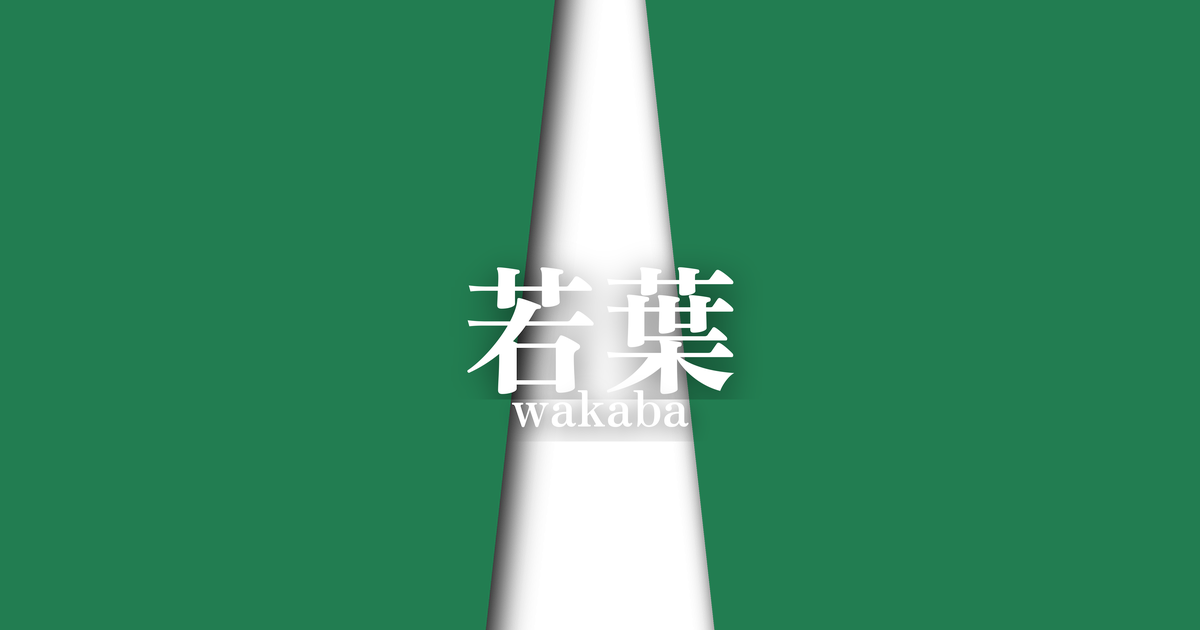
| Japanese color name | Wakaba |
|---|---|
| reading | wakaba |
| season | 春 |
| Color of the table | Green (midori) |
| Back color | White (shiro) |
What is Wakaba? Origin and Etymology
"Wakaba" (young leaves), as its name suggests, is a color combination that represents the fresh, vibrant leaves that have just sprouted in spring. The bright green on the outside represents the life-giving young leaves themselves, while the white on the inside is said to symbolize the downy hairs on the underside of the leaves and the brightness of the leaves as they are translucent in the light. Heian period aristocrats reflected the natural scenery in the colors of their clothing, enjoying the delicate changes of the seasons. The Wakaba color combination is thought to have been particularly favored as a color that embodied the joy and hope of spring arriving after a long, harsh winter.
This color scheme is a manifestation of a realistic aesthetic sense based on observation of nature. It's not simply green; the use of white on the reverse side suggests an intention to express dynamic scenes, such as the movement of leaves swaying in the wind and the reflection of light. This sensitivity to capturing the subtleties of nature strongly reflects the unique Japanese aesthetic cultivated within the Heian period's national culture.
Historical background of Wakaba
The layered color scheme of kimonos represents the pinnacle of clothing culture established in aristocratic society during the mid-Heian period. Court ladies skillfully incorporated the beauty of nature's seasonal colors into their layered uchiki (outer robes), competing to showcase the harmonious beauty of their combinations. This aesthetic sense was an important indicator of an individual's refinement and sensibility.
"Wakaba" (young leaves) is said to have been one of the colors that represent spring and was widely worn by women in the imperial court. In particular, it was valued as an outfit that harmonized with the surrounding nature at splendid outdoor events such as spring festivals and cherry blossom viewing parties. It is believed that the vibrant green of young leaves was dyed using the dyeing techniques of the time, by combining plant dyes such as Japanese knotweed and indigo in complex ways.
Related literature, waka poetry, and seasonal words
"Young leaves" are a seasonal word for spring and have been featured in many waka and haiku poems, depicted as a symbol of the breath of life, youth, and hope for the future. In classical literature, they also appear as an important motif to express the feeling of the season. In "The Tale of Genji" and "The Pillow Book," there are frequent scenes in which characters wear clothing in colors appropriate for the season, and the fact that characters wear green-toned clothing in the spring scenery of lush young leaves suggests that this color was beloved.
The snow falling on the young leaves of my garden—I see it as flowers, but I wonder if it's actually falling.
The season of fresh green leaves and scenery
"Wakaba" (young leaves) is a color scheme that expresses the feeling of spring, especially from late spring to early summer. It is considered most appropriate for the time when new leaves sprout all at once, around March to April in the old lunar calendar, and from late April to May in the modern calendar, and when the mountains change from light green to vibrant green. This color scheme evokes the image of young leaves sparkling in the sunlight after the rain, or the whiteness of the underside of leaves swaying in the wind.
It gives a fresh and invigorating impression full of vitality, making it perfect for celebrating the arrival of spring. In stark contrast to the somber colors of winter, the vibrant green and white contrast evokes a sense of the beginning of a new season and the energy of growth in the viewer.
Color scheme proposal for young leaves
Cherry blossom pink (#FEEAFA)
The combination with the color of cherry blossoms, a representative flower of spring, expresses the beautiful, quintessential Japanese spring scenery of young leaves and cherry blossoms. The colors complement each other, creating a vibrant and elegant impression—a classic color scheme.
Light green (#A9D159)
By combining it with the fresh green color of newly sprouted leaves, which are even younger than young leaves, a rich gradation of green is created. This more delicately expresses the surge of vitality in spring and emphasizes a lively impression.
Dayflower color (#38A1DB)
The combination of green and blue evokes the morning dew on young leaves and the clear spring sky. The refreshing contrast between green and blue gives a fresh and intellectual impression. It is a color scheme that brings to mind a refreshing scene in nature.
Practical Scenes
In Heian period attire, it was primarily used as a women's uchiki (a type of kimono). To express the feeling of spring, it was sometimes worn layered with other spring colors such as "red plum" or "willow." It is said to have been particularly favored by young women because it gave a youthful and lively impression.
In modern times, this color scheme is incorporated into kimonos, obi sashes, and traditional Japanese accessories such as obiage and obijime. It is perfect for creating a springtime feel, and when worn at wedding receptions, tea ceremonies, or theater performances, it gives an elegant and refreshing impression.
Beyond traditional Japanese clothing, incorporating this motif into interior design elements like curtains and cushions can bring a spring-like feel and brightness to a room. In web design and graphic design, it's suitable for brands and products that want to convey a natural and fresh image.