
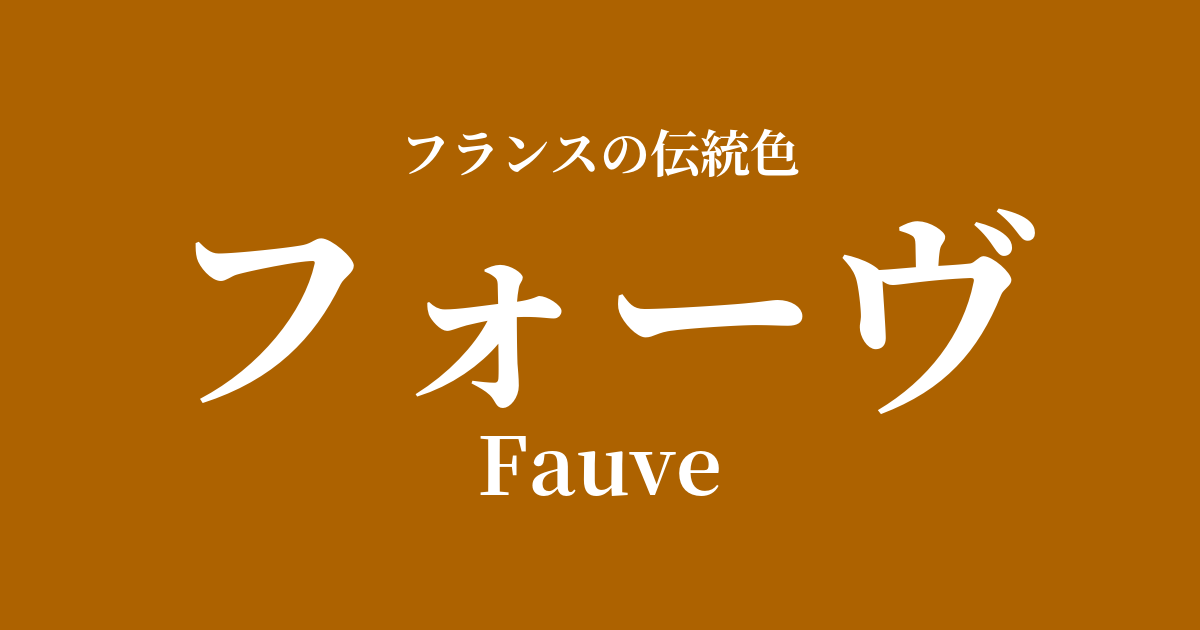
| French | Fauve |
|---|---|
| Katakana | Fauv |
| HEX | #AD6200 |
| RGB | 173, 98, 0 |
What is Fauvism? Origin and Etymology
"Fauve" is a French word meaning "wild beast." Originally, it was used to refer to wild animals with yellowish-brown fur, such as deer and lions.
The term "Fauve" came to refer to a specific shade thanks to the Fauvism art movement that emerged in the early 20th century. The fiery, vibrant, and passionate yellow-brown color seen in their works became known as "Fauve" along with the name of the movement. It can be said that this is a special color name that encompasses nuances of artistic impulse and the dynamism of life, going beyond just the name of a color.
Historical background of Fauvism
The history of Fauvism in color began with the Salon d'Automne, an exhibition held in Paris in 1905. The works exhibited at this exhibition by Henri Matisse, André Derain, and others were painted with intense colors and bold brushstrokes that set them apart from traditional painting up to that point.
In the center of the room where their works were displayed was a serene Renaissance-style sculpture. The critic Louis Vauxcelles, upon seeing this contrasting scene, remarked that it was "like Donatello in a cage of wild beasts (Fauves)." This critique led to their art style being called "Fauvism."
The color Fauvism itself symbolizes the spirit of Fauvism. Rather than using colors as they appear, the artist freely and unrestrainedly used primary colors to express their inner emotions. That wild yet pure energy is embodied in this warm tan.
Fauvism in the world of art and fashion
Fauvist colors are inextricably linked to Fauvism, a revolutionary movement in art history. In works such as Henri Matisse's "The Red Table" and André Derain's "Landscape at Collioure," earthy Fauvist colors are richly expressed as the strong sunlight and earth tones of southern France, or as the shadows on the skin of figures.
In the world of fashion, Fauve is a color that has been loved across generations. In particular, because it conveys warmth and sophistication, it is often favored in coats, knitwear, and leather goods in autumn and winter collections. While it is a naturally derived earth tone, it harmonizes beautifully with urban and modern styles. Its powerful hue will enhance the wearer's individuality and instill confidence.
What I dream of is an art of balance, an art of purity and tranquility, devoid of subjects that disturb or trouble the mind. (….) Something that soothes and calms the spirit, like an armchair, for example.
Color scheme preview
This is to check the readability of the text when this color is used as the background.
Fauvist color scheme proposals
Blue Nuit (#0F2540)
This combination features Fauve, reminiscent of the earth, and Bleu Nuit, like the deep night sky. It gives an intelligent, calm, and luxurious impression. The contrast is beautiful, and each color elegantly enhances the other.
Terre de Sienne (#E97451)
This combination of earth tones, both derived from soil and pigments, creates a warm and natural atmosphere, giving a comfortable and relaxed impression. It's recommended for interior design and casual fashion.
Jaune de Naples (#F7E35F)
This color scheme combines calming fauve with bright, vibrant yellow, adding energy and vibrancy. It creates an artistic and creative impression, brightening the viewer's spirits and bringing joy. It's particularly effective when used as an accent color.
Practical Scenes
In interior design, Fauve brings warmth and tranquility to a space. Incorporating it into accent walls in living rooms or studies, or adding it through fabrics like cushions, rugs, and curtains, can create a cozy atmosphere. It pairs particularly well with wooden furniture and leather sofas.
In fashion, Fauve creates a sophisticated, mature style. Its appeal is further enhanced when combined with high-quality materials such as trench coats, wool jackets, and cashmere sweaters. Incorporating it into leather accessories such as bags, belts, and shoes tightens the overall look and adds an elegant accent.
In web and graphic design, it's effective when you want to express trustworthiness, tradition, or a connection to nature. It's also ideal as the brand color for brands that value organic products or craftsmanship.