
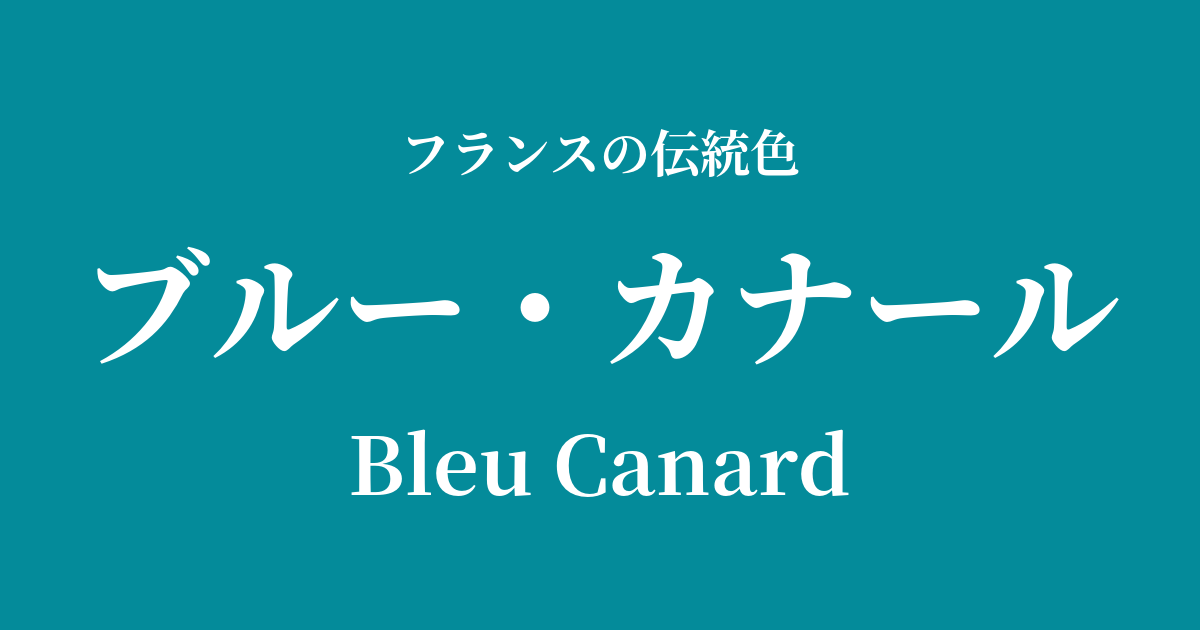
| French | Bleu Canard |
|---|---|
| Katakana | Blue Canard |
| HEX | #048b9a |
| RGB | 4, 139, 154 |
What is Blue Canal? Origin and Etymology
"Bleu Canard" is a deep, beautiful blue-green color, meaning "duck blue" in French. As the name suggests, it is named after the glossy feathers found on the head and neck of male mallard ducks (Canard colvert).
This color name, which captures the mysterious and complex hue that appears green or blue depending on the angle of light, speaks to the French people's keen observational skills and aesthetic sense regarding the colors of nature. Its charm lies in its rich nuances, full of vitality, that cannot be expressed by simply calling it blue or green.
Historical background of the Blue Canal
Blue Canard was particularly popular during the glamorous "Belle Époque" (the beautiful era) from the late 19th to the early 20th century. The Industrial Revolution led to the development of numerous new synthetic dyes, allowing for vibrant and deep colors that had previously been difficult to achieve to adorn the worlds of fashion and interior design.
Furthermore, the influence of Japonisme (a fascination with Japanese culture) that swept across Europe during this period cannot be ignored. The oriental and exotic colors, such as the indigo and verdigris depicted in Ukiyo-e prints, are said to have greatly inspired artists and designers, creating the foundation for the preference of complex intermediate colors like blue canard.
Later, during the Art Nouveau and Art Deco periods, its modern and sophisticated colors were highly valued and continued to be loved in various fields such as architecture, furniture, and jewelry.
The Blue Canal in the World of Art and Fashion
Blue Canard, with its dramatic hue, has been used impressively in the worlds of art and fashion. In particular, this color played a crucial role in fashion from the Belle Époque to the Art Deco period. Dresses and coats made from lustrous fabrics such as velvet and silk satin brought out the depth and sheen of Blue Canard to the fullest, elegantly adorning the women of that era.
In the world of interior design, this color is known as one of the colors that symbolizes Art Deco spaces. By boldly using this color in wallpaper, curtains, and sofa upholstery, a luxurious yet modern and sophisticated atmosphere was created. Its combination with colors such as gold, brass, and black remains a timeless and refined style that is still referenced today.
Color scheme preview
This is to check the readability of the text when this color is used as the background.
Blue Canard's color scheme proposal
Jaune de Naples (#f7d98d)
These colors are close to complementary, and they vividly enhance each other's colors. The addition of warm yellow to the depth of blue canard creates an exotic, vibrant, and gorgeous impression.
Beige (#c8ad8f)
The vibrant blue of the canard is gently enveloped by the natural, soft hues of beige. It creates an elegant and relaxed atmosphere, making it perfect for creating a comfortable, natural modern space.
Gris de Payne (#4b586b)
The deep, bluish-gray harmonizes beautifully with the blue canard, creating a very intellectual and calm atmosphere. It's a sophisticated and modern combination with a beautiful, deep gradient.
Practical Scenes
In interior design, this color is ideal as an accent color to add dramatic depth to a space. Simply painting one wall in the living room this color, or incorporating velvet sofas and cushions, instantly creates a sophisticated impression. Pairing it with gold or brass lighting and accessories enhances the classic and luxurious atmosphere.
In fashion, wearing this color from head to toe—whether it's a coat, dress, or suit—can create an intelligent and mysterious aura. Incorporating it into glossy materials like silk blouses or scarves further enhances the complex nuances of the color. For a touch of individuality in your everyday outfits, using it as an accent color in bags or shoes is also recommended.
In web and graphic design, it is effective when you want to convey a sense of luxury, reliability, and expertise. By using it as a background color or as a key color for logos and buttons, you can make a strong impression on users.