
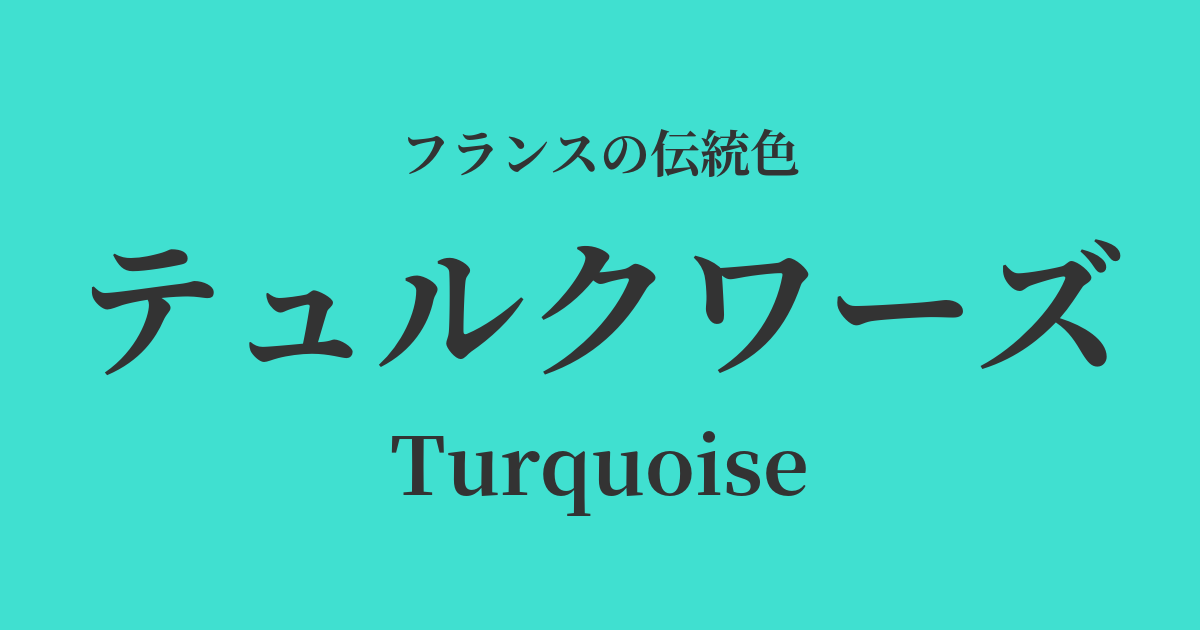
| French | Turquoise |
|---|---|
| Katakana | Turquoise |
| HEX | #40e0d0 |
| RGB | 64, 224, 208 |
What is Turquoise? Origin and etymology
Turquoise, as its name suggests, is a vibrant, greenish-blue color derived from the gemstone "turquoise." The French phrase "pierre turquoise" literally translates to "Turkish stone."
Interestingly, this gemstone is not actually mined in Turkey. Its main sources have historically been Persia (present-day Iran) and the Sinai Peninsula, and it was brought to Europe by Turkish merchants, hence its name. The mystical blue color, arriving from a foreign land, captivated Europeans and eventually became established as a color name.
Historical background of Turquoise
Turquoise gained particular attention in France during the 19th century. At that time, "Orientalism" was popular in Europe, and a longing for distant lands swept through the world of art and fashion. The exotic colors of turquoise perfectly symbolized the mood of that era.
Especially during the Second French Empire under Napoleon III, noblewomen, including Empress Eugénie, eagerly wore luxurious jewelry adorned with gemstones of this color. The combination with gold was seen as a symbol of wealth and power, adding a touch of glamour to high society.
Subsequently, during the Art Nouveau and Art Deco periods from the end of the century to the beginning of the 20th century, turquoise continued to be used as an important color in decorative arts such as jewelry, glasswork, and posters, and its unique charm continued to inspire many artists.
Turquoise in the world of art and fashion
In the world of art, we can find colors reminiscent of Turquoise in the works of Eugène Delacroix and Jean-Léon Gérôme, representative painters of Orientalism. This exotic blue-green is effectively used in the Middle Eastern landscapes, luxurious costumes, and ornaments they depict, transporting the viewer to another world.
In the field of fashion, Paul Poiret, a designer from the early 20th century, is known for his bold incorporation of Oriental silhouettes and colors. His dresses featured turquoise as a vibrant accent, symbolizing a new style that liberated women from traditional corsets. The costume designs of the Ballets Russes (Russian Ballet), which shocked Paris at the time, are also said to have had a significant influence on this color trend.
Even within France's world-renowned jewelry culture, turquoise holds a special place. Prestigious maisons such as Cartier and Van Cleef & Arpels have long recognized the beauty of this gemstone, creating numerous masterpieces. Its vibrant colors harmonize beautifully with diamonds and gold, continuing to captivate people across generations.
Color scheme preview
This is to check the readability of the text when this color is used as the background.
Turquoise color scheme proposal
Blanc d'Argent (#E8E8E8)
The vibrant color of the turquoise is enhanced by the pure and elegant silvery-white. This combination gives off a luxurious, jewelry-like feel and a modern, sophisticated impression.
Corail (#F88379)
Turquoise and coral, being nearly complementary colors, enhance each other's beauty, creating an exotic and vibrant impression. They are perfect for evoking the natural beauty of the tropics or an oriental atmosphere.
All (#FFD700)
This is a historically significant and noble combination, also seen in ancient Egyptian ornaments. The gold accents the mystical atmosphere of the turquoise, creating a luxurious and elegant impression.
Practical Scenes
In interior design, turquoise is an ideal accent color that brings freshness and a sense of the extraordinary to a space. Simply incorporating it through small items like cushions, rugs, or art panels will brighten the entire room and create a more open atmosphere. When paired with a white or beige color scheme, it evokes a Mediterranean resort style.
In fashion, this color is particularly effective at enhancing summer outfits. Incorporating it into dresses, skirts, or scarves brightens up the entire look and gives it a lively feel. Pairing it with silver accessories creates a cool, refreshing look, while combining it with gold creates a rich and exotic atmosphere.
In web and graphic design, turquoise is an effective color for attracting user attention. Using it for call-to-action buttons, icons, and headings helps to give a site a lively and trustworthy feel, and build a creative and modern image.