
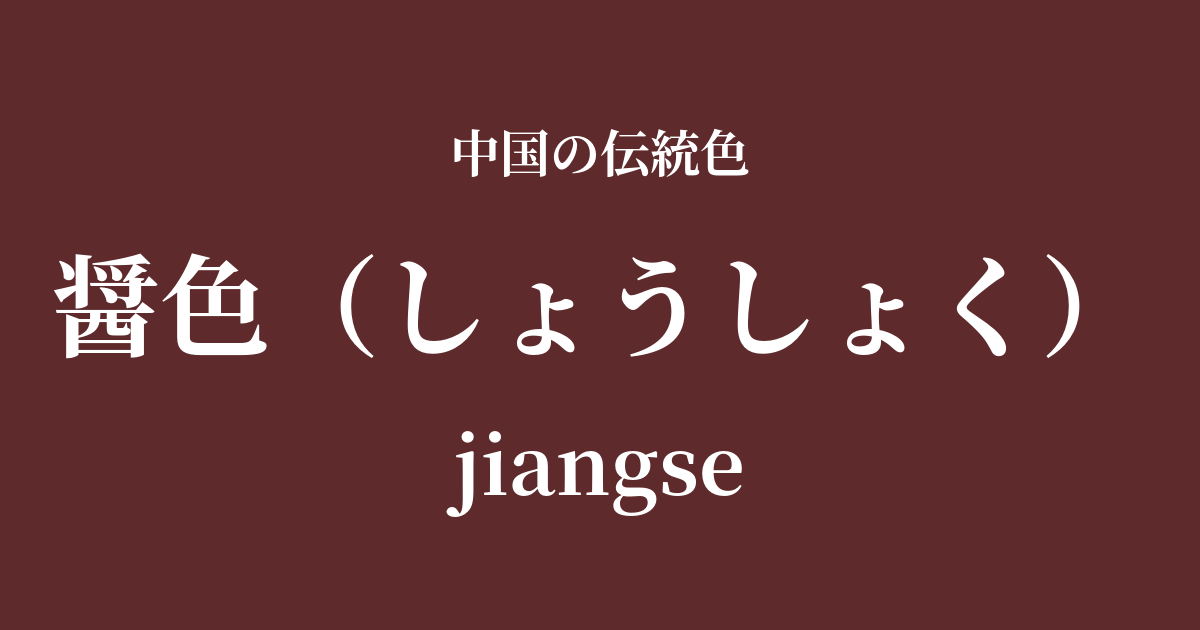
| Color name | Sauce color |
|---|---|
| reading | Shoshoku |
| pinyin | jiangse |
| HEX | #5E2A2B |
| RGB | 94, 42, 43 |
What is "Jiang-colored"? Origin and etymology
The color "jiang" (or "jiang color"), as the name suggests, originates from "jiang," a traditional Chinese fermented condiment. "Jiang" is a paste-like condiment made primarily from soybeans and wheat, fermented and aged with salt, and is said to be the root of soy sauce and miso.
The deep, rich, and glossy reddish-brown color that develops during the long maturation process of this "jiang" (soy sauce) is the origin of the term "jiang-se" (soy sauce color). It is not merely the name of a color, but a flavorful color deeply rooted in China's rich food culture and people's lives.
The historical background of soy sauce
The history of "jiang" (soy sauce) is very old, and some sources suggest that it is already mentioned in documents from the Zhou Dynasty (circa 1046 BC – 256 BC). Therefore, it is thought that the color of jiang has also been a familiar color in the lives of the Chinese people since ancient times.
During the Han dynasty, the technology for making soy sauce further developed, making it an indispensable part of the common people's diet. Consequently, the color of soy sauce likely became widely established as an everyday color.
This color, which evokes a sense of calm and gravitas, was also seen as a symbol of the earth, fertility, and stability. Therefore, while it was widely used in the clothing, everyday pottery, and furniture of ordinary people, it was also used to adorn the pillars and beams of temples and other prestigious buildings, playing a role in creating a solemn atmosphere.
Soy sauce in Chinese art and crafts
The color "jiang" (soy sauce glaze) particularly shines in the world of ceramics. This glaze, known as "jiang yu" (soy sauce glaze), was widely used from the Song dynasty through the Yuan and Ming dynasties. Jiang yu pottery, especially that made in the Cizhou kilns of Hebei Province, possesses a unique charm that is simple yet powerful, conveying the warmth of the clay. Its deep hue sets it apart from other vibrant colors, exuding a calm and dignified elegance.
In the realm of fashion culture, the color "jiang" (soy sauce) was primarily favored as the everyday wear of ordinary people. This was because cotton and linen clothing dyed with plant-based dyes was practical as it did not show dirt easily. On the other hand, when high-quality silk fabrics were dyed in this color, the resulting shade, combined with its luster, created a subtle yet dignified hue, and it is said to have been loved by literati who preferred understated attire.
Color scheme preview
This is to check the readability of the text when this color is used as the background.
Soy sauce color scheme proposal
Tsukihaku (#EAF4FC)
The rich, deep reddish-brown of the soy sauce color is combined with the pure, pale, bluish-white of the moon-white color, allowing each color to complement the other. It gives a quiet, refined, and dignified impression, making it ideal for creating a study or tea room atmosphere.
Pine flower color (#BCEE68)
The combination of earthy soy sauce and vibrant pine pollen-like pine blossom green evokes a sense of natural vitality and warmth. The harmony of these earth tones is soothing, creating a friendly and tranquil atmosphere.
Golden (#EACF5E)
The deep, rich reddish-brown hue, accented with shimmering gold, creates a luxurious yet refined impression. This vibrant and auspicious color scheme evokes traditional decorations and festive occasions.
Practical Scenes
In interior design, soy sauce brings a sense of calm and gravitas to a space. Using it on a large area, such as a wall, sofa, or rug, creates a stable and chic atmosphere. Combining it with lighter colors like off-white or cream prevents the space from becoming too dark, resulting in a modern and sophisticated look. It also pairs exceptionally well with wooden furniture and ceramics.
In fashion, incorporating soy-colored coats, jackets, and leather goods creates a classic and sophisticated impression. It's a timeless color unaffected by trends, making it a long-lasting favorite. Adding a pop of color, such as a bright green like pine blossom yellow or gold accessories, will add depth and elegance to your outfit.
In web design, it's an effective base color for creating a stable overall site, including background and footer colors. It's suitable for websites of established brands that want to convey a sense of luxury and reliability, or for companies that deal with natural materials.