
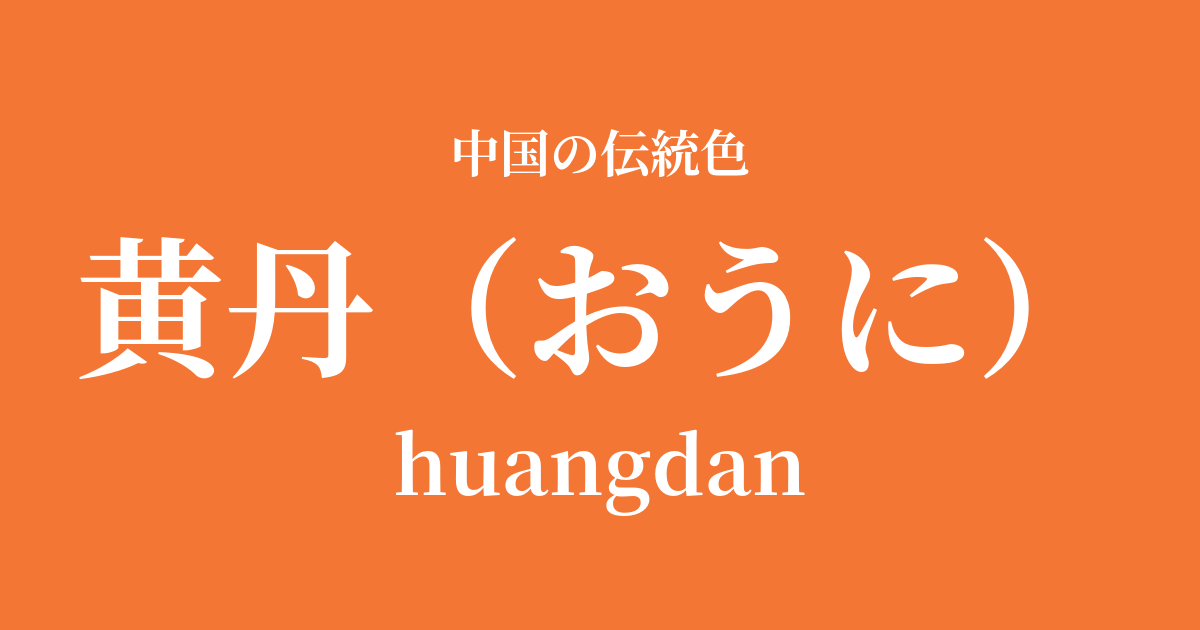
| Color name | Huangtan |
|---|---|
| reading | Ouni |
| pinyin | huangdan |
| HEX | #F37634 |
| RGB | 243, 118, 52 |
What is yellow ochre? Origin and etymology
Ouni is a traditional color name referring to a bright, reddish-yellow, or orange, color. As the name suggests, it means "yellow cinnabar," and its origin lies in red lead (entan), or trilead tetroxide, which has been used as a pigment since ancient times.
The word "dan" (丹) has held a special significance in ancient China. In particular, in Taoist thought, it referred to "xian dan," the elixir of immortality, and was considered a symbol of vitality and mystery. The powerful, fiery hue of huang dan evoked the sun and fire, and was considered a fitting color to represent the authority and vitality of a person of special status.
Historical background of yellow orange
The most important role for the color yellow-orange in history was during the Tang Dynasty. During this period, yellow-orange was strictly defined by law as a "forbidden color," and only the crown prince was permitted to wear it.
While the emperor's color was designated as "ochre," the next most important color, orange, was designated as the color of the crown prince's robe. The "Treatise on Carriages and Clothing" in the "New Book of Tang" and the "Old Book of Tang" clearly record that the crown prince wore orange-colored clothing.
This restriction on the use of this color symbolized the strict social hierarchy of the time. In a society where a person's status could be determined at a glance by the color of their clothing, orange was an extremely noble and politically significant color, signifying the next emperor.
Yellow cinnabar in Chinese art and crafts
The color orange (huangni) is deeply intertwined with the clothing culture that symbolized the authority of the crown prince. A robe made from the finest silk fabrics dyed in orange, combined with its luster, must have exuded a splendor and dignity that would overwhelm anyone who saw it.
Furthermore, orange was also widely used as a pigment. It is believed that this vibrant color was used to create sacred and majestic spaces, such as in palace architecture, temple murals, and the coloring of Buddhist statues. For example, it is said that some of the vivid orange colors seen in the murals of the Dunhuang Mogao Caves were achieved using this orange.
Furthermore, in the world of ceramics, particularly in the internationally diverse Tang Dynasty sancai ware, a vibrant orange glaze similar to huangni can be found. The glaze, fired at low temperatures using lead as a solvent, beautifully expresses the bright and powerful color of huangni.
Color scheme preview
This is to check the readability of the text when this color is used as the background.
Yellow-orange color scheme proposal
Gen (#191919)
The authority and splendor of the yellow-orange are balanced by the gravitas of the black, creating a dignified and majestic impression. It is a traditional and powerful color scheme reminiscent of court ceremonies.
Stone green (#168573)
The warmth of the yellow-orange and the coolness of the stone-green complement each other, creating a vibrant and lively impression. It's a gorgeous and exotic color scheme reminiscent of the murals found in Dunhuang.
Tsukihaku (#EAF4FC)
The pure, clear white of the moon-white color highlights the vibrancy of the orange-orange color, creating an impression that is noble yet light and sophisticated. This elegant color scheme is easy to incorporate into modern designs.
Practical Scenes
In interior design, orange is an ideal accent color that brings energy and vibrancy to a space. Incorporating it into cushions, artwork, or small pieces of furniture will brighten and refine the entire room. It pairs particularly well with dark brown wood and metal materials such as brass.
In fashion, it's recommended to start by incorporating it into accessories. Using yellow-orange in scarves, bags, or jewelry can add a noble and striking accent to your entire outfit. Its historical background also adds a narrative element, making it suitable for special occasions.
In web and graphic design, it's effective when used for buttons and headings that you want to attract attention. Using it as a key color for brands with themes like luxury, tradition, or authority can create a powerful and sophisticated image.