
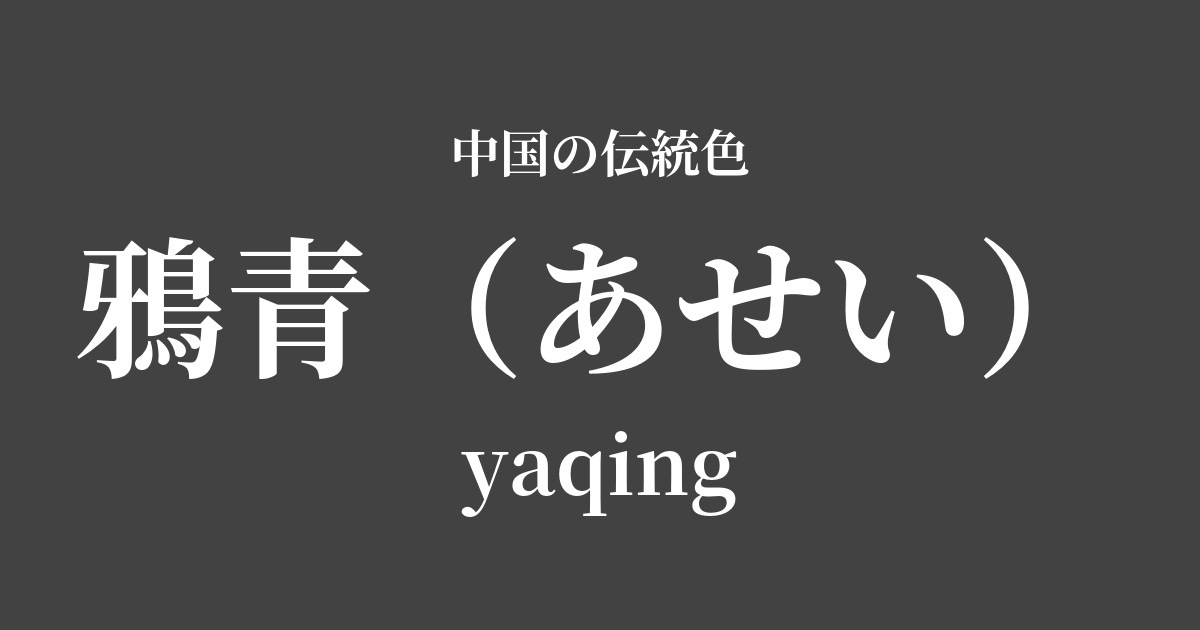
| Color name | Raven blue |
|---|---|
| reading | Asei |
| pinyin | yaqing |
| HEX | #424242 |
| RGB | 66, 66, 66 |
What is "鸦青"? Origin and etymology
As the name suggests, "Asei" (鴉青) is a deep, slightly bluish black color derived from the color of a crow's feathers.
Since ancient times, the Chinese have carefully observed phenomena in the natural world, creating a rich vocabulary of colors from these observations. Crow's blue is one such example; it is a color name born from a poetic sensibility, capturing the way a crow's feathers appear not merely black, but as if they emit a blue or purple sheen when light hits them.
This subtle nuance of color, which is not simply black, gives the crow blue a profound and mysterious impression.
Historical background of the Chinese hawk
The aesthetic sensibilities of the oak tree reached a particularly high level during the Song Dynasty (960-1279), a period that pursued a simple and introspective beauty. During this era, a culture that valued tranquility and profoundness over extravagant ornamentation flourished.
Among the court and literati, true beauty was believed to lie not in vibrant colors, but in the monochrome world of ink paintings. As a color embodying this Song dynasty aesthetic, oak blue was favored in various fields, including ceramics, paintings, and textiles.
In particular, it became deeply ingrained in the intellectual class as a noble color symbolizing spirituality, and was associated with Zen Buddhist thought.
The ebony in Chinese art and crafts
When discussing raven blue porcelain, it's essential to mention the black-glazed porcelain, exemplified by the "Tenmoku tea bowls" fired during the Song Dynasty. These tea bowls, made in places like the Jian kilns of Fujian Province, feature beautiful blue and silver spots known as "yohen" and "yuteki" floating within the black glaze. Their mystical shimmer is reminiscent of the luster of a raven's feathers and was considered the epitome of raven blue beauty.
Furthermore, in the world of ink painting, it is said that "there are five colors in ink," and all things are expressed solely through the shades of ink. Among these, a bluish ink called "blue ink" was sometimes used. The deep darkness and tranquil water surfaces depicted with this blue ink resonate with the serene worldview of crow blue.
In fashion culture, crow blue is thought to have been used in the clothing of literati and officials as a color that signifies calmness and dignity. While not flashy, it held special significance as a color that conveyed intelligence and refinement.
Raven Blue Point
Color scheme preview
This is to check the readability of the text when this color is used as the background.
A proposed color scheme for crow blue.
Moon White (#D9E4E8)
The deep, rich feel of the crow blue is gently softened by the pure, soft light of the moon white. It creates a calm, refined, and elegant atmosphere reminiscent of a silent night sky and moonlight.
Vermillion (#FF4D00)
The tranquility of crow blue and the passionate energy of vermilion create a dramatic contrast. This striking color scheme, while traditional, exudes a modern strength and is sure to capture the eye.
Pilestone (#99462A)
The inorganic, ink-like impression of crow blue is complemented by the warmth of ochre. This creates a stable and profound color scheme that evokes the grandeur and tranquility of nature.
Practical Scenes
In interior design, oak blue brings depth and tranquility to a space. Incorporating it as an accent wall in a study or bedroom creates a quiet and focused environment. Combining it with light-colored wood or metal materials such as brass results in a modern and sophisticated space.
In fashion, choosing a raven blue coat or suit instead of black creates a more sophisticated and nuanced look. Lustrous fabrics like silk or velvet will further enhance the depth of the raven blue color. Adding white or gold as accent colors will create a refined impression.
In website and graphic design, using it as a background color can enhance text and other elements, conveying trustworthiness and professionalism. It pairs exceptionally well with minimalist designs and is ideal for building a thoughtful brand image.