
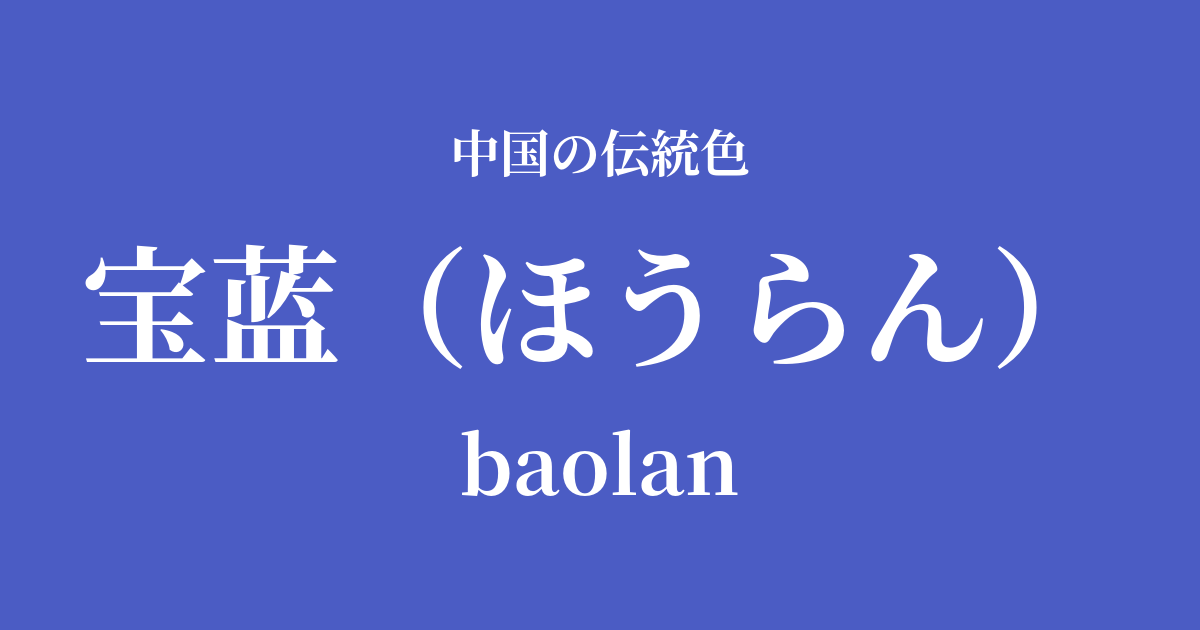
| Color name | treasure |
|---|---|
| reading | Houran |
| pinyin | baolan |
| HEX | #4B5CC4 |
| RGB | 75, 92, 196 |
What is Baolan? Origin and etymology
Hōran, as its name suggests, means "jewel blue," and is a deep, vibrant blue color.
This name is derived from the elegant, clear blue color of sapphires (called "蓝宝宝" in Chinese). Since ancient times, people have found special value in the mystical brilliance and rarity of gemstones, and have revered their colors. "Treasure Blue" is a color name that truly embodies that admiration.
Historical background of Baolan
The color Baolan (precious blue) gained particular attention during the Qing Dynasty. In this era of flourishing court culture, Baolan was used in ceremonial attire such as court robes and dragon robes worn by emperors and members of the imperial family, and was considered a symbol of the highest authority and nobility.
Furthermore, this color was widely used not only in textiles but also in ceramics and cloisonné enamel known as keitai-ran. In particular, in keitai-ran, this vibrant blue, produced by pigments primarily composed of cobalt, gave works a sense of splendor and depth. It is also believed that the introduction of new pigments through trade with the West contributed to broadening the range of expression of this precious blue.
Baolan in Chinese Art and Crafts
The beauty of Baolan (precious blue) stands out in the clothing culture of the Qing Dynasty. Baolan-colored silk fabrics were used for the highest-ranking garments, such as the dragon robes worn by the emperor and the ceremonial robes of the empress. The elegance of Baolan was further enhanced by intricate tapestry weaving called Guosi and luxurious embroidery using gold and silver threads.
In the field of crafts and arts, Jingtai-lan (a type of glazing) is the symbol of Bao-lan (precious glazing). In this technique of applying glaze to a copper vessel, Bao-lan is frequently used as the base color, defining its magnificent and majestic style. Bao-lan decorations using this technique can also be seen on the throne and furnishings of the Forbidden City.
Color scheme preview
This is to check the readability of the text when this color is used as the background.
Blue color scheme proposal
Ming Huang (#FFB61E)
When combined with bright yellow, the color of the emperor, it evokes the Qing Dynasty court, creating the most dignified and luxurious impression. The colors complement each other, creating a majestic atmosphere.
Tsukihaku (#EAF4FC)
When combined with pure, moon-white, the vibrancy of the precious blue stands out, creating a serene and intellectual impression reminiscent of a clear night sky. It is perfect for creating a clean and sophisticated space.
Beni Kaido (#F2A0A1)
The gentle, vibrant red of the flowering begonia contrasts beautifully with the calm blue of the precious blue, creating a lively and elegant impression. This is a captivating color combination often seen in traditional embroidery and crafts.
Practical Scenes
In the world of fashion, when used in statement pieces such as dresses and jackets, blue enhances the wearer's elegance and intelligence. When incorporated into lustrous fabrics like silk or velvet, the depth of the color is further highlighted, resulting in an elegant look.
In interior design, incorporating this color in accent walls, sofas, or artwork brings a sense of calm and sophistication to a space. Combining it with gold or brass metal materials, or dark-colored wooden furniture, creates a classic yet modern atmosphere.
In websites and graphic design, blue can be used as a color that symbolizes reliability and expertise. Using it in a company logo or as a key color can give users a sense of stability and high quality, thereby enhancing brand value.