
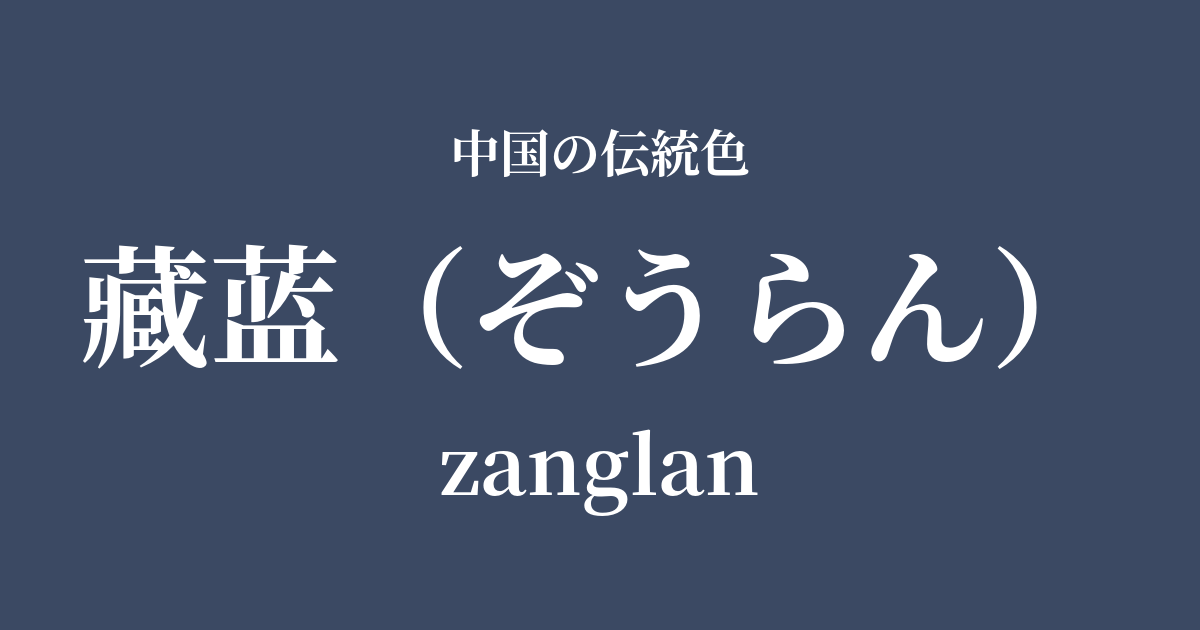
| Color name | 藏蓝 |
|---|---|
| reading | Zoran |
| pinyin | Zanglan |
| HEX | #3B4963 |
| RGB | 59, 73, 99 |
What is Tibetan Blue? Origin and Etymology
Zōran, as its name suggests, means "indigo blue" from "Tibet," and is a deep, mysterious blue color. "Zō" refers to Tibet in Chinese, indicating that this color is closely associated with Tibetan culture.
The origin of this color is said to lie in the clear night sky of the Tibetan Plateau and the reflection of the deep, still waters of sacred lakes. It is also thought to be derived from the color of the robes worn by Tibetan Buddhist monks and the sacred pigments used in thangka paintings.
Tibetan blue is more than just a color name; it holds special meaning as a color that symbolizes the deep faith of people nurtured in a harsh natural environment, spiritual tranquility, and cosmic expanse.
Historical background of Tibetan blue
Although the name "Zanglan" (藏蓝) is considered to have become widely used relatively recently, the history of this color is ancient, and its origins can be traced back to cultural exchange between China and Tibet.
During the Tang Dynasty, when Princess Wencheng married King Songtsen Gampo of Tibet, advanced sericulture, weaving, and dyeing techniques were introduced. This exchange is believed to have had a significant impact on Tibetan color culture.
During the Qing Dynasty in particular, Tibetan Buddhism was deeply revered in the imperial court. It is said that emperors, including Emperor Qianlong, favored using this deep blue, reminiscent of Tibetan blue, in Buddhist implements, ceremonial robes, and palace decorations. This color played a role in linking the emperor's authority with sacred faith.
Thus, rather than being a central color of the Han Chinese, Tibetan blue has been cherished throughout history as one of the colors symbolizing the cultural richness and diversity of China, a multi-ethnic nation.
Tibetan blue in Chinese art and crafts
Tibetan blue is an extremely important color in thangkas, the pinnacle of Tibetan Buddhist art. It is used to depict the night sky as a background for Buddhas and Bodhisattvas, and as the body color of fearsome deities known as wrathful gods, expressing their sacredness and transcendent power. Historically, precious minerals such as lapis lazuli have been used as pigments for these paintings.
In clothing culture, this color can be seen in the traditional Tibetan garment "chupa" and the robes of monks. It remains deeply rooted in the lives of people who live amidst harsh natural environments, symbolizing their strength and deep faith.
Furthermore, it resonates with the deep cobalt blue found in blue and white porcelain (sometsuke) produced during the Ming and Qing dynasties. In particular, the rich, lustrous blue produced by the pigment "smalt" evokes an aesthetic sense shared with the tranquility and profoundness of Tibetan blue.
Color scheme preview
This is to check the readability of the text when this color is used as the background.
藏蓝 color scheme suggestion
Yuhuang (#FFB300)
The combination of deep Tibetan blue and vibrant, warm orpiment creates a majestic and energetic impression reminiscent of Tibetan temples and thangkas. The colors complement each other beautifully, creating a stunning contrast.
Tsukihaku (#EAF4FC)
By combining the clear blue of the night sky with a pale moonlight-like white, this color evokes a calm and sophisticated atmosphere reminiscent of a quiet night on a plateau. It's an elegant color scheme that soothes the mind.
Cinnabar (#FF4D4F)
The combination of sacred Tibetan blue and vibrant cinnabar exudes a powerful presence. This color scheme, also found in Buddhist art, creates an impressive space and design that is both passionate and dignified.
Practical Scenes
In interior design, incorporating blue-green as an accent wall in a study or bedroom creates depth and tranquility in the space. It can also be expected to have a calming effect and enhance concentration. Combining it with gold, brass, or walnut furniture will create an even more refined and sophisticated atmosphere.
In fashion, coats, dresses, and sets in dark blue give an intelligent and elegant impression. They pair exceptionally well with basic colors like white, beige, and light gray, creating a sophisticated urban look. Incorporating accessories such as silk scarves and leather bags also adds a touch of refinement.
In web and graphic design, using this color as the main color can convey trustworthiness, expertise, and a sense of luxury. It is particularly suitable for the websites of technology companies, consulting firms, and luxury brands.