
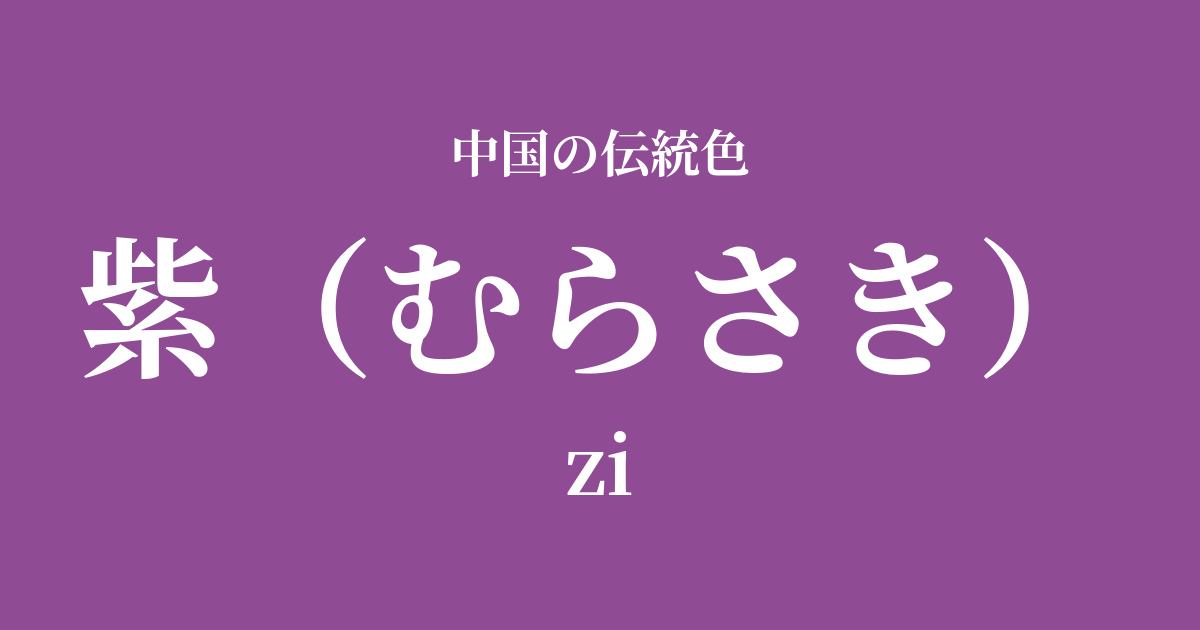
| Color name | 紫 |
|---|---|
| reading | purple |
| pinyin | zi |
| HEX | #8F4B94 |
| RGB | 143, 75, 148 |
What is purple? Origin and etymology
The color "purple" held special value due to the rarity of its raw materials. In ancient China, purple was mainly produced from a dye extracted from the roots of a plant called gromwell, but this dye was extremely difficult to produce, and only small amounts could be obtained.
Therefore, cloth dyed purple became extremely expensive, making it unattainable for ordinary people—truly a "flower on a high mountain." This physical rarity elevated purple to the status of a noble color that people longed for.
The kanji character "紫" (purple) is a phono-semantic compound character formed by combining "糸" (thread) and "此" (this). "此" represents the sound, while "糸" means dyed thread, and by extension, the color itself. The origin of this character suggests that purple has been deeply associated with dyeing culture since ancient times.
The historical background of purple
The recognition of purple as a special color dates back to the Spring and Autumn and Warring States periods. The philosophical text "Han Feizi" recounts an anecdote that Duke Huan of Qi was so fond of purple clothing that the price of purple cloth throughout the country skyrocketed fivefold. Even back then, purple was already a special color associated with those in power.
On the other hand, in Confucian teachings, purple was not necessarily considered the highest color. In Confucianism, blue, red, yellow, white, and black were considered "primary colors," while purple, being in between them, was positioned as an "intermediate color." The Analects contain Confucius's words, "I detest purple for stealing vermilion," indicating that there was also a view that purple was a color that disrupted the legitimate hierarchy of red (vermilion), and therefore viewed with caution.
However, the status of purple dramatically improved during the Han Dynasty. In the Five Elements philosophy, an ancient Chinese natural philosophy, it was believed that the Emperor of Heaven resided in the "Ziwei Enclosure" at the center of the heavens. This association of "purple" with the Emperor of Heaven led to purple being considered a symbol of the Son of Heaven, or emperor, who ruled the earth, and purple came to be treated as the supreme color.
This idea had a profound influence on later generations, and the imperial palace that once stood in Beijing was named "Forbidden City," a name that symbolizes "the forbidden place where the Emperor resides," likening it to the abode of the Heavenly Emperor.
During the Tang Dynasty, purple became an officially recognized color indicating official rank. Only high-ranking officials of the third rank or higher were permitted to wear the purple official robe, known as "zhi bao," making purple a symbol of advancement and honor. This system was passed down to subsequent dynasties, and purple became deeply etched into Chinese history as a color of unwavering authority and dignity.
Purple in Chinese Art and Crafts
In fashion culture, purple was highly valued as a color symbolizing noble status. In particular, the "purple robe" in the official attire system of the Tang Dynasty was the object of admiration for many officials. The garment, made of lustrous silk dyed purple, possessed both elegance and dignity, eloquently conveying the wearer's status.
In the world of ceramics, purple holds a special place. For example, beautiful purple glazes are sometimes used in Tang Dynasty sancai ware. Also, in the Jun ware of the Song Dynasty, a mystical purple color sometimes appeared among the colors that were accidentally created during the firing process called "yōhen," and it was highly prized as a treasure due to its rarity and beauty.
In painting, purple was effectively used to depict deities, noble figures, or mystical scenes. Particularly associated with Taoist thought, it was an indispensable color for expressing the sacred realm transcending the mundane world and creating a fantastical atmosphere. Its deep hue invites the viewer into an otherworldly realm.
Purple Rose Flower Shibiro
Color scheme preview
This is to check the readability of the text when this color is used as the background.
Purple color scheme proposal
Tsukihaku (#EAF4FC)
By combining noble purple with moonlight-white, reminiscent of pure moonlight, this creates a mysterious and sophisticated impression, like a quiet and clear night sky. It is a dignified color scheme that combines elegance and tranquility.
Fujio (#FFB61E)
Combining the emperor's color, a yellowish wisteria, with noble purple creates a very luxurious and authoritative impression. The colors complement each other, resulting in a color scheme that is both vibrant and dignified.
Mayuzumi (#49586E)
The deep purple, combined with a dark brown reminiscent of ink, creates a dignified and sophisticated adult atmosphere. This combination conveys an intelligent and thoughtful impression, making it well-suited for studies and formal occasions.
Practical Scenes
In interior design, purple is a suitable accent color that brings elegance and tranquility to a space. Simply incorporating it into one wall, cushions, or rugs instantly elevates the room, creating a sense of luxury. It pairs particularly well with dark brown wooden furniture and gold metal products, creating a classic and sophisticated atmosphere.
In the world of fashion, purple is a color that enhances elegance and mysterious charm. When incorporated into lustrous materials such as silk and velvet, the depth and nobility of purple are further highlighted. It can be used not only in statement pieces like dresses and coats, but also as an accent color in accessories such as scarves and bags to add an intellectual and sophisticated touch to your outfit.
In website and graphic design, purple is effective when dealing with luxury brands, cultural content, or spiritual themes. Used as a main color, it creates a sense of gravitas; used as an accent, it attracts attention and creates a special feeling. Combining it with white or light gray results in a modern and sophisticated design while maintaining elegance.