
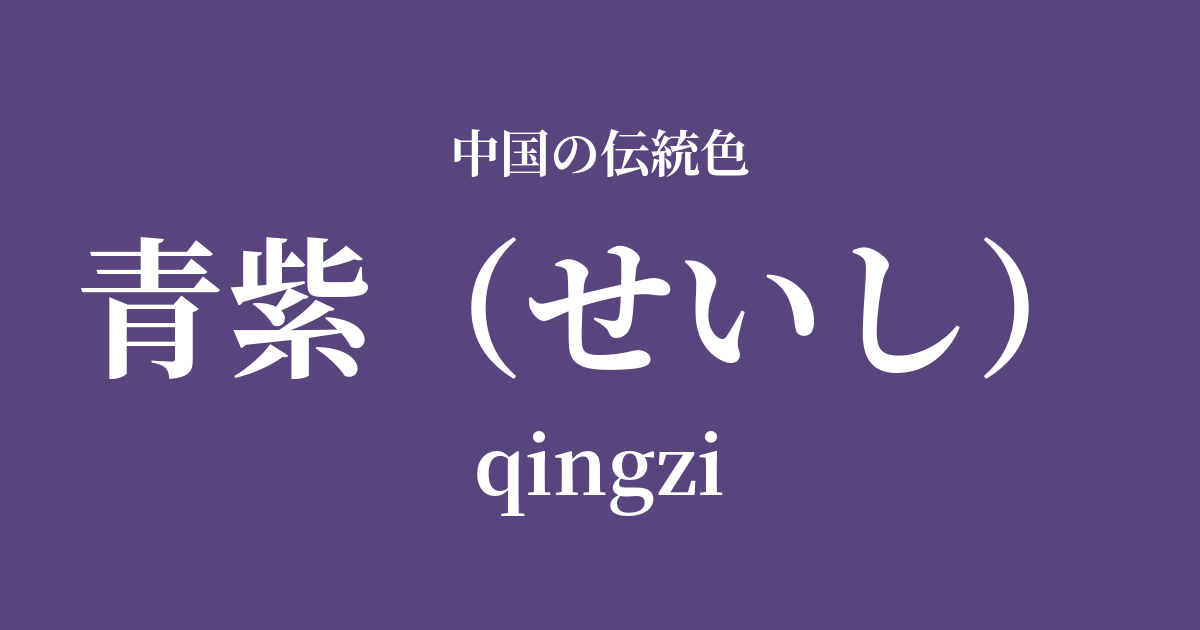
| Color name | blue-purple |
|---|---|
| reading | seishi |
| pinyin | qingzi |
| HEX | #5A447D |
| RGB | 90, 68, 125 |
What is blue-violet? Origin and etymology
As its name suggests, blue-violet (seishi) is a deep hue that is a mixture of blue and purple. This color is created by combining two important natural dyes.
One is "indigo," which has been used as a blue dye since ancient times. The other is "shikon," the root of the gromwell plant. By dyeing with indigo and then again with shikon, or vice versa, a complex and mystical hue is created that is neither a simple blue nor purple. The laborious dyeing process has also contributed to the rarity and value of this color.
The historical background of blue-purple
In ancient China, purple was considered an extremely noble color. Due to the rarity of the dye, gromwell root, wearing purple clothing was limited to a privileged few, and it was seen as a symbol of authority, worn by emperors and high-ranking officials.
Especially during the Tang Dynasty, a system called "pinse yi" (clothing colors) was established to indicate the rank of officials, and purple was a color that only the highest-ranking officials of the third rank or higher were permitted to wear. Blue-violet is also thought to have been similarly revered as a color belonging to this noble purple family. Just as the "purple" of the Forbidden City originates from the "Ziwei Yuan" (purple enclosure), the heavenly palace where the Emperor of Heaven resided, purple-based colors were associated with the order of heaven and the universe and were considered sacred.
Blue-violet in Chinese art and crafts
Blue-violet holds an important place in Chinese clothing culture. It pairs particularly well with silk fabrics, and when dyed onto lustrous silk, the blue-violet changes its appearance depending on the light, captivating the viewer. This noble color was likely used on special occasions, such as in the Hanfu worn by aristocratic women during the Tang Dynasty and in ceremonial attire.
Furthermore, similar shades of bluish-purple can be found in the world of ceramics. For example, the purple glaze seen in Tang Dynasty sancai ware is created using mineral pigments such as cobalt and manganese, and sometimes fires to a deep, bluish-purple. This mystical hue gives the vessels an air of refined elegance.
Deep blue purple, Peijin jade
Color scheme preview
This is to check the readability of the text when this color is used as the background.
Blue-purple color scheme proposal
Tsukihaku (#EAF4FC)
The deep blue-violet hue is beautifully complemented by a clear, moon-white color reminiscent of moonlight. The contrast, evoking the night sky and the moon, creates a serene and noble impression.
Autumn color (#D9B611)
The combination of purple and yellow, which are close to complementary colors, makes each other appear more vibrant. The autumnal colors, reminiscent of the bountiful harvest of autumn, add a touch of elegance to the dignified blue-violet.
Silver mouse (#A2A2A2)
Without diminishing the mystical atmosphere of blue-violet, it adds a modern and sophisticated touch. This combination is ideal for creating an urban, calm, and intellectual space.
Practical Scenes
In interior design, incorporating blue-violet into accent walls, velvet curtains, and cushions brings depth and a luxurious atmosphere to a space. When combined with light, neutral colors such as moon white or silver gray, it is ideal for a quiet, contemplative study or bedroom.
In fashion, using it in statement pieces like dresses and coats exudes an elegant and mysterious charm. Even incorporating it in small accessories like silk scarves or leather bags elevates the entire outfit.
In web design and graphic design, using this color as a background gives a sense of gravitas and trustworthiness to luxury brands, art, and spiritual content. Choosing a light color like moonlight for the text color creates a beautiful contrast while maintaining readability.