
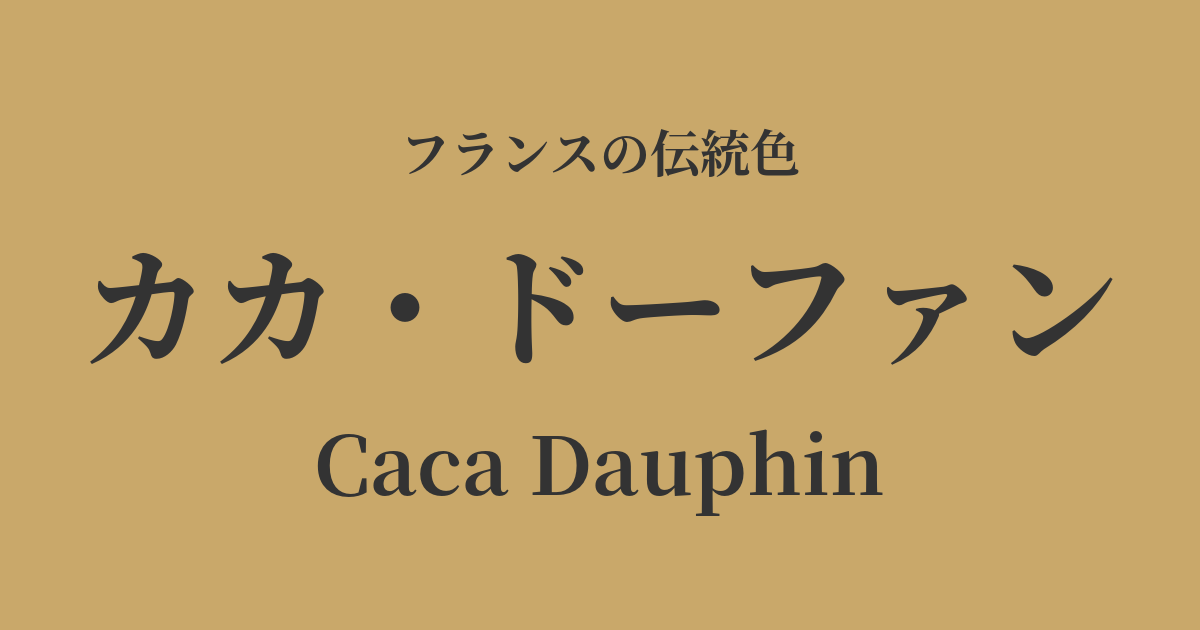
| French | Caca Dauphin |
|---|---|
| Katakana | Kaka Dofan |
| HEX | #C9A86A |
| RGB | 201, 168, 106 |
What is Caca Dauphin? Origin and Etymology
"Caca Dauphin" is a very unique color name, spelled "Caca Dauphin" in French and literally meaning "Crown Prince's poop."
The origin of this name is said to be related to an event that occurred in 1781 when Louis XVI and Marie Antoinette's long-awaited eldest son, Crown Prince Louis-Joseph-Xavier François, was born. The famous anecdote tells of Marie Antoinette seeing the yellowish-brown color of the newborn crown prince's diaper and calling the color "caca dauphin," which she then popularized as a new fashionable color at court.
This episode conveys the unique sensibilities, humor, and enthusiastic celebratory mood surrounding the birth of an heir at the Palace of Versailles at that time.
The historical background of Kaka Dauphin
The Caca Dauphin style was popular in the late 18th century, during the Bourbon dynasty just before the French Revolution, a time when Rococo culture was at its peak. The fashion leader of this era was none other than Queen Marie Antoinette. The colors of the dresses and ribbons she wore were quickly imitated by the nobility at the Palace of Versailles and became fashionable throughout Paris.
The Caca Dauphin was one such example; the queen was so fond of the color that women of the court all had dresses made in this yellowish-brown hue. This trend with its unusual name is sometimes seen as symbolic of the hedonistic, and at times decadent, culture of the aristocratic society before the revolution.
The way in which a national celebration such as the birth of a long-awaited heir was incorporated into fashion in this manner is an interesting example that speaks to the unique characteristics of French court culture at the time.
Kaka Dauphin in the world of art and fashion
The Caca Dauphin is deeply connected to the color sensibilities of late Rococo art. During this period, painters such as Elisabeth-Louise Vigée-Le Brun painted portraits of many nobles, including Marie Antoinette. In their works, one can find silk dresses with a yellowish-brown or gold sheen reminiscent of the Caca Dauphin.
In the fields of fashion and textiles, this fashionable color was quickly adopted in Lyon, the center of the silk weaving industry at the time, and it is believed to have been produced as luxurious damask and brocade (patterned velvet). The Caca Dauphin, expressed on lustrous silk fabric, created shadows depending on how the light hit it, making its colors appear even richer.
This color was used not only in dresses, but also in interior design elements such as wall coverings, chair upholstery, and curtains, becoming an important element in creating the luxurious and elegant spaces of the Rococo style.
Color scheme preview
This is to check the readability of the text when this color is used as the background.
Kaka Dauphin's color scheme proposal
Rose Pompadour (#D48E9F)
By combining two colors that symbolize the Rococo era, it creates a sweet, elegant, and sophisticated impression reminiscent of Marie Antoinette's court.
Blue Roi (#2A5883)
The gold-toned Caca Dauphin and the royal blue Bleu Roi complement each other's colors, creating a dignified, majestic, and classic impression.
Gris de Lignan (#DED7C8)
The muted gray of the linen elegantly softens the yellowish tones of the Caca Dauphin fabric, creating a natural, modern, calm, and chic atmosphere.
Practical Scenes
In interior design, incorporating Caca Dauphin as an accent in wallpaper, curtains, or cushions adds warmth and classic depth to a space. It pairs particularly well with antique-style furniture and gold ornaments.
In fashion, using glossy materials like silk and satin in dresses and blouses creates a very elegant impression. Additionally, incorporating them into accessories such as scarves and bags can add a sophisticated accent to an outfit.
In web and graphic design, using this color as a background or key color creates a design that evokes a sense of luxury and historical narrative. It is suitable for luxury brand websites and content related to history and art.