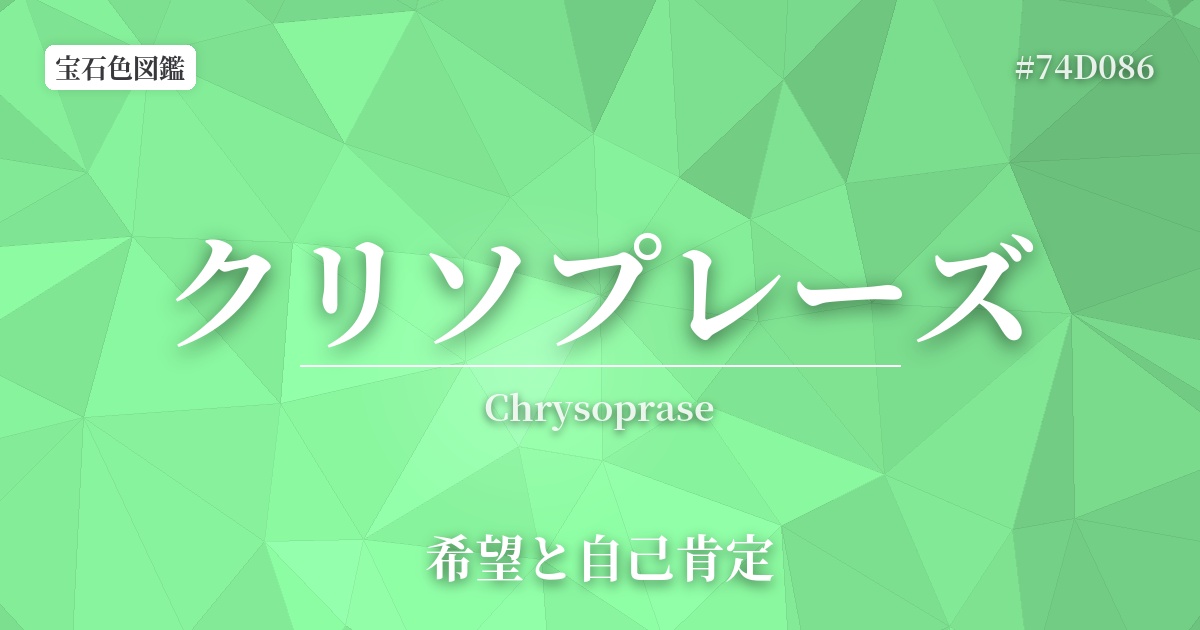
| English name | Chrysoprase |
|---|---|
| Katakana | Chrysoprase |
| HEX | #74D086 |
| RGB | 116, 208, 134 |
| Mineralogy | Oxide minerals |
What is chrysoprase? Origin and mineralogy
The name chrysoprase comes from the Greek words "chrysos," meaning "gold," and "prason," meaning "leek." As the name suggests, it is a gemstone characterized by its vibrant and beautiful green color, reminiscent of leek leaves.
Mineralogically, chrysoprase is classified as a type of chalcedony, which is composed of fine quartz crystals. Its attractive apple-green color is due to trace amounts of nickel contained within the mineral. Other green chalcedony varieties whose color is caused by chromium are called "chromium chalcedony" and are distinguished from chrysoprase.
Australia is world-renowned as a major source of chrysoprase, known for producing high-quality specimens. Chrysoprase mined in Queensland, in particular, is sometimes called "Australian Jade," but mineralogically it is completely different from jadeite. Chrysoprase is also found in various other parts of the world, including Poland, Germany, Russia, the United States, and Brazil.
The history and culture of chrysoprase
Chrysoprase has a long history, known to people since the time of ancient Greece and Rome, and has been used in jewelry and carvings such as cameos. According to one account, Alexander the Great of Macedon always wore chrysoprase as a talisman to bring him victory during his campaigns.
Chrysoprase remained popular in medieval Europe, and was used in church decorations and religious artifacts. In particular, in the 18th century, Frederick the Great of Prussia is known to have been very fond of this gemstone. The king used chrysoprase extensively in the decoration of his summer palace, Sanssouci Palace, in Potsdam. Its beautiful green color harmonizes beautifully with the palace's magnificent Rococo interior.
Chrysoprase was also very popular in Victorian England. Many pieces of jewelry from that era featured chrysoprase set with diamonds and pearls, suggesting that its refreshing color captivated people's hearts.
Chrysoprase and color psychology
The vibrant green of chrysoprase evokes images of fresh spring leaves and abundant nature, bringing hope and vitality to the viewer's heart. In color psychology, green is considered a symbol of harmony, growth, and healing, and is expected to have the effect of balancing mind and body and relieving stress.
As a power stone, chrysoprase is known as the stone of "hope and self-affirmation." It is said to bring out the wearer's hidden talents and abilities, and give them the courage to move forward towards their dreams and goals. It is also believed to soothe anxiety and impatience, help recover from emotional distress, and thereby enhance self-esteem and bring about an optimistic perspective.
Color scheme preview
This is to check the readability of the text when this color is used as the background.
Chrysoprase color scheme proposal
Antique White (#FAEBD7)
The soft white of the antique white gently complements the vibrant green of the chrysoprase, creating a natural and elegant impression. This combination is perfect for creating an organic and comfortable space.
Saddle Brown (#8B4513)
The deep saddle brown adds stability and sophistication to the youthful green of chrysoprase. This combination of earth tones is recommended when you want to create a calm and refined impression.
Rosy Brown (#BC8F8F)
The muted pink of rosy brown is almost complementary to the green of chrysoprase, making each color appear more vibrant. This color scheme gives a modern, slightly bold, and playful impression.
Practical Scenes
In jewelry design, chrysoprase is almost always cut into a cabochon shape with a smoothly polished surface to maximize its beautiful color. When paired with gold, it creates a glamorous and classic impression, while when paired with silver, it creates a modern and refreshing impression, making it enjoyable in a wide range of items such as rings, necklaces, and earrings.
In interior design, incorporating the color of chrysoprase into small items such as cushions, curtains, and artwork brings a fresh accent and a sense of vitality to the space. It pairs particularly well with wooden furniture and houseplants, helping to create a natural and relaxing atmosphere.
In website and graphic design, this color is perfect for brands dealing with themes such as wellness, eco-friendliness, and organic products. Used as a main color, it conveys approachability, while used as an accent color, it gives users a positive and reassuring impression.