
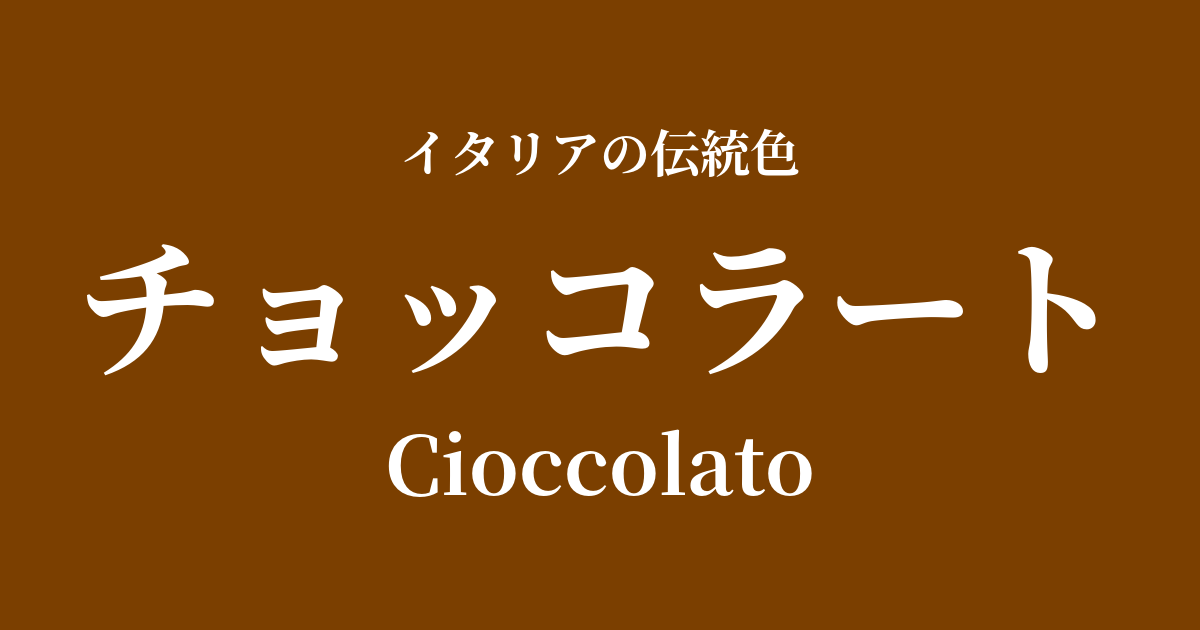
| Italian original name | Cioccolato |
|---|---|
| Japanese notation | Cioccolato |
| HEX | #7B3F00 |
| RGB | 123, 63, 0 |
What is Cioccolato? Origin and Etymology
Cioccolato is an Italian color name meaning "chocolate." As the name suggests, it refers to a deep, reddish-brown color reminiscent of rich, bitter dark chocolate.
The origin of this color can be traced back to the Aztec Nahuatl word "xocolātl," which is a combination of "xococ" (bitter) and "ātl" (water), and referred to a drink made from cocoa beans.
When cocoa beans were introduced to Europe in the 16th century, they were initially used as medicine, and later became a luxurious drink enjoyed by royalty and nobility. The color name cioccolato derives from the noble and sweet color of chocolate, symbolizing richness, comforting warmth, and refined adult indulgence.
Historical background of Cioccolato
The history of chocolate in Italy is said to have begun in the late 16th and early 17th centuries, through the influence of Spain on Naples, Sicily, and the Medici family in Florence.
Turin, a city in northern Italy, played a central role in the development of chocolate culture from the 17th century onward. It was beloved by the court of the House of Savoy, where artisans honed their skills, and it is also known as the place where the world's first solid chocolate was created. This city's history imbues the color cioccolato with a deep narrative.
Chocolate was also extremely popular in Venice, where it was a favorite drink alongside coffee in street cafes. In the 18th century, it became an essential part of the lifestyle of the wealthy in Italy, and its color was a symbol of wealth and social status.
Cioccolato in Italian Culture and Art
In Italian painting from the late Renaissance to the Baroque period, deep, rich browns like cioccolato were used to create dramatic contrasts of light and shadow. In particular, in Caravaggio's "chiaroscuro" (light and shadow technique), these dark colors were essential for expressing the three-dimensionality and emotional depth of figures. As pigments, amber and sienna, made from natural earth, are close to this shade.
In the fields of architecture and interior design, this color is found in the opulent wood carvings and furniture found in Baroque churches and palaces. The rich hues of high-quality woods such as walnut and mahogany bring a warmth and elegance to the space that is reminiscent of cioccolato.
Even today, this color remains indispensable in iconic Italian fashion and crafts. The deep brown found in traditional Florentine leather goods such as bags, shoes, and belts symbolizes a timeless, classic beauty that never fades with age.
Color scheme preview
This is to check the readability of the text when this color is used as the background.
Choccolato's color scheme proposal
Avori (#FFFFF0)
The contrast between rich chocolate and soft ivory creates an elegant and classic atmosphere. It brings brightness and depth to the space, giving it an elegant, calm, and sophisticated impression.
Verde Oliva (#808000)
The warmth of the cioccolato and the natural hues of the olive green harmonize to create a calming earth-tone combination reminiscent of the Italian countryside. It creates a natural, sophisticated, and relaxing space.
Arancio (#FFA500)
The combination of deep chocolate and vibrant arancio (orange) creates a warm and energetic impression. Like the combination of Sicilian oranges and chocolate, it's a rich and appealing color scheme.
Practical Scenes
In interior design, cioccolato is a color that adds warmth and a sense of depth to a space. Incorporating it into accent walls in the living room, leather sofas, or wooden furniture can create a calm and luxurious atmosphere. Combining it with ivory or beige results in a modern and sophisticated look.
In fashion, this color is particularly appealing in autumn and winter outfits. Incorporating it into wool or cashmere coats, leather jackets, or boots adds depth and sophistication to your look. As a timeless color that transcends trends, it's perfect for high-quality items that you'll cherish for years to come.
In web and graphic design, using this color for backgrounds, footers, buttons, etc., brings a sense of stability and trustworthiness to the entire site. It is particularly effective when you want to convey high quality or history, such as for luxury food products, traditional crafts, or menswear brands.