
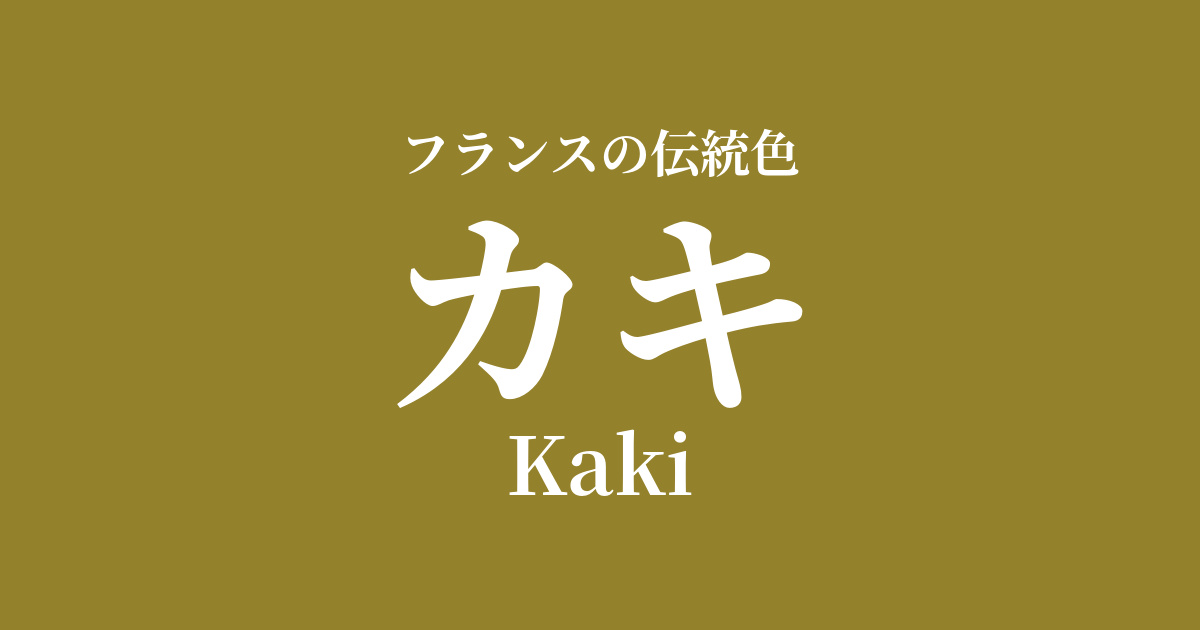
| French | Kaki |
|---|---|
| Katakana | oyster |
| HEX | #94812b |
| RGB | 148, 129, 43 |
What is a oyster? Origin and etymology
The traditional French color "Kaki" might evoke the Japanese fruit "kaki" (persimmon) from its name, but its origin is completely different. The word for this color comes from the Persian word "khāk," which means "earth" or "dust."
The origin of "khaki" is said to date back to the mid-19th century, when British troops stationed in India began wearing uniforms dyed with local dust. This dusty color proved to be an excellent protective color (camouflage) for hiding from the enemy in deserts and arid regions.
This practical color spread to France and became established as "Kaki," its French spelling. In other words, persimmon color is the color of the earth itself, a color born from the wisdom of blending into the natural environment.
Historical background of oysters
The color oyster yellow first appeared in French history during the colonial era of the late 19th century. Following the British army, the French army also actively adopted this color for the uniforms of troops stationed in overseas territories such as North Africa and Indochina.
The French military uniform at the time was very conspicuous, consisting of a bright blue jacket known as the "Grand Bleu" and red trousers. This was intended to boost soldier morale and showcase splendor, but as weaponry modernized, its drawback as an easy target on the battlefield became apparent.
With the outbreak of World War I, this problem became even more serious, and the French army changed the color of their uniforms to the less conspicuous "Blue Horizon" (horizon blue). On the other hand, the Foreign Legion and colonial troops, fighting in harsh environments, continued to widely use the oak-colored uniform, which was excellent as camouflage.
Eventually, the oak color spread throughout the world as the standard color for military uniforms, becoming a symbol of "military colors." While closely linked to the history of war, this color, born from its functionality and rationality, would later have a significant influence on fashion in peaceful times.
Kaki in the world of art and fashion
Originally a military color, oyster pepper spread to the world of fashion in the 20th century due to its functional beauty. In particular, it became a key color in the "safari look" worn by adventurers and explorers, sparking people's admiration.
The decisive factor in this trend was the safari jacket introduced by designer Yves Saint Laurent in 1967. He elevated the color oak from a mere practical color to a sophisticated, fashionable one. As a result, oak established itself as a modern and chic color, symbolizing independent women and intelligent men.
In the world of art, the color persimmon can be found in Orientalist paintings depicting desert landscapes and realistic works with war themes. As the color of the earth, persimmon was an important color for painters pursuing realism, giving depth and a sense of reality to landscapes and figures.
In modern times, earth tones are a quintessential choice and an indispensable color in textiles and interior design. Their calming hues are loved by many as a symbol of harmony with nature and a sustainable lifestyle.
Color scheme preview
This is to check the readability of the text when this color is used as the background.
Color scheme proposal for oysters
Blue Natier (#29598D)
The earthy warmth of the persimmon color and the intelligent, calming blue of Blue Natier complement each other perfectly. This color scheme creates a sophisticated, mature atmosphere that is both classic and modern.
Champagne (#F7E7CE)
Both are combinations of natural colors derived from nature. They bring brightness and softness to the space, creating a very elegant, relaxed, and tranquil impression.
Rouge Grenat (#8B2634)
The calm, oyster-like hue, combined with a deep, garnet-like red, creates a passionate and dramatic impression. It's perfect as an accent piece for fashion or interior design.
Practical Scenes
Oyster is a very versatile color that works well in a variety of situations.
In fashion, it enjoys unwavering popularity as a staple color for items like trench coats, chinos, and cargo pants. It works well with military and workwear styles, and adding it to more refined outfits creates a sophisticated look. It also pairs exceptionally well with basic colors like white, black, and navy.
In interior design, using it on large areas such as wallpaper, sofas, and curtains can create a calm and relaxing space. Combining it with natural materials such as wooden furniture, houseplants, and linen is particularly beautiful, creating a natural and comfortable atmosphere.
In web and graphic design, using this color as a background can convey a sense of reliability, stability, and an organic image. It is suitable for outdoor brands, natural cosmetics, and lifestyle content.