
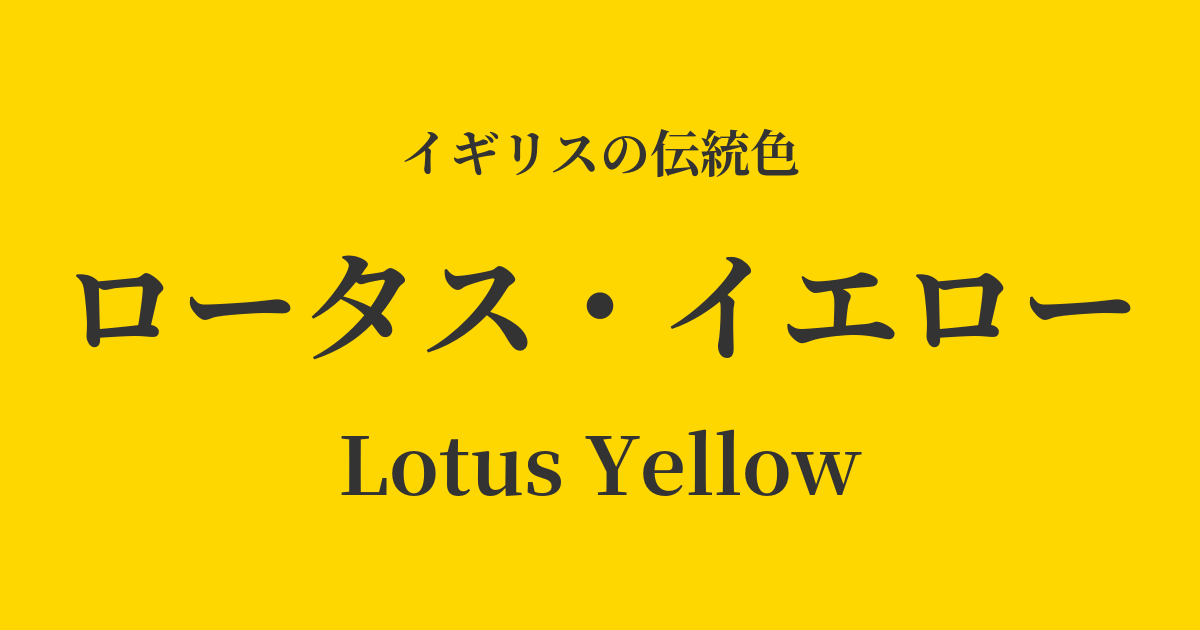
| Original English name | Lotus Yellow |
|---|---|
| Japanese notation | Lotus Yellow |
| HEX | #FFD700 |
| RGB | 255, 215, 0 |
What is Lotus Yellow? Origin and Etymology
Lotus Yellow, as the name suggests, is a color derived from Lotus Cars, the legendary British sports car and racing car manufacturer.
This vibrant yellow became world-famous when it was adopted by Team Lotus, the F1 team led by founder Colin Chapman, for the racing car livery. With its unparalleled visibility on the racetrack, this color is deeply intertwined with the brand's identity, symbolizing speed, innovation, and a passion for victory.
The brand name "Lotus" means lotus flower, but it is believed that this yellow color was chosen not so much because it directly derives from the color of the lotus flower, but rather to represent the functionality in racing and the brand's progressive image.
The historical background of Lotus Yellow
The history of Lotus Yellow is inextricably linked to the golden age of motorsport in Britain in the mid-20th century. After World War II, many backyard builders emerged in Britain, and motorsport became a national pastime. Amidst this, Lotus quickly rose to prominence with its lightweight and innovative design philosophy.
In the 1960s, it was customary for F1 cars to be painted in national colors (colors designated by each country), with "British Racing Green" being a prime example for Britain. However, once commercial sponsorship was permitted, teams began to seek more eye-catching, unique liveries.
Team Lotus also adopted sponsor colors, but this vibrant yellow, separate from the tradition of national colors, became a color that represented the team's identity and was carried over to subsequent production cars. It is a color that symbolizes Lotus's glorious racing lineage.
Lotus Yellow in British Culture
Lotus Yellow is an indispensable color when discussing British motorsport culture. While British Racing Green symbolizes the nation's traditions, Lotus Yellow symbolizes the innovation and victories of specific teams, and both are respected, albeit in contrast. At historic events like the Goodwood Festival of Speed, cars in this color still race, thrilling the hearts of many fans.
In the automotive industry, this color has long been a beloved and iconic body color for Lotus's production sports cars, particularly the "Elise" and "Exige." Choosing this color is not merely a matter of personal preference; it is sometimes seen as synonymous with owning a part of Lotus's racing history and philosophy.
Furthermore, in the world of motorsport-inspired fashion, this color is used as an accent on racing jackets and driving gloves, creating an active and sporty style.
Color scheme preview
This is to check the readability of the text when this color is used as the background.
Lotus Yellow color scheme proposal
British Racing Green (#004225)
This is a combination of two colors that represent British motorsport. The lively feel of Lotus Yellow and the traditional, calm atmosphere of green complement each other, creating a classic yet sporty impression.
Royal Blue (#002366)
The vibrant yellow and deep blue are almost complementary colors, enhancing each other's presence. This creates a modern, sophisticated, and powerful contrast, resulting in a visually impactful combination.
Oxford Blue (#002147)
The vibrancy of the yellow is further enhanced when paired with Oxford Blue, a very deep navy. This color scheme creates an intelligent and refined impression while also conveying a sense of playfulness and energy.
Practical Scenes
In the world of fashion, yellow is ideal as an accent color that takes center stage in an outfit. Simply incorporating it into a jacket, sneakers, or bag instantly brightens the overall look and creates a more energetic feel. The vibrancy of yellow is especially striking when combined with basic colors like navy, gray, and black.
In interior design, it works well as an accent color that brings energy and fun to a space. It's recommended to incorporate it through small items such as cushion covers, art panels, and lighting fixtures. Adding it to modern furniture or minimalist spaces can create a sophisticated yet playful interior.
In website and graphic design, its high visibility makes it effective when used for buttons, icons, and headings that you want to draw attention to. It's suitable for designs that capture the user's eye and create an active and dynamic impression.