
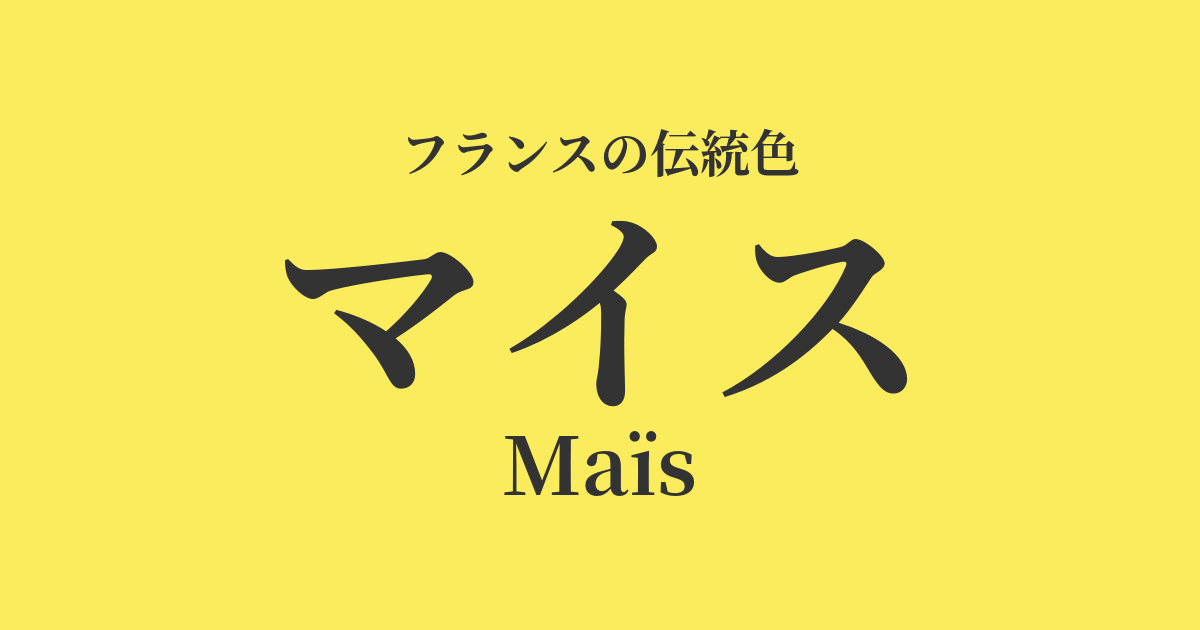
| French | Maïs |
|---|---|
| Katakana | Mys |
| HEX | #fbec5d |
| RGB | 251, 236, 93 |
What is "Maisu"? Origin and etymology
"Maïs" is a French word meaning "corn." As the name suggests, the color comes from the golden hues of ripe corn kernels that have been bathed in sunlight.
Maize is a crop originally from the New World, brought to Europe during the Age of Discovery in the 16th century. When it first arrived in France, it was cultivated as an ornamental plant in royal gardens due to its rarity, but it gradually became deeply rooted in the food culture of all of France, especially in the warmer southern France, as a food source and livestock feed.
Against this backdrop, the color of Maize has become not just yellow, but a warm and vibrant color that symbolizes abundant harvests, the joy of the harvest, and the cheerful sun of southern France, and has become beloved by people.
The historical background of Meiss
The appearance of the color maize in French culture is deeply connected to the spread of corn. After being introduced in the 16th century, corn cultivation expanded in the 18th century, particularly under the physiocracy promoted during the reign of Louis XV, becoming an important crop, especially in southwestern France. From this period onward, its golden hue became one of the common colors that adorned the French countryside.
During the "Belle Époque" (the beautiful era) from the late 19th to the early 20th century, society as a whole was enveloped in an optimistic mood, and bright, cheerful colors like Mais were favored in the world of fashion, posters, and decorative arts. In particular, traditional textiles and ceramics from the Provence region of southern France frequently used Mais colors, which seem to reflect the strong sunlight of the region, and along with olive green and lavender purple, they have become established as colors that symbolize the region's identity.
Mies in the world of art and fashion
In the world of art, one of the painters who most loved the powerful yellow reminiscent of Meiss was Vincent van Gogh. The landscapes of Arles in southern France, where he spent his later years, had a decisive influence on his sense of color. The radiant yellow frequently used in his masterpieces such as "Sunflowers," "The Yellow House," and "The Sower" seems to express the very vitality and energy of the sun that Meiss's color embodies.
In the fields of fashion and textiles, maize is an indispensable color. In particular, in traditional Southern French printed fabrics such as "Indienne" and "Provençal prints," this warm yellow is effectively used in designs featuring the sun, sunflowers, and cornfields. Even today, when Southern French resort style is featured as a theme in spring/summer collections, maize is chosen as the color for linen and cotton dresses and blouses, creating a fresh and cheerful atmosphere.
Yellow, oh, what a beautiful yellow!
Color scheme preview
This is to check the readability of the text when this color is used as the background.
MICE's color scheme proposal
Blue Lavande (#9683ec)
This symbolic color scheme evokes the lavender fields and sunshine of Provence in southern France. The warmth of Maize and the coolness of Lavande complement each other, creating a refreshing and pleasant contrast.
Veil Olive (#556b2f)
When combined with a muted green reminiscent of olive leaves, it creates a very natural and calming impression. This combination of gentle and sophisticated earth tones evokes the rich natural beauty of southern France.
Rouge Coquelicot (#c62d3f)
The combination with the vibrant red of poppies blooming in the field is a bold color scheme brimming with vitality, reminiscent of Van Gogh's paintings. It can strongly convey a passionate, lively, and positive impression.
Practical Scenes
In interior design, Mise is an ideal color for bringing warmth and brightness to a space. Using it as an accent wall in the living room or kitchen, or incorporating it through fabrics like cushions, curtains, or rugs, will instantly create a cheerful and cozy atmosphere throughout the room. It pairs particularly well with natural wooden furniture such as oak and pine.
In fashion, this color is used to brighten the complexion and create a friendly impression. It's effective not only when boldly incorporated into dresses and skirts, but also when used as an accent color in accessories such as bags, scarves, and shoes. Pairing it with basic colors like navy, white, and beige highlights the vibrancy of the color, resulting in a sophisticated look.
In web and graphic design, it is an effective accent color that attracts user attention and evokes positive emotions. It is particularly effective in building brand images for food, agriculture, travel, and lifestyle-related industries, conveying a sense of richness and enjoyment.