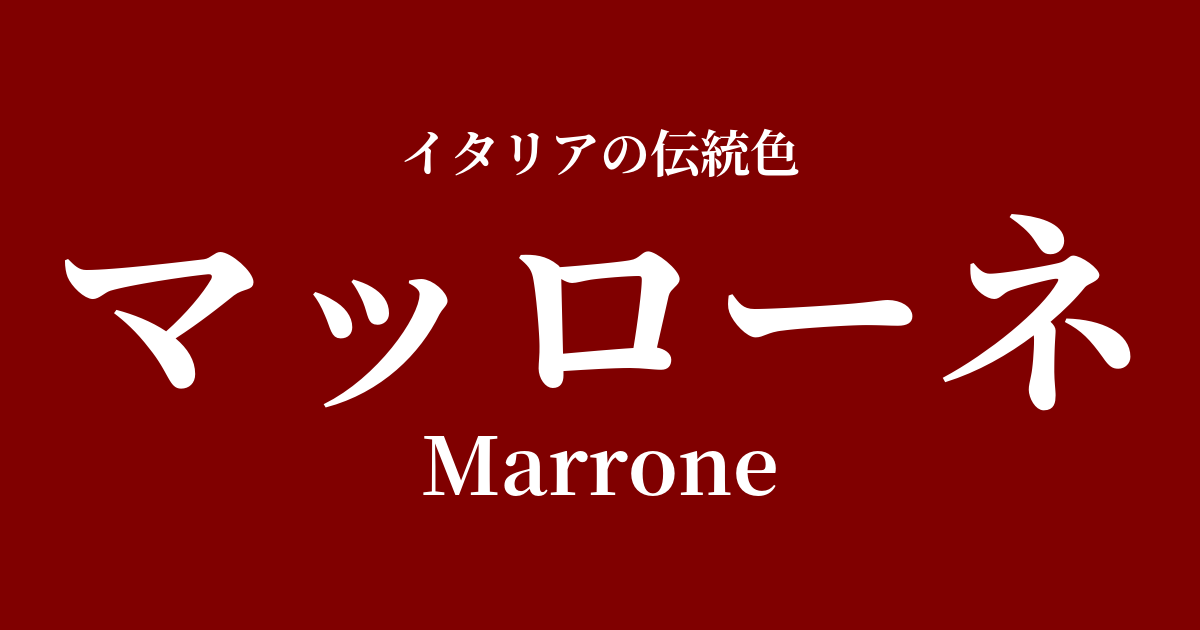
| Italian original name | Marrone |
|---|---|
| Japanese notation | Marrone |
| HEX | #800000 |
| RGB | 128, 0, 0 |
What is Marrone? Origin and Etymology
Marrone is a color name derived from the Italian word for "chestnut," especially referring to large, high-quality chestnuts. As the name suggests, it represents the glossy, deep reddish-brown color of chestnuts that ripen in autumn.
This color strongly evokes Italy's rich natural beauty, especially the autumn harvest season. It's a color found in nature—earth, tree trunks, fallen leaves—and has long evoked feelings of stability, warmth, and abundance. Marrone's charm lies in its simplicity, yet it possesses an inner strength and warmth.
Historical background of Marrone
Reddish-brown colors like marrone have a long history in Italy. In ancient Roman times, as seen in the frescoes of Pompeii, natural pigments derived from the earth (ochre and sienna, which are mainly composed of iron oxide) were widely used and were one of the basic colors that adorned architecture and art.
From the Middle Ages to the Renaissance, this color sometimes carried religious significance. In particular, Franciscan monks, who valued poverty, wore simple clothing made of undyed wool or earth-toned browns, and marrone was sometimes considered one of their symbolic colors. In painting, it was an essential color for depicting the clothing of saints, the earth, and the shading of human skin.
Marrone in Italian Culture and Art
In Renaissance art, particularly Baroque painting, deep browns like marrone were used to create dramatic effects. Caravaggio, who excelled at the chiaroscuro technique that emphasizes the contrast between light and shadow, used this color against a dark background to make figures and subjects stand out dramatically.
In the fields of architecture and crafts, walnut wood is deeply ingrained in the Italian landscape and lifestyle, appearing in the terracotta tiles found on the roofs of traditional Tuscan houses and in the rich, heavy furniture made from walnut.
Marrone remains a classic color in contemporary fashion. When used in high-quality leather goods such as shoes, bags, and belts, it creates a classic, sophisticated, and timelessly appealing style.
Color scheme preview
This is to check the readability of the text when this color is used as the background.
Marrone's color scheme proposal
Giallo Napoli (#FADA5E)
The addition of the bright and soft Giallo Napoli to the mellow Marrone creates a warm and classic atmosphere. It gives a calm and refined impression reminiscent of an autumn landscape.
Verde Oliva (#808000)
Marrone, the color of the earth, and Verde Oliva, symbolizing the olive tree, are earth tones that evoke the nature of Italy. They create a deep impression where tranquility and vitality coexist.
Avori (#FFFFF0)
The combination of deep marrone and warm white avorio creates a beautiful contrast, resulting in an elegant and luxurious space. The colors complement each other, giving a refined impression.
Practical Scenes
In interior design, marrone wood brings a sense of weight and tranquility to a space. Incorporating it into walnut furniture, leather sofas, or as an accent wall creates a sophisticated atmosphere in a study or living room. Adding it through fabrics such as rugs and cushions can further enhance the warmth of the space.
In fashion, this color adds depth to autumn and winter outfits. Incorporating it into leather jackets, boots, or wool coats creates an intelligent and classic look. Even adding just one accessory in this color tightens the overall impression and creates a refined look.
In web and graphic design, it's effective when you want to convey reliability, tradition, and a sense of luxury. Using it as a background or accent color on websites showcasing historical brands or products that utilize craftsmanship can enhance the persuasiveness of the content.