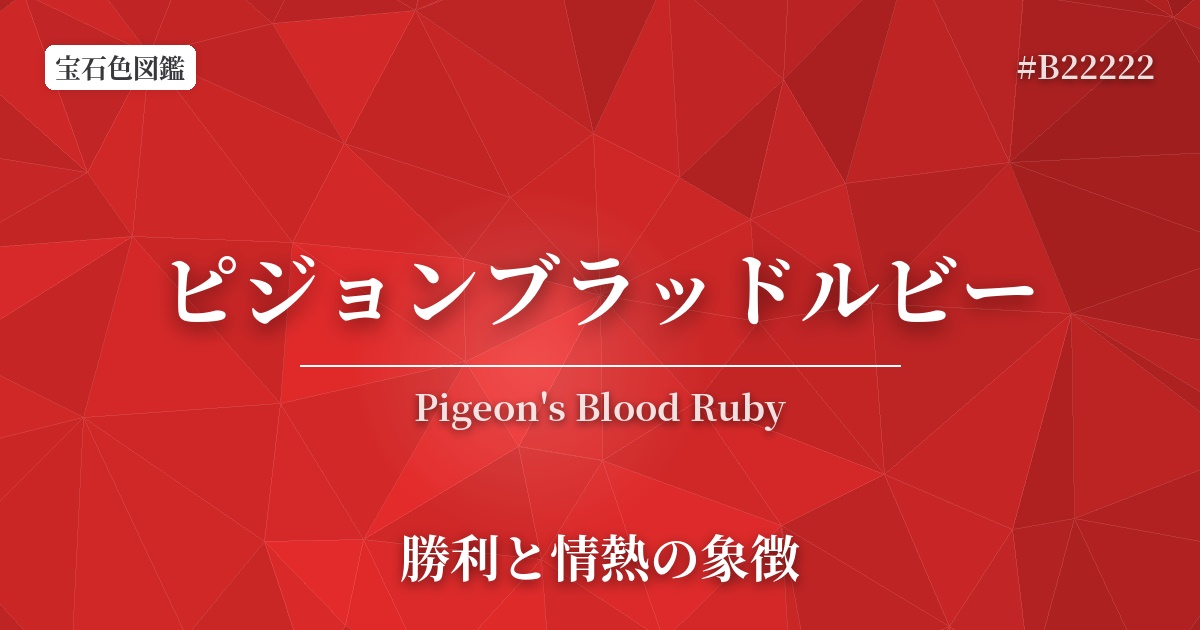
| English name | Pigeon's Blood Ruby |
|---|---|
| Katakana | Pigeon Blood Ruby |
| HEX | #B22222 |
| RGB | 178, 34, 34 |
| Mineralogy | Oxide minerals |
What is a pigeon's blood ruby? Origin and mineralogy.
Pigeon's Blood Ruby is a special designation given only to rubies recognized as being of the highest quality. Its name originates from the fact that in Myanmar (formerly Burma), it was likened to the vivid color of freshly slaughtered pigeon blood. It is characterized by a deep, powerful red color with a slight bluish tint.
From a mineralogical perspective, pigeon blood ruby is a type of mineral called corundum. This mineral, which is composed of aluminum oxide, has a fiery red color due to the inclusion of trace amounts of chromium. With a Mohs hardness of 9, it boasts a hardness second only to diamond, making it not only beautiful but also highly durable.
Historically, the most famous source of rubies is the Mogok region of Myanmar, but in recent years, high-quality rubies, often referred to as "pigeon's blood," have also been produced in Mozambique and Vietnam. The subtle differences in color depending on the source are one of the gemstone's profound charms.
The history and culture of pigeon blood rubies
Rubies have been revered as the "king of gemstones" since ancient times, and among them, pigeon's blood rubies held a special place in the world. In ancient India, they were believed to grant invincible power to their owners and were highly prized as amulets by royalty and warriors.
Its passionate color captivated European royalty and nobility, and it adorned many crowns and symbols of authority. The "Timur Ruby," owned by the British royal family, is particularly famous, although it was later discovered to be a red spinel, not a ruby. Thus, its beauty was once so striking that it was sometimes confused with high-quality red spinel.
In Asian cultures, pigeon blood rubies are believed to ward off evil and bring good fortune. They have a history of being treated not merely as ornaments, but as special objects imbued with people's faith and wishes.
Pigeon Blood Ruby and Color Psychology
The vibrant red of pigeon blood symbolizes energy, passion, and vitality in color psychology. It is said to raise the viewer's heart rate, stimulate excitement and vitality, and is a color that attracts attention and boosts confidence.
As a power stone, pigeon blood ruby is considered a "symbol of victory and passion." It is believed to awaken the passion dormant within the wearer, granting courage and an indomitable spirit to face difficulties. It will strongly support those who strongly desire to achieve their goals in love and work. It is also said to enhance charisma and help in demonstrating leadership.
Color scheme preview
This is to check the readability of the text when this color is used as the background.
Pigeon Blood Ruby Color Scheme Proposal
Gold (#FFD700)
The deep red of pigeon blood and the gleam of gold create a luxurious and dignified impression reminiscent of royal jewelry. It is perfect for special occasions and sophisticated designs.
Charcoal (#36454F)
The muted charcoal tone complements the vibrant red of pigeon blood, creating a modern and sophisticated look. Recommended for those who want to project an urban and stylish image.
Ivory (#FFFFF0)
The warm white of ivory softens the intensity of pigeon blood, creating an elegant and feminine impression. This color scheme adds a refined touch of glamour to weddings and formal occasions.
Practical Scenes
In the world of jewelry, pigeon blood rubies are immensely popular as special gemstones that adorn life's milestones, such as engagement rings and anniversary gifts. When paired with gold, they create a glamorous look, while when paired with platinum, they give off a noble and modern impression.
In fashion, incorporating this color as an accent in dresses, scarves, bags, etc., can add a passionate and dramatic touch to the entire outfit. The red stands out even more when paired with monochrome outfits such as black or white.
In interior design, using pigeon blood in cushion covers, artwork, and rugs brings energy and a sense of luxury to a space. Adding it as an accent in a living room or study creates a refined and sophisticated impression.
In website and graphic design, using this eye-catching red for call-to-action (CTA) buttons and important headings can effectively attract user attention and encourage action. However, overuse can create a sense of pressure, so using it strategically is more effective.