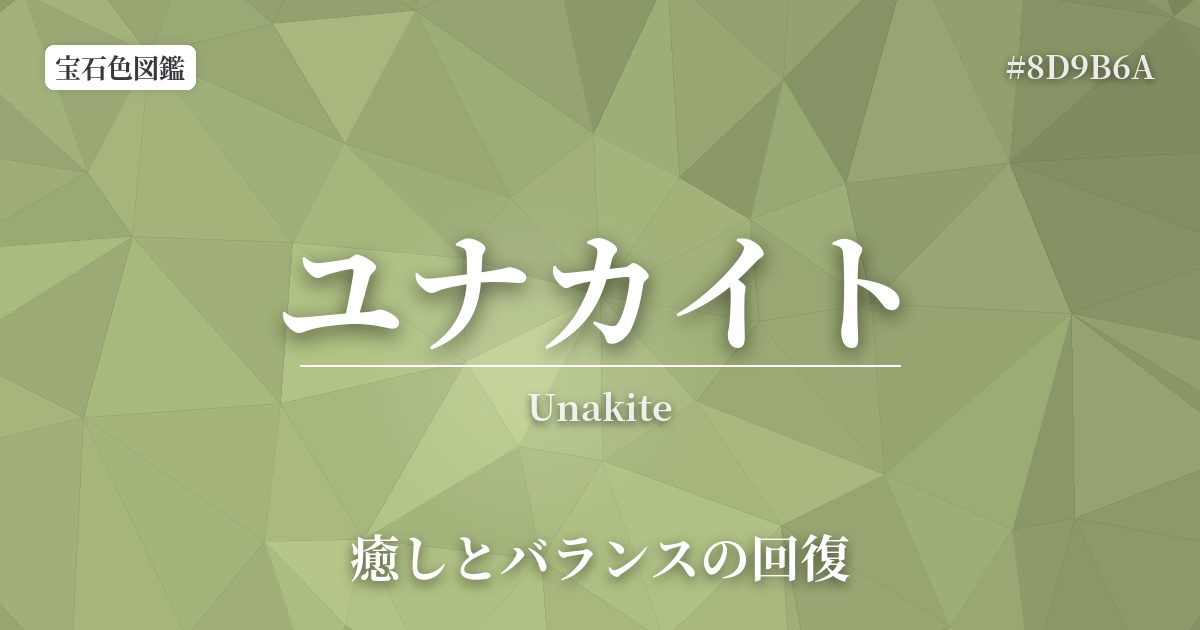
| English name | Unaccount |
|---|---|
| Katakana | Unakaito |
| HEX | #8D9B6A |
| RGB | 141, 155, 106 |
| Mineralogy | rock |
What is Unakite? Origin and Mineralogy
The name Unakite originates from the Unaka Mountains in North Carolina, USA, where the stone was first discovered in 1874. The name was chosen in honor of the place of its discovery.
Mineralogically, unakite is classified as a "rock" rather than a single mineral. It is mainly composed of a mixture of epidote (a muted green), orthoclase (a salmon pink to orange), and colorless or milky white quartz. Its greatest appeal lies in the fact that each piece has a unique pattern, as the ratio of these minerals determines the individuality of each specimen.
The main producing regions are North Carolina and Virginia in the United States, where it was discovered, but it is also found in various other parts of the world, including South Africa, Brazil, China, and Sierra Leone.
The history and culture of Unakite
Because unakite was discovered relatively recently, in the late 19th century, it does not have the long history of being found in the ruins of ancient civilizations. However, due to its unique beauty, it quickly gained attention as a decorative stone material after its discovery.
Initially, its beautiful patterns made it primarily used as building tiles, fireplace decorations, and sculpture material. In America, in particular, it is said to have gained popularity as a building material that incorporated the beauty of nature during the Arts and Crafts movement.
In the 20th century, unakite polished into a cabochon cut became widely popular as jewelry. Its gentle, earthy hues led to its use in various accessories such as pendants, bracelets, and earrings, and it remains a beloved gemstone today.
Unakite and Color Psychology
Unakite is known as a stone that symbolizes "healing and the restoration of balance." Its colors are said to have the power to deeply affect the mind.
The green parts evoke forests and young leaves, bringing peace and harmony to the mind. Meanwhile, the pink parts symbolize love and gentleness, and are believed to alleviate emotional tension. The combination of these two colors is thought to help balance the energy of both mind and body.
It is also called the "stone of hope for the future" because it encourages letting go of emotional wounds and negative feelings from past events, and supports the building of a mental foundation for moving forward positively. It will soothe your mind when you are experiencing extreme emotional ups and downs or when you are seeking emotional stability.
Color scheme preview
This is to check the readability of the text when this color is used as the background.
Color scheme proposal for Unakite
Sandy Brown (#F4A460)
The combination of Unakite's green and sandy brown creates a natural, warm, earthy color scheme. It's recommended for those who want to create an organic, calm, and relaxing space.
Rosy Brown (#BC8F8F)
This muted rose color enhances the pink elements present in unakite. It gives a gentle, calm, and slightly classic feel, creating a sophisticated and feminine impression.
Cream (#FFFDD0)
By combining it with a soft, bright cream color, the calm green of Unakite stands out, creating a sense of cleanliness and elegance. It is a natural yet sophisticated color scheme that gives a bright and gentle impression.
Practical Scenes
In jewelry design, unakite is almost always used in cabochon cuts to highlight its unique patterns. When used in large pendants or bangles, its painterly beauty truly shines. It pairs exceptionally well with natural and ethnic fashion styles.
In interior design, tumbled stones are perfect for bringing a sense of calm and warmth to a space. Simply placing tumbled stones in a glass container or adding spheres or pyramid-shaped objects will create a peaceful atmosphere in your room. They're also great for decorating the base of houseplants.
In website and graphic design, earth tones add depth to designs. They are particularly compatible with wellness, organic products, and lifestyle brands, and using them as background textures or accent colors can create a sense of security and trust.