
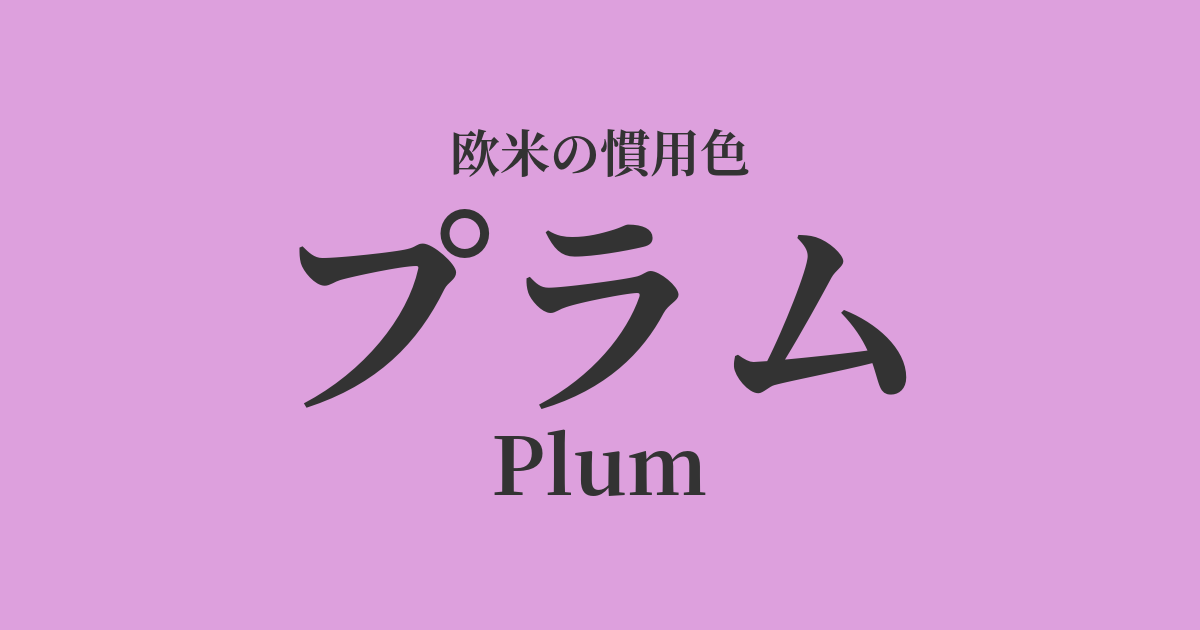
| Original English name | Plum |
|---|---|
| Japanese notation | plum |
| HEX | #DDA0DD |
| RGB | 221, 160, 221 |
What is a plum? Origin and etymology
As the name suggests, "plum" is a reddish-purple color derived from the color of the ripe skin of the fruit known as the European plum.
The English word "Plum" traces its origins back to the Old English word "plume," and then to the Latin word "prunum," meaning plum. It is said that "Plum" began to be used as a color name in the late 18th century.
This color combines the mystery and nobility of purple with the passion and vitality of red. Its hue, reminiscent of ripe fruit, evokes images of abundance, maturity, and sweetness.
The term "plum color" can refer to a wide range of shades, from bluish-purple to deep reddish-purple, just as the color of the fruit varies depending on the variety. Generally, it is recognized as a slightly brighter, reddish-purple, like #DDA0DD.
Plum's historical background and culture
Purple has historically been a very precious and expensive color. In ancient times, purple dye could only be extracted in very small quantities from certain types of seashells, so its use was limited to a select few privileged classes, such as royalty, emperors, and high-ranking clergy. For this reason, purple came to be a symbol of power, wealth, and nobility.
The plum color inherits the traditional image of purple, while also possessing a familiarity and warmth derived from the fruit.
With the invention of synthetic dyes in the mid-19th century, purple shades became cheaper to produce and spread to the general public. Especially during the Victorian era, deep, rich colors were favored, and plum was widely used in dresses, interior decorations, and accessories, attracting many people with its elegant charm.
Since the 20th century, plum has been incorporated into trends of each era and remains one of the colors that continues to be loved in the world of fashion and design.
Plum in design and art
In the world of fashion, plum is an elegant color that has been loved across generations. Especially in autumn/winter collections, it is used in coats, knitwear, and dresses, creating a sophisticated and mature atmosphere. When combined with high-quality materials such as velvet, silk, and cashmere, the depth and luxurious feel of the color are further enhanced.
Plum is a popular color in the cosmetics world as well. It's used in lipsticks, eyeshadows, and nail polishes, creating a mysterious and sensual look. It's also said to have a skin-toning effect, and many brands have released plum-toned items.
In interior design, it is used as a color to add a dramatic accent to a space. Incorporating it into one wall, sofa, curtains, or cushions brings a sense of calm and luxury to the entire room. It also pairs well with materials such as gold, brass, and marble, contributing to the creation of a modern and luxurious space.
That's a plum of a job.
Color scheme preview
This is to check the readability of the text when this color is used as the background.
Plum color scheme suggestion
Cream (#FFFDD0)
The vibrant color of plum is gently enveloped by the softness of cream. This color combination gives an elegant and feminine impression, and is recommended when you want to create a classic and calm atmosphere.
Sage Green (#B2AC88)
This natural and sophisticated combination evokes the fruits and leaves of nature. The colors complement each other, creating a calm and intellectual impression. It's perfect for creating an organic and comfortable space.
Charcoal Gray (#36454F)
The sweetness of the plum is balanced by the charcoal gray, creating a sophisticated and modern urban impression. This stylish and substantial color combination is an intelligent choice that suits both men and women.
Practical Scenes
If you want to incorporate plum into your fashion, it's a good idea to start with accessories such as scarves, bags, and shoes. It adds an elegant accent to your entire outfit, creating a more sophisticated look. It pairs well with basic colors like black, gray, and beige, giving your usual outfits a fresh feel.
Once you're comfortable with it, it's a great idea to try incorporating it into larger items such as knitwear, skirts, and dresses. In particular, using it in flowing blouses or high-quality knits will highlight the elegance of the plum color.
In interior design, plum is most effective when used as an accent color. Simply incorporating plum into cushions or rugs in the living room, or bedspreads in the bedroom, will bring depth and tranquility to the room.
An accent wall painted plum-colored on just one wall is a popular technique that adds depth to a space and creates a dramatic atmosphere. Combining it with gold photo frames and lighting fixtures will make the space even more luxurious.
In website and graphic design, plum is a suitable color when you want to convey a sense of luxury, reliability, and creativity. It is particularly effective for beauty-related, luxury brand, and art-related websites.
Since using it as a main color can often create a heavy, imposing impression, it's recommended to use it as an accent color for headings, buttons, icons, and so on. It stands out well against white or light gray backgrounds, attracting the user's attention.