
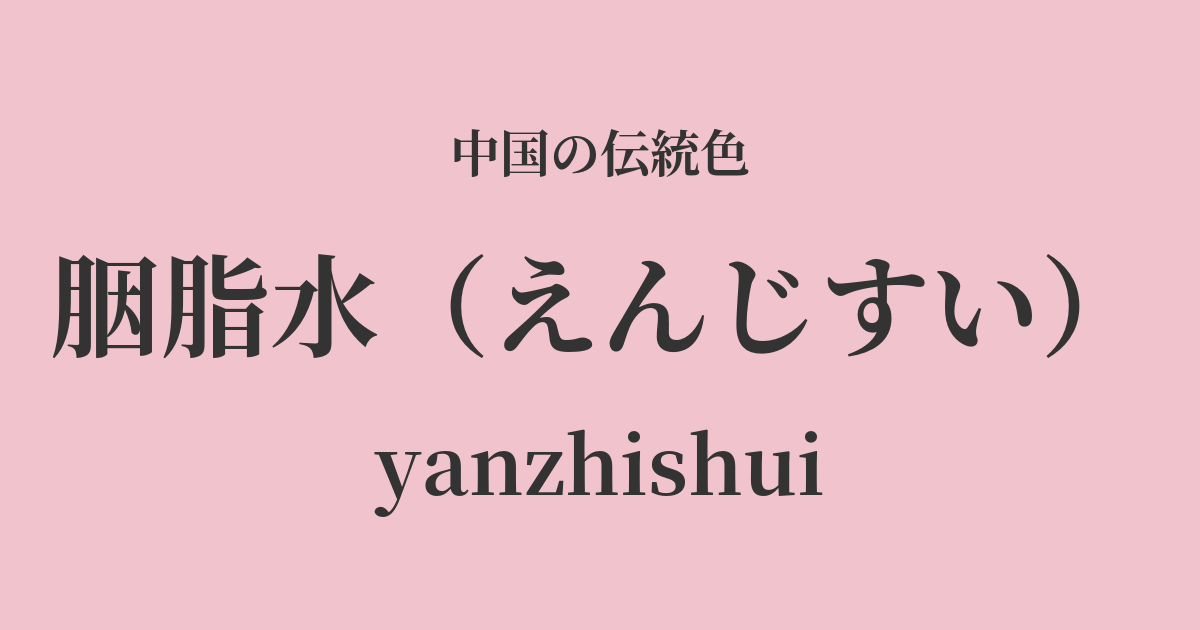
| Color name | hot oil water |
|---|---|
| reading | crimson water |
| pinyin | yanzhishui |
| HEX | #F1C4CD |
| RGB | 241, 196, 205 |
What is rouge water? Origin and etymology
"Enjisui" (胭脂水), as the name suggests, refers to a pale, delicate pink color, like that of "enji" (脙脂), an ancient cosmetic, dissolved in water.
"Enji" refers to a red pigment extracted from the petals of the safflower, which has been used since ancient times to color women's cheeks and lips. Rather than the vibrant red itself, the name captures the soft, translucent hue that results when it is diluted with water, making it a very poetic color name.
This color is a makeup shade that gives a woman's skin a natural flush and elegance, symbolizing a refined beauty that evokes grace, loveliness, and a touch of transience.
The word "yanzhi," from which the term originates, is said to have come from the fact that safflower was cultivated on Mount Yanzhi, which was ruled by the Xiongnu. It was brought to China via the Silk Road and became widely popular along with the development of cosmetic culture.
Historical background of rouge water
The history of using maroon in makeup is long, with records indicating that it was already widely used among women during the Han Dynasty. Especially during the Tang Dynasty, a rich, international culture flourished, and women's makeup developed into something bolder and more glamorous. It is said that court ladies, including Yang Guifei, skillfully used maroon, competing to be the most beautiful.
The color name "rouge water" originated from this glamorous makeup culture. One can easily picture the elegant scene of a court lady taking a small amount of rouge dissolved in water with her fingertips and gently applying it to her cheek.
In contrast to the extravagant culture of the Tang Dynasty, the Song Dynasty saw a shift towards a more natural and refined aesthetic. Therefore, pale, elegant colors like those found in rouge became popular, and their value was recognized not only in cosmetics but also in art and crafts. These colors transcended mere trends and can be said to have evolved alongside the changing aesthetic sensibilities of China.
Rouge in Chinese Art and Crafts
The hues of rouge water are fully displayed in Chinese art, particularly in the field of ceramics. This glaze, known as "rouge water glaze" or "rouge red glaze," was developed during the reign of Emperor Kangxi of the Qing Dynasty and reached its peak during the reigns of Emperors Yongzheng and Qianlong. The uniform, soft pink color of the porcelain, resembling red dissolved in water, was highly prized in the imperial court, and its delicate beauty continues to captivate collectors today.
Furthermore, in the art of meticulous brushwork depicting figures, this delicate pink is skillfully used to express the complexion of a woman's skin and the elegant hues of her clothing. With just a single brushstroke, it's possible to breathe life and grace into the figure in the painting.
In the world of fashion, rouge has long been cherished as a color that enhances a woman's beauty. It pairs exceptionally well with silk fabrics; the pale pink Hanfu, which changes its appearance depending on the light, accentuates the wearer's loveliness and elegance. It was likely used in a wide range of occasions, from young women's formal wear to the everyday attire of noblewomen.
胭第 tears, Ai Rusui, Ikutoki Shige.
Color scheme preview
This is to check the readability of the text when this color is used as the background.
Suggestion of color scheme for hot oil water
Tsukihaku (#EAEAE1)
When combined with the tranquil white of moonlight, the sweetness of the rouge is subtly softened, creating a very elegant and calm impression. It is recommended when you want to create a graceful and sophisticated atmosphere.
Stone green (#56A290)
Stone green, a deep, calming green derived from minerals, is almost a complementary color that enhances the delicate beauty of rouge. It creates a natural contrast, like that between flowers and leaves, giving an impression that is both vibrant and elegant.
Blue color (#EDD1D5)
The lotus root color, known as "ou-iro," is a pinkish-beige shade very similar to rouge. Combining these two colors creates a delicate gradation, giving a romantic, gentle, and extremely feminine impression.
Practical Scenes
In the world of fashion, rouge is the perfect color to express femininity. When incorporated into high-quality materials such as silk blouses and dresses, or cashmere sweaters, its elegance is further enhanced. Bringing this color near the face can also have the effect of making the skin appear brighter.
If you want to incorporate it through accessories, scarves, bags, or jewelry are recommended. They will add a subtle touch of elegance and softness to your outfit.
In interior design, it works well as an accent color that brings warmth and tranquility to a space. Using it for bedroom wallpaper or curtains, or for cushions and rugs in the living room, can create a comfortable and relaxing atmosphere.
By combining it with white, light gray, or light wood-grain furniture, you can create a modern and sophisticated space that isn't overly sweet.
In the fields of web design and graphic design, this style is ideal for bridal-related content, cosmetic brands, and lifestyle-oriented materials. It visually conveys concepts such as gentleness, happiness, and delicacy, leaving viewers with a pleasant impression.