
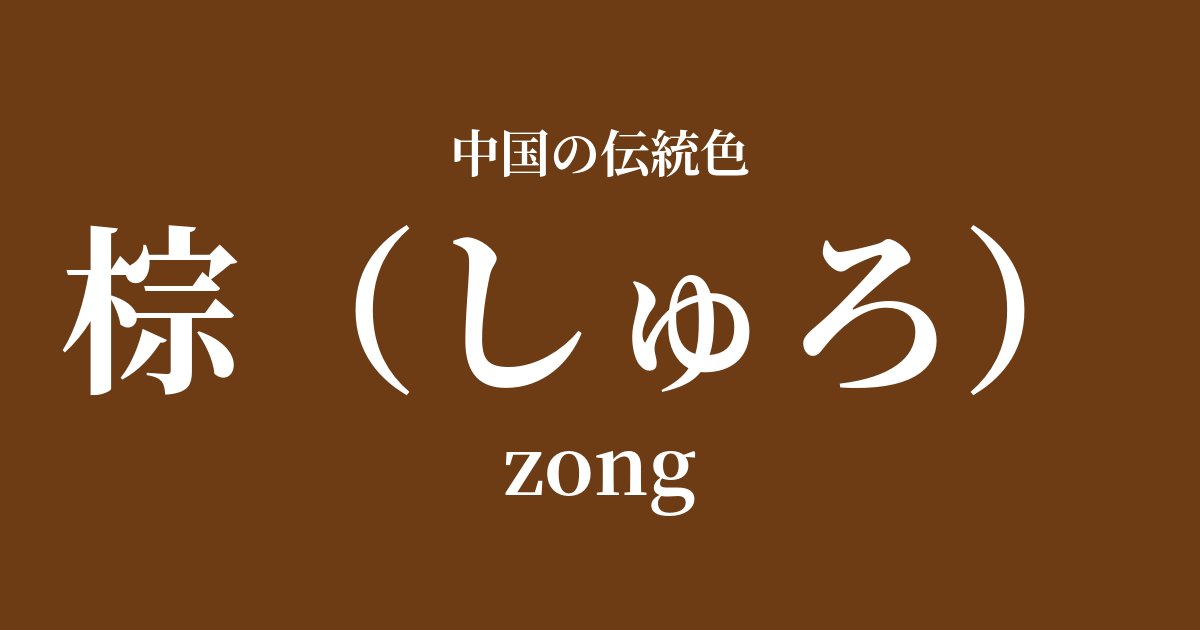
| Color name | 棕 |
|---|---|
| reading | palm tree |
| pinyin | zong |
| HEX | #6D3C14 |
| RGB | 109, 60, 20 |
What is a "brown palm"? Origin and etymology
"Shuro" is a color name derived from the evergreen palm tree "Shuro," as its name suggests. Specifically, it refers to the color of the dark brown fibers that cover the trunk of the Shuro tree.
Because this fiber is extremely strong and water-resistant, it has long been valued as a material for various everyday items in people's lives, such as rain gear like straw raincoats and hats, as well as brooms, ropes, and scrubbing brushes. Therefore, the color of the brown palm has become more naturally ingrained in people's lives as the color of the material itself, rather than a color dyed with dye.
This earthy color, the complete opposite of flashy, possesses a simple, practical warmth.
Historical background of the palm tree
Unlike the opulent colors that were popular in certain dynasties, brown was a color deeply rooted in the lives of ordinary people throughout Chinese history. In the shadow of the dazzling color culture of the imperial court, this color always supported people's daily lives and continued to exist as an integral part of the landscape.
This color was particularly common in the clothing and tools of people who led simple lives, such as farmers, artisans, and ascetic monks. This was because it was a natural color that did not require expensive dyes, was less prone to showing dirt, and was highly practical.
In the Five Elements philosophy, the brown color is associated with "earth," symbolizing the land. More specifically, the shade of brown has formed the foundation of Chinese culture as a color that symbolizes the bounty of nature, the wisdom of the people who utilize it, and the spirit of a steady and reliable life.
Brown in Chinese Art and Crafts
In the world of Chinese art and crafts, the brown color has a unique presence due to its simple beauty. For example, ceramics using brown glaze, such as the Tenmoku tea bowls that flourished during the Song dynasty, exhibit a deep flavor reminiscent of the brown color. The accidental patterns created by earth and fire are linked to the spirit of Zen, fostering a serene and profound aesthetic sense.
In the world of painting, when depicting tree trunks, rock faces, and houses in ink painting, ochre and other pigments were used in addition to varying shades of ink to express the powerful texture and warmth of nature.
Furthermore, in the context of clothing culture, this color was interpreted not only as the hemp and cotton clothing worn by commoners, but also, at times, as the muted, colorful robes worn by Buddhist monks. It also carried cultural significance as a color that embodied a spirit of discouraging extravagance and valuing simplicity.
Bamboo cane, sandals, Katsuma, who are you? It's a rainy day.
Color scheme preview
This is to check the readability of the text when this color is used as the background.
Brown color scheme proposal
Ai (#00496C)
The combination of palm, reminiscent of the earth, and deep blue, evoking the deep sky and sea, paints a magnificent picture of nature. It gives a calm, stable, intellectual, and dignified impression.
Akika color (#D9A44E)
By adding autumnal colors reminiscent of ripe fruit and rice stalks, the simplicity of the palm tree is given warmth and richness. It gives a calm and contented impression, as if celebrating the bountiful autumn harvest.
Moon White (#E9E7E1)
By combining it with a moon-white color that reflects the pure light of the moon, the substantial feel of the palm wood is enhanced, creating a sophisticated and modern space. It gives off a quiet and dignified impression.
Practical Scenes
In interior design, brown is an ideal color for bringing warmth and tranquility to a space. It pairs exceptionally well with natural materials such as solid wood furniture, linen curtains, and terracotta tiles, creating a comfortable and relaxing atmosphere. When used as an accent wall, it adds depth and sophistication to the entire room.
In fashion, this color is particularly useful for autumn and winter outfits. Choosing this color for jackets and trousers made of materials like wool, leather, or corduroy creates a sophisticated and warm style. When combined with earth tones such as indigo, ecru, and khaki, it exudes a timeless appeal that transcends trends.
In web design, using this color for backgrounds and footers can give the entire site a sense of stability and trustworthiness. It is particularly suitable as a theme color for websites dealing with traditional crafts, organic products, or historical content.