
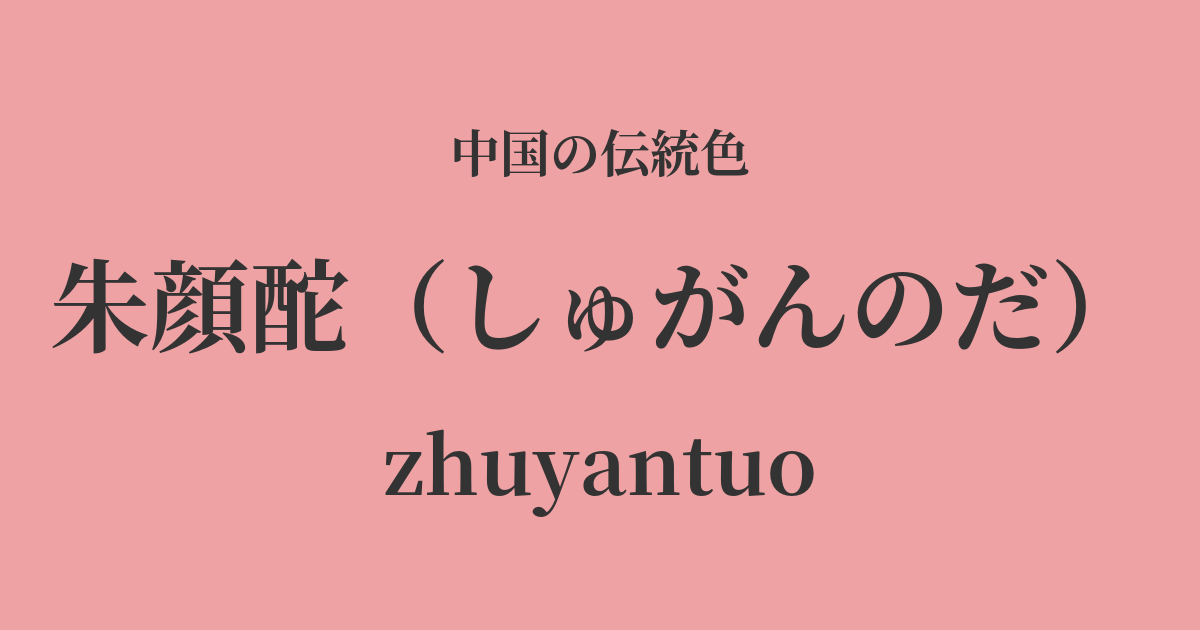
| Color name | red face |
|---|---|
| reading | Shugan no da |
| pinyin | zhuyantuo |
| HEX | #EEA2A4 |
| RGB | 238, 162, 164 |
What is Zhu Yan Li? Origin and Etymology
"Shugan no Da" (朱颜酡) is a color name that, as its kanji characters suggest, originated from a very poetic scene.
"Shugan" refers to a youthful, healthy-looking, and beautiful face, especially a woman's lovely features. On the other hand, "da" is a kanji character that describes the way a face turns red after drinking alcohol.
When these two elements are combined, it creates a very emotional and alluring meaning: "the beautiful color of cheeks that have turned slightly red from drinking alcohol." It's not just a simple pink color, but a richly narrative color that encompasses the nuances of emotions such as happiness, exhilaration, and a subtle sensuality.
Historical background of Zhu Yanli
The term "zhu yan li" (朱颜酡) is not a color designated as a fashionable color of a particular dynasty, but rather an expression that has been cherished in Chinese literature, especially in the world of poetry, since ancient times.
This phrase frequently appears in poetry from the Tang and Song dynasties, particularly in scenes describing joyful moments at banquets or praising the beauty of women. This is evidence that people at the time found vitality and beauty in healthy complexions and the slightly tipsy look of a woman.
This color has been deeply associated with vibrant and humanistic scenes, such as the cheeks of a beautiful woman dancing at a court banquet or the harmonious expression of someone sharing drinks with a close friend. Throughout history, it has been passed down through literary works as a color symbolizing the ideal "beautiful expression" that resides in people's hearts.
Zhu Yanli in Chinese Art and Crafts
In Chinese art, particularly in "shijoga" (paintings of court ladies), the blush on a woman's cheeks was skillfully used to express her vitality and emotions. Zhuyanmi is a color perfectly suited to representing that flushed cheek. This color allows us to imagine the plump, healthy cheeks of beauties seen in Tang Dynasty paintings.
In clothing culture, this color is used to enhance the elegance of Hanfu (traditional Chinese clothing). Its delicate beauty is particularly highlighted when combined with light-colored silk fabrics. Using this color as an accent on the lining or cuffs of a jukun (a type of formal skirt) creates a refined yet華やかな (gorgeous) impression, enhancing the wearer's dignity.
Zhu 颜酡slight, blue 颓稠slight, tutorihana front light.
Color scheme preview
This is to check the readability of the text when this color is used as the background.
Suggested color scheme for vermilion
Moon White (#D9E9E5)
The warm pink of the reddish-brown and the cool, pure blue of the moon-white create a beautiful contrast. This color scheme combines sweetness and freshness, giving a sophisticated and elegant impression.
Ivory white (#FFF1CF)
The warm ivory white naturally enhances the gentleness and softness of the vermilion. The overall combination creates a soft, gentle, feminine, and approachable atmosphere.
Red (#494947)
The dark brown, almost black, subtly balances the sweetness of the reddish-brown, creating an overall sophisticated and chic impression. The delicate pink stands out, resulting in a modern and dignified color scheme.
Practical Scenes
In the field of interior design, using it as an accent wall in bedrooms or private spaces can create a comfortable and relaxing atmosphere. Furthermore, incorporating it into fabrics such as cushions, curtains, and rugs can add a touch of softness and warmth to a space.
In fashion, this color is flattering to the skin and is expected to have the effect of making the complexion look brighter and healthier. When incorporated into blouses or dresses made of glossy materials such as silk or satin, the elegant sheen of vermilion is further enhanced.
In web and graphic design, it is suitable for cosmetic brands, wedding-related content, and lifestyle-related materials. When used as a main color, it creates an elegant impression, and when used as an accent color, it adds a friendly touch.