
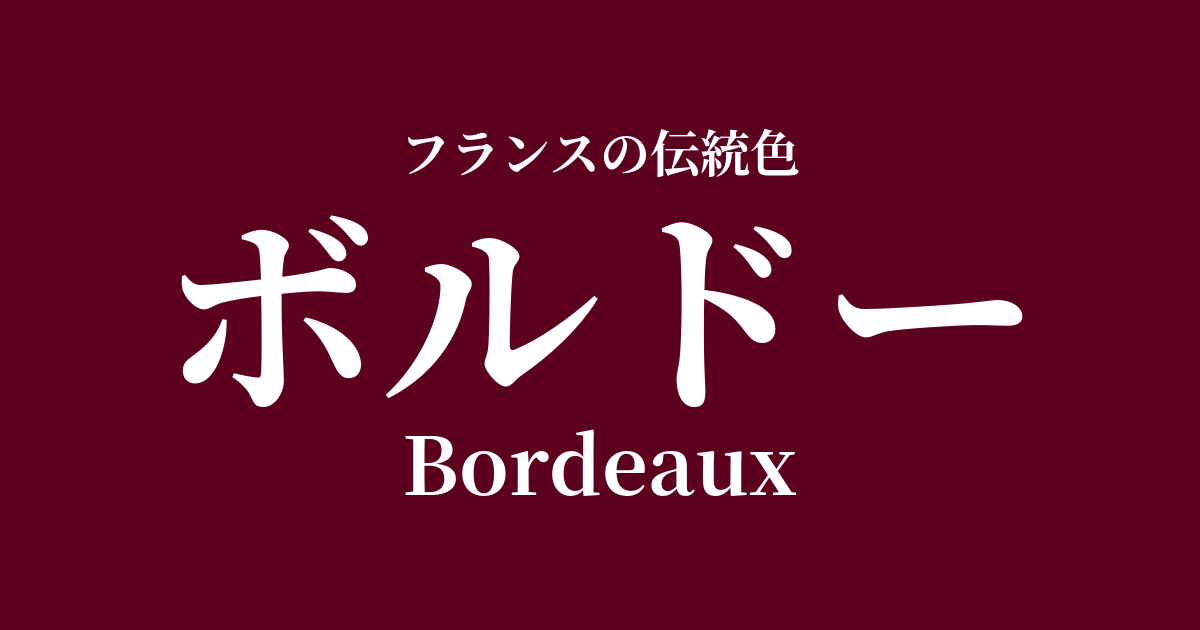
| French | Bordeaux |
|---|---|
| Katakana | Bordeaux |
| HEX | #5C0120 |
| RGB | 92, 1, 32 |
What is Bordeaux? Origin and Etymology
Bordeaux, as the name suggests, is a color derived from the red wine produced in the Bordeaux region, one of the world's leading wine-producing areas located in southwestern France. It refers to a deep, dark red color with a purplish tint, like that of wines made from aged Cabernet Sauvignon or Merlot grapes.
This color is not simply red; it evokes the richness of grapes cultivated over many years, the weight of time spent quietly maturing in barrels, and even the fragrant aroma released the moment it's poured into a glass. It blends the essence of passionate red with nuances of black and purple that bring calmness and elegance, and has long been cherished as a color symbolizing the charm of a mature adult.
The historical background of Bordeaux
The story behind the color of Bordeaux is deeply intertwined with the history of winemaking in this region. Its origins can be traced back to ancient Roman times, but a particularly important turning point occurred during the Middle Ages.
In the 12th century, when Eleanor, Duchess of Aquitaine, married Henry, Count of Anjou (who would later become King Henry II of England), the Bordeaux region became part of the vast English royal domain. As a result, Bordeaux wine was exported in large quantities to England under the name "Claret" and became beloved in courts throughout Europe. During this period, the deep red of Bordeaux became a symbol of wealth and power that transcended national borders.
In the 18th century, Bordeaux experienced its golden age as a center of the wine trade, and its prosperity was reflected in its beautiful cityscape. With the rise of the bourgeoisie, this color was favored in luxurious clothing and interior decoration, and it became established as a color that adorned a sophisticated lifestyle.
Bordeaux in the world of art and fashion
The rich and elegant hue of Bordeaux has inspired the sensibilities of artists and designers throughout the ages.
In the world of fashion, burgundy was immensely popular as a color for dresses made from lustrous fabrics such as velvet and silk satin, especially during the Belle Époque and Art Deco periods. Its deep hue makes a woman's skin appear whiter and more beautiful, enhancing her dramatic charm. Even today, many haute couture houses continue to incorporate burgundy as a key color in their autumn/winter collections, proposing a style that is both classic and modern.
In painting, the color is rarely referred to directly as "Bordeaux," but glimpses of it can be seen in the portraits of royalty and nobility and religious paintings by masters of the Renaissance and Baroque periods. The deep red used in the folds of luxurious clothing and the shadows of velvet curtains was an important color for expressing the authority and divinity of the depicted figures.
A bottle of wine contains more philosophy than any book.
Color scheme preview
This is to check the readability of the text when this color is used as the background.
Bordeaux color scheme proposal
Gris de Lignant (#DCD5C4)
The richness of Bordeaux and the soft brightness of Gris de Lignan complement each other, creating a sophisticated and classic impression. This color scheme is ideal for spaces and designs where you want to achieve both elegance and warmth.
Blue Nuit (#0F2540)
The combination of deep red and deep blue, both colors with a sense of weight and sophistication, creates a very modern and intellectual impression. It evokes a sense of calm and luxury, creating a space that is both unique and harmonious.
Rose Pompadour (#ED82A2)
The mature allure of Bordeaux, combined with the delicate sweetness of Rose Pompadour, creates a dramatic and romantic atmosphere. This color combination is perfect for expressing a passionate and feminine impression.
Practical Scenes
Bordeaux, with its elegance and presence, can be used effectively in a variety of situations.
In fashion, incorporating this color into key items such as coats, suits, and dresses instantly creates a chic, autumnal look. Adding it as an accent color through leather accessories like bags, pumps, and belts also tightens up the overall outfit and gives it a sophisticated feel.
In interior design, using it as an accent wall in the living room, on a velvet sofa, or in heavy curtains brings a sense of calm and luxury to the space. It's also recommended to incorporate it partially through cushions, rugs, or artwork. It pairs particularly well with gold, brass, and woods such as walnut.
In the fields of web and graphic design, it is ideal as a key color for websites that want to convey quality and reliability, such as luxury brands, restaurants, and jewelry stores. When used as a background color, it creates a sophisticated and substantial atmosphere, while when used as an accent for buttons or headings, it attracts the user's attention and creates an elegant and refined feel.