
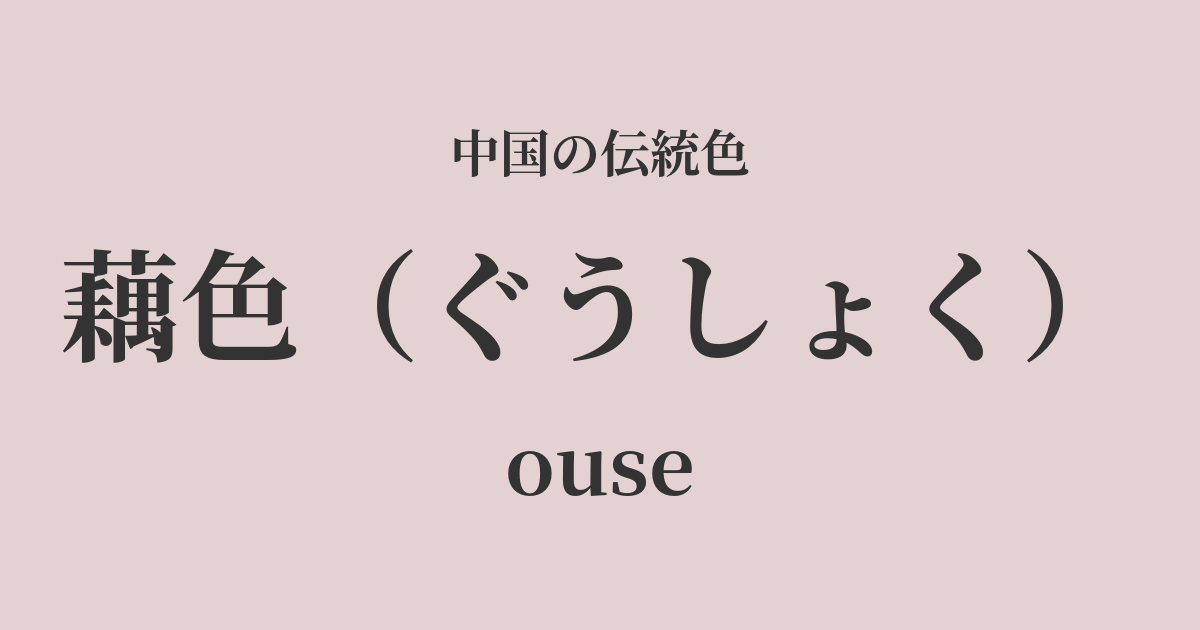
| Color name | Dark blue |
|---|---|
| reading | Guushoku |
| pinyin | ouse |
| HEX | #E4D2D2 |
| RGB | 228, 210, 210 |
What is lotus color? Origin and etymology
Gūshoku is a very delicate and beautiful color, derived from the pale reddish-beige color seen in the cross-section of the lotus rhizome, or lotus root.
The single kanji character "藕" means lotus root. The lotus, which blooms with pure flowers from the mud, has been revered as a symbol of nobility since ancient times. The color of the lotus root that supports the lotus underground, "藕色" (ou-iro), is not flashy, but it conveys an inner elegance and a simple, natural beauty.
Freshly dug lotus roots are almost white, but when exposed to air, they oxidize and gradually change to a pale pinkish hue. The term "o-iro" (lotus root color) captures this fleeting moment of color change, embodying the ancient Chinese sensibility of finding beauty in the subtle changes of nature.
The historical background of the lotus color
The color lotus root was particularly favored during the Song Dynasty (960-1279). In contrast to the opulent and extravagant culture of the Tang Dynasty, this era saw the flourishing of a simple and refined culture of "elegance."
Influenced by Zen Buddhism, people began to value inner spirituality and harmony with nature more than extravagant ornamentation. Literati, exemplified by Su Shi, believed that true beauty lay in nature and favored restrained, tranquil art such as ink painting and celadon pottery.
Muted, muted colors like lotus root green truly embodied the aesthetic sensibilities of the Song Dynasty. These colors, extracted from nature, possessed the power to soothe the viewer's mind. It is said that many people, from court ladies to commoner literati, incorporated these refined hues into their clothing to express their dignity and refinement.
Lotus color in Chinese art and crafts
Lotus root (苕色) is deeply intertwined with Chinese clothing culture. In particular, during the Song dynasty, this color was widely used by both men and women in Hanfu (traditional Chinese clothing). The natural luster of silk combined with the soft hue of lotus root creates an elegant and sophisticated atmosphere. This subdued color palette can also be seen in the attire of people depicted in paintings of the time.
Furthermore, the aesthetic sensibility of lotus color resonates with that of Song Dynasty ceramics. For example, the quiet, post-rain sky-like color found in Ru ware celadon and the warm ivory of Ding ware white porcelain are based on the same philosophy as lotus color: rejecting ostentation and bringing out the inherent beauty of the material itself. Even though it is not a direct color, lotus color resonates with these works of art in its artistic spirit.
One piece of semi-new brown gauze
Color scheme preview
This is to check the readability of the text when this color is used as the background.
Lotus root color scheme proposal
Tsukihaku (#EAF4FC)
The warmth of the lotus flower color and the coolness of the moon white color complement each other, creating an elegant and clear impression. It evokes a tranquil and refined atmosphere reminiscent of a lakeside shrouded in morning mist.
Mayuzai (#405B73)
By combining it with the calm, deep blue of Mayuzumi, the soft femininity of Ou-iro (bead ochre) is highlighted. This color scheme exudes an intelligent and modern atmosphere, while also conveying a sense of mature elegance.
Matsuka (#DDE2A7)
By combining it with pine blossoms, which have a pale yellow color reminiscent of pine pollen, the resulting color scheme is gentle and full of vitality, evoking the feeling of spring's arrival. It gives a natural and approachable impression.
Practical Scenes
In the world of fashion, lotus flower color is ideal for items such as dresses, blouses, and scarves because it blends well with the skin and gives a gentle, elegant impression. It pairs particularly well with natural materials such as linen, silk, and cotton, enhancing the texture of the materials and creating a natural yet sophisticated look.
In interior design, using lotus root color in large areas such as wallpaper, curtains, and sofas envelops the entire space in a calm and relaxing atmosphere. It harmonizes beautifully with wooden furniture and houseplants, creating a comfortable, natural, and modern space.
In web and graphic design, using this color as a background enhances the content and gives the entire site a soft and sophisticated impression. It is a color that is particularly compatible with lifestyle brands and themes related to beauty and wellness.