
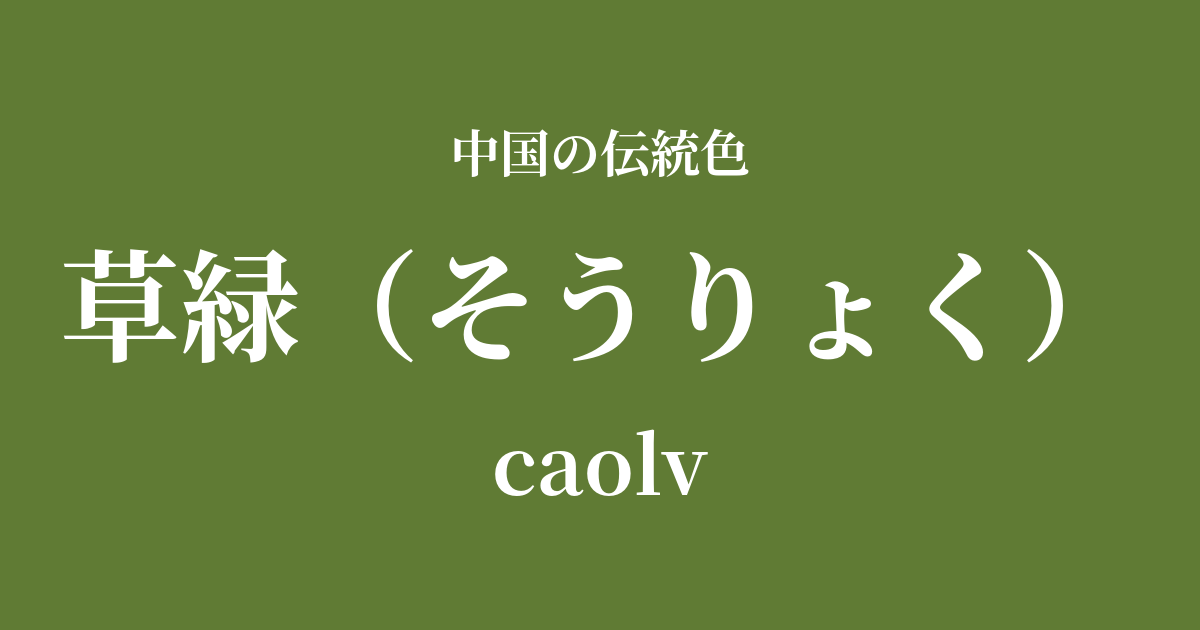
| Color name | Grass green |
|---|---|
| reading | Power |
| pinyin | caolv |
| HEX | #607B34 |
| RGB | 96, 123, 52 |
What is "grass green"? Origin and etymology
As the name suggests, "sōryoku" (草緑) is a vibrant green color that represents the color of grass that sprouts in spring and covers the earth, full of vitality.
Rather than originating from a specific story or legend, this color is arguably one of the most universal and fundamental colors that people have discovered through their observation of nature. The color of young grass, which signals the end of winter and the beginning of a new season, has long been considered a symbol of hope, youth, and rebirth.
The kanji character for "green" is a combination of the characters for "thread" and "water," and is said to have originally referred to the color of silk thread dyed with dye. Because the most representative color was the color of plants and trees, it became established as a color that symbolizes the vitality of nature.
The historical background of Kusa-mizu
In Chinese history, the meaning of the color green has changed over time.
In the Five Elements philosophy, green (or blue) belongs to the "wood" element and is considered a color that symbolizes spring and the east. It was positioned as an important color that represents the beginning of the cycle of life.
However, in the attire of government officials, green was not necessarily a color that indicated high status. For example, during the Tang Dynasty, the rank of an official was indicated by the color of their clothing, and green official robes (green robes) were worn by officials of relatively lower ranks. This custom has also influenced later literary works.
On the other hand, during the Song dynasty, green became widely popular among the common people. In particular, grass-green skirts and jackets became fashionable among women. This may reflect a departure from the strict color order of the court, a shift towards a more natural appreciation of the beauty of nature.
Grass greenery in Chinese art and crafts
Grass green was an indispensable color in Chinese art, especially in painting and ceramics, for expressing the breath of nature.
In landscape painting, this color was effectively used to depict the vibrant appearance of mountains from spring to summer. In particular, in a style called "blue-green landscape," both stone blue (a mineral pigment) and stone green (a mineral pigment) were used to vividly portray idealized and magnificent natural landscapes.
Green is also an important color in the world of ceramics. In "Tang Sancai" ware, produced during the Tang Dynasty, the green glaze creates a magnificent contrast with the white and brown glazes. Furthermore, green-glazed pottery, which developed from the Song Dynasty onward, became more common and warm, enriching people's lives.
In clothing culture, grass green was a color that symbolized youthfulness and spring attire, and was particularly favored for women's Hanfu (traditional Chinese clothing). When dyed on lustrous silk fabrics, grass green creates shadows depending on the light, revealing a beauty reminiscent of natural plants swaying in the wind.
Grass color far away, no closer look
Color scheme preview
This is to check the readability of the text when this color is used as the background.
Grass green color scheme suggestion
赭石 (#A75347)
By combining it with ochre, the color of the earth, it creates an earth-toned color scheme that evokes nature itself. It creates a warm, stable, and peaceful space.
Peony powder (#EEA2A4)
It gives a vibrant and lively impression, like a spring garden overflowing with flowers. The green of the grass enhances the loveliness of the peony powder, creating a cheerful and bright atmosphere.
Tensei (#4D82B0)
This color scheme evokes the clear sky after the rain and the fresh greenery, exuding a sense of coolness and elegance. It creates a calm and intellectual atmosphere, giving a sophisticated impression.
Practical Scenes
Grass green is a color that brings peace and the energy of nature to our lives.
In interior design, incorporating accent walls, cushions, curtains, and other fabrics can bring a refreshing breeze into a room. It pairs particularly well with wooden furniture and white-based spaces, creating a natural and comfortable atmosphere.
In fashion, this color creates a relaxed yet elegant style. Incorporating it into cotton or linen shirts or dresses will enhance your natural, unpretentious charm. It's recommended to pair it with earth tones such as beige, ivory, and brown.
In the fields of web and graphic design, this style is ideal for content themed around organic products, the environment, and health. It visually conveys a sense of security and trustworthiness, leaving viewers with a healthy and honest impression.