
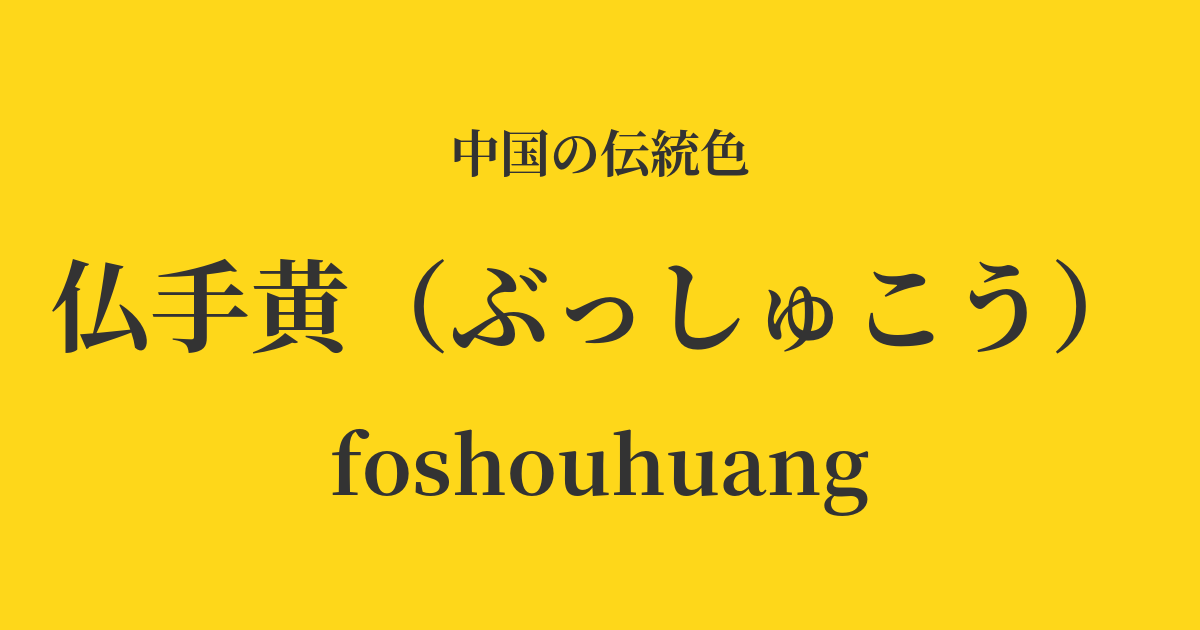
| Color name | Buddha's Hand Yellow |
|---|---|
| reading | Busshuko |
| pinyin | foshouhuang |
| HEX | #FED71A |
| RGB | 254, 215, 26 |
What is Buddha's Hand Yellow? Origin and Etymology
The name "Busshuko" (佛手黄) literally means "Buddha's hand citron," and it derives from the color of the ripe peel of this type of citrus fruit. The Buddha's hand citron is given this auspicious name because the tip of the fruit is split at the end, resembling the clasped hands of Buddha.
This fruit is also known for its intense fragrance, and has been prized not so much for eating, but as a natural air freshener to fill rooms with scent, or as an ornamental plant. Buddha's hand yellow is a bright and warm yellow that embodies the vitality emanating from the Buddha's hand citron and the wishes for happiness that people have associated with it.
Historical background of the Buddha's Hand Yellow
The Buddha's hand citron is believed to originate in northeastern India and was brought to China along with the introduction of Buddhism. Particularly during the Ming and Qing dynasties, its unique shape and auspicious symbolism made it extremely popular among the imperial court and literati.
In Chinese, the pronunciation of "佛 (fó)" (Buddha) and "福 (fú)" (fortune) are similar, so the Buddha's hand citron was considered a "hand that invites fortune" and was treated as a symbol of longevity, wealth, and prosperity of descendants. It is also believed that the fact that it belongs to the yellow family, which is the color of the emperor, is one of the reasons why this color was revered. In the imperial court, it was customary to place Buddha's hand citrons as New Year's decorations and pray for happiness throughout the year.
Buddhist hand huang in Chinese art and crafts
The color of Buddha's hand yellow, and the Buddha's hand citron from which it is derived, were popular motifs in Chinese art and crafts.
In the world of painting, it is frequently depicted as an auspicious motif. In particular, the "Three Abundances" motif, which depicts the Buddha's hand citron together with peaches (longevity) and pomegranates (fertility), is a very auspicious subject that expresses the wish for good fortune, longevity, and many children. Giuseppe Castiglione, a court painter of the Qing Dynasty, also left behind works depicting the Buddha's hand citron using realistic techniques.
Furthermore, in Qing Dynasty ceramics, especially enamelware and femcai (roasted porcelain), the Buddha's hand citron motif was painted in vibrant Buddha's hand yellow on white porcelain, competing in beauty. The brilliant yellow gives the vessels a festive atmosphere and elegance.
The Buddha is a cause and effect, and the flower is a flower. Observe the beauty of the nose, and read the hand.
Color scheme preview
This is to check the readability of the text when this color is used as the background.
Buddhist Yellow Color Scheme Proposal
Matsuka Midori (#B0D2C1)
This natural and vibrant color scheme is reminiscent of the fruit and leaves of the Buddha's hand citron. The bright Buddha's hand yellow is complemented by the calming pine blossom green, creating a fresh and pleasant impression.
Ai (#165E83)
The combination of yellow and blue, which are close to complementary colors, enhances each other's appearance. This dignified color scheme, also seen in Qing Dynasty porcelain, gives a refined and intellectual impression.
Cinnabar (#FF4D4F)
This combination of red and yellow is considered the most auspicious in China. It evokes the joy and energy of a festival, creating a vibrant and powerful impression that uplifts the spirits of those who see it.
Practical Scenes
Buddha's Hand Yellow works well as an accent color, bringing brightness and a sense of happiness to spaces and designs.
In interior design, simply incorporating small items like cushion covers, vases, and art panels can instantly brighten up an entire room. Adding them to a natural space based on white, beige, or wood tones creates a warm and inviting accent.
In fashion, incorporating this color through scarves, bags, or accessories can add a sophisticated pop of color to your outfit. It's especially effective in spring and summer attire, creating a lively and seasonal impression.
In web design, it's effective when used for buttons and banners that you want to attract attention. It's also suitable as a key color for services that want to convey a positive and cheerful atmosphere.