
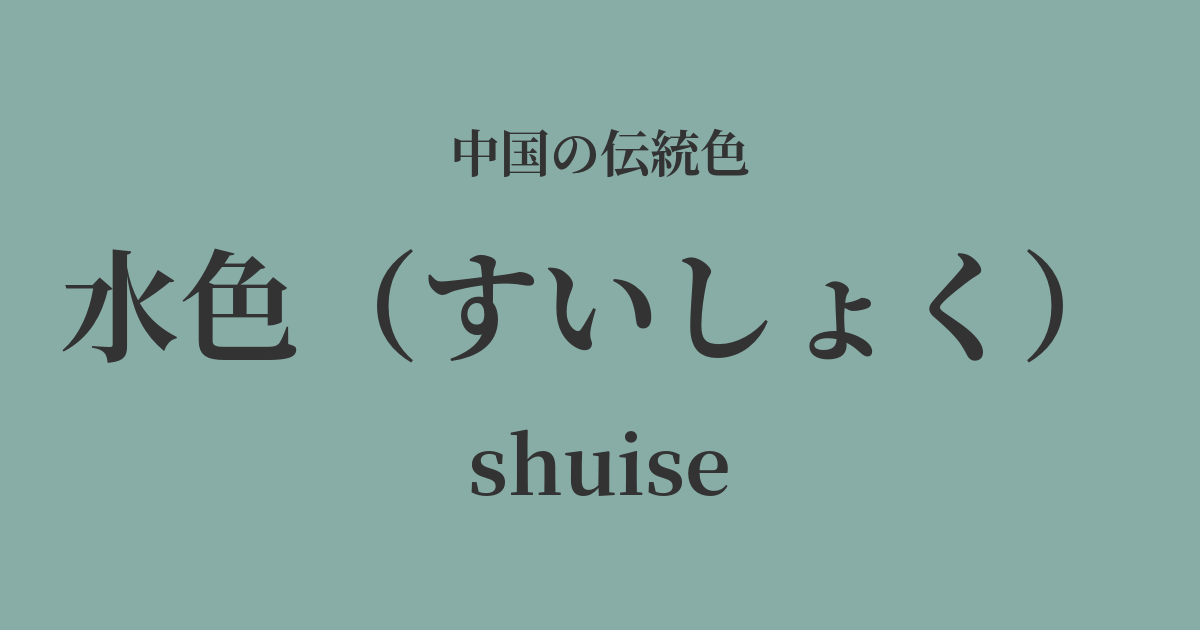
| Color name | light blue |
|---|---|
| reading | Sui-shoku |
| pinyin | shuise |
| HEX | #88ADA6 |
| RGB | 136, 173, 166 |
What is light blue? Origin and etymology
Suishoku (水青), as its name suggests, means "the color of water," and is a pure, calming blue-green color. Rather than being derived from a specific dye or pigment, it is a scenic color name that captures the color of the surface of clear rivers, lakes, and tranquil bays found in nature.
This color doesn't so much represent the physical color of water itself, but rather symbolizes the serene and pure image of nature that Chinese literati and artists idealized. The image of water flowing through a tranquil landscape, far removed from the mundane world, as depicted in traditional Chinese landscape paintings, is the background to this color.
Light Blue Historical Background
Rather than being a color officially designated by a particular dynasty, light blue reflects the aesthetic sensibilities cultivated within the scholar-official (literati) culture that developed from the Song dynasty onward. They valued the simple yet profound beauty found in nature more than extravagant ornamentation.
In particular, the popularity of Song dynasty ceramics, especially celadon, is thought to have increased interest in subtle shades of light blue. From emperors to literati, many people pursued the ideal color of celadon. The delicate sense of color pursued, such as "the color of the sky after the rain," is also connected to the sensibility of appreciating the color of clear water. Light blue quietly permeated people's hearts as a color that symbolized a quiet and introspective beauty, distinct from the flamboyant court culture.
Light blue in Chinese art and crafts
The artwork most deeply connected to the color light blue is celadon from the Song Dynasty. In particular, the celadon glaze fired in the Ru ware and imperial kilns is characterized by its moist texture and deep, clear blue-green color, making it the ideal expression of light blue. Its serene presence evokes the calmness and vitality of water.
In the world of landscape painting, pale blue pigments were used to depict water such as rivers, lakes, and waterfalls. The subtle addition of water color to the majestic natural landscapes depicted with varying shades of ink gives the paintings a sense of freshness and depth.
In fashion culture, light blue is a color that symbolizes purity and dignity, and was favored as the color of Hanfu (traditional Chinese clothing) worn by scholars and people of high moral character. It was especially often used in summer clothing, giving a cool and intellectual impression. It is not flashy, but combined with the luster of silk, it is a color that enhances refined beauty.
Haruki Emizu Green Rui Ai
Color scheme preview
This is to check the readability of the text when this color is used as the background.
Light blue color scheme proposal
Black (#3E3A39)
The tranquility of the light blue is complemented by the sharpness of the ink, creating a serene and intellectual impression reminiscent of an ink painting. This combination is ideal for minimalist and sophisticated spaces and designs.
Ivory white (#FFF1CF)
The warmth of ivory white gently envelops the coolness of light blue, creating a clean and peaceful atmosphere. Recommended for creating a natural and comfortable space.
Lotus root color (#E4D2D8)
This elegant and refined color scheme is reminiscent of lotus flowers blooming on the water's surface. The purity of the light blue and the soft sweetness of the lotus flower color harmonize to create a feminine and calming impression.
Practical Scenes
In interior design, light blue has a calming effect, making it ideal for spaces where you want to relax, such as bedrooms, studies, and living rooms. Incorporating it into one wall, curtains, or cushions will bring a sense of tranquility and freshness to the room. It also pairs exceptionally well with natural materials such as light wood and bamboo.
In fashion, this color is used to convey intelligence and a sense of cleanliness. It's especially effective in incorporating into shirts, blouses, and dresses during the spring and summer seasons, creating a cool and elegant impression. Choosing lightweight materials like silk or linen further enhances the delicate beauty of the color.
In web and graphic design, it is effective when you want to convey trustworthiness and integrity. Using it for healthcare, education, and environmental themes, or as an accent color in minimalist designs, can create a clean and calming image.