
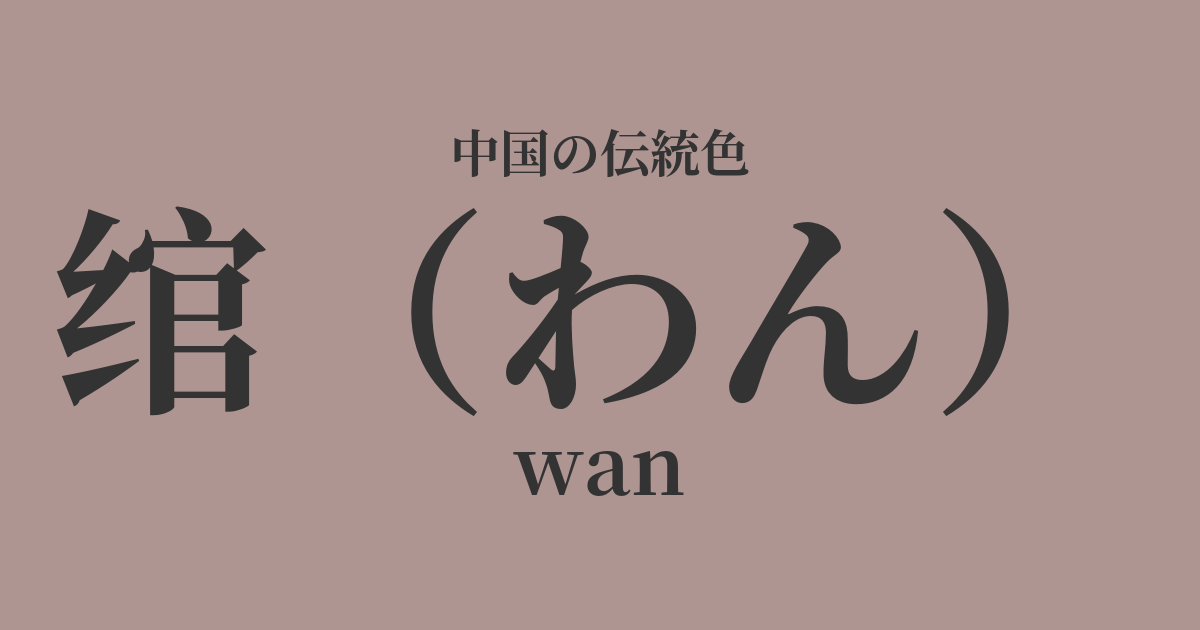
| Color name | 绾 |
|---|---|
| reading | Wan |
| pinyin | wan |
| HEX | #AE9591 |
| RGB | 174, 149, 145 |
What does "绾" mean? Origin and etymology
"绾 (Wan)" is a very elegant color name that refers to a reddish-gray or light red.
The origin of this color comes from the verb "绾," which originally meant "to tie up" or "to bundle." It is said that the name of this color became established from the graceful movements of ancient Chinese women as they tied up their long, beautiful hair, and from the colors of the tied hair.
The Qing Dynasty color manual "Xue Yuan Xiu Pu" describes "Jiu" as "red with a yellowish tint, like tied-up hair," indicating that this color has a reddish nuance derived from the color of hair. It is a modest yet refined shade that conveys warmth and elegance.
The historical background of Jin
The word "绾" (ji) appears in Han Dynasty literature and is particularly common in Tang Dynasty poetry and prose, describing the way women style their hair beautifully. During this period, an elegant and refined culture flourished, and women's makeup, hairstyles, and clothing became extremely elaborate.
"绾" was one of the colors that symbolized the aesthetic sensibilities of court ladies and literary figures. Rather than being recorded as a specific color that was in fashion, this word was often used in poetry and stories to describe scenes expressing the beauty and grace of women.
It was more than just a color name; it was a word that evoked an ideal image of womanhood, such as graceful movements and a refined demeanor. Across generations, it has quietly been passed down as a color symbolizing classical beauty.
In Chinese art and crafts
The elegant shade of "绾" is deeply intertwined with Chinese clothing culture, particularly the silk fabrics of Hanfu. When this color is dyed onto silk with a soft sheen, it creates delicate shading depending on the light, further enhancing the wearer's elegance. It was especially used in women's garments such as jukun (skirts) and san (shirts), creating a refined and understated beauty.
Furthermore, in meticulous figure paintings such as those in the Gongbi style, the color "绾" is sometimes used to depict women's clothing and skin. The gentle and calm tone of this color is suitable for expressing the inner tranquility and refined atmosphere of the person being depicted.
Mina Yoshinari
Color scheme preview
This is to check the readability of the text when this color is used as the background.
Color scheme proposal by Jin
Moon White (#D1D9E5)
The warm reddish hue of the "Kon" and the cool, clear blue of the "Tsukishiro" complement each other, creating a quiet, refined, and elegant impression. It suits both classic and modern spaces well.
Matsuka (#B3A94F)
The soft reddish hue of the rosary and the calm yellow of the pine blossom harmonize to create a gentle and warm color scheme reminiscent of an autumn landscape. It creates a natural, comfortable, and peaceful space.
Mayuzumi (#49585F)
The deep color of Mayuzumi contrasts beautifully with the light shade of Ku, creating a dignified and refined impression. This elegant color scheme achieves both subtlety and a sense of gravitas.
Practical Scenes
In the field of interior design, incorporating the color "绾" (Jì) into wallpaper, curtains, sofas, and other fabrics brings a calm and warm atmosphere to a space. It pairs well with furniture made from natural materials such as light-colored wood and ash, and when used as an accent color in Japanese modern or Japan-style designs, it creates a sophisticated space. In particular, using it in a bedroom can create a peaceful and relaxing environment.
In fashion, this color is flattering to the skin and has the effect of making the complexion appear softer. It is ideal for clothing made from high-quality natural materials such as silk blouses and linen dresses. Pairing it with gold or pearl accessories will create an even more elegant and sophisticated look.
In web and graphic design, using it as a background or key color gives the entire site a gentle and sophisticated impression. It is suitable for websites with themes that propose a high-quality and refined lifestyle, such as lifestyle brands, cosmetics, and traditional crafts.