
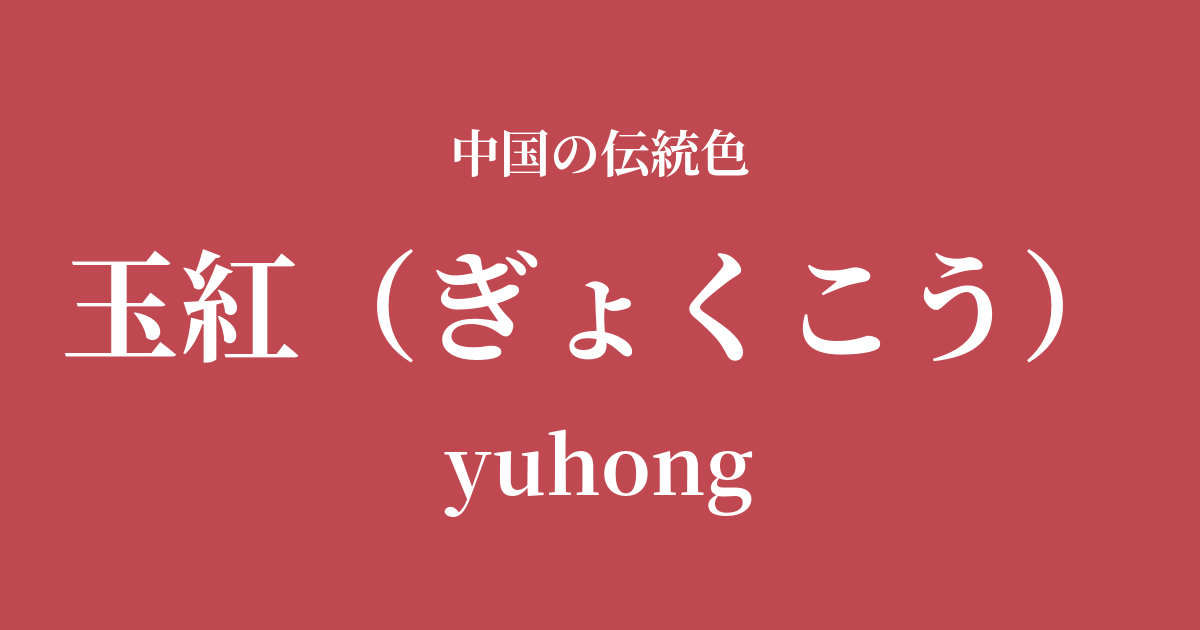
| Color name | Jade red |
|---|---|
| reading | Gyokuko |
| pinyin | yuhong |
| HEX | #C04851 |
| RGB | 192, 72, 81 |
What is "Jade Red"? Origin and Etymology
Gyokukou, as its name suggests, means "jade red," and is an elegant red color. The fact that it is named after the word "jade" rather than simply being red reveals the true essence of this color.
In ancient China, jade held a special value far beyond mere beauty. It was considered a symbol of wealth and power, while simultaneously embodying spiritual values such as the virtue of a virtuous person, purity, and immortality.
The name "Tamabeni" evokes the reddish hue of jade, which is considered particularly valuable among such jade, and the moist luster of jade dyed with red pigment. This color name embodies not only superficial beauty, but also an admiration for a nobleness and profoundness that seems to emanate from within.
Historical background of jade red
The culture of valuing jade dates back to the Neolithic period in China and remained central to court culture throughout successive dynasties. In particular, red was often associated with the virtues and immortality of jade as an auspicious color symbolizing good fortune, joy, and vitality.
It is difficult to pinpoint exactly when the color name "gyokuhō" (玉紅) became established, but it is believed that this deep red color was particularly favored in the opulent culture of the Tang Dynasty. As a color used in the clothing of aristocratic women and in the makeup that adorned their cheeks and lips, this jade-like red was likely considered the ideal of beauty.
During the Ming and Qing dynasties, colors became even more diverse and refined. Various shades of red can be seen in the porcelain, textiles, and furnishings used in the imperial court, and jade red is said to have been used in various situations as a color that spoke of noble status and refined aesthetics.
Jade Red in Chinese Art and Crafts
The rich luster and depth of the jade red pigment can be found in various Chinese works of art.
For example, the red mottled patterns (kiln variations) seen in Jun ware from the Song dynasty, which are created by accidental changes in the glaze during firing, are reminiscent of the image of jade red. The moist, soft red that appears on the hard surface of the ceramics is very similar to the texture of jade.
In the realm of clothing culture, silk fabrics used in Hanfu and court attire best express the beauty of jade red. The subtle luster of silk, which changes its appearance depending on how the light hits it, further enhances the jade-like elegance of this color, highlighting the wearer's status and beauty.
Furthermore, the Ming Dynasty play "The Peony Pavilion" contains a passage describing a beautiful woman's lips as "a single streak of jade red," suggesting that this color was also considered a symbol of beauty in the world of literature.
Half-bay shadow, one mark of jade red
Color scheme preview
This is to check the readability of the text when this color is used as the background.
A color scheme proposal for Tamakou.
Moon White (#DDE7EB)
By combining it with the pale, pure, bluish-white of Tsukishiro, the vibrancy and elegance of Tamakou are enhanced. It is a color scheme that evokes a quiet, graceful, and classic beauty.
Yellow (#FFB61E)
The bright, radiant yellow of the ornate yellow, when combined with the deep red of the gyokurenai red, creates a magnificent and opulent impression reminiscent of courtly culture. It is a splendid combination suitable for celebrations and special occasions.
Raven blue (#404852)
By combining the deep, calm, ink-like blue of Karasu-ao (Crow Blue) with the red of Tamakou (Jade Red), the color becomes a modern and sophisticated accent. This color scheme is chic yet secretly passionate, making it suitable for contemporary spaces and designs.
Practical Scenes
Tamakou, with its elegance and splendor, is a color that can be used in a variety of modern situations.
In interior design, incorporating this color as an accent color in cushions, rugs, or artwork can add warmth and a sense of luxury to a space. It pairs particularly well with natural wood and metal materials such as brass, creating a classic yet sophisticated atmosphere.
In fashion, it can elevate your entire outfit, not only with statement pieces like dresses and blouses, but also with accessories such as scarves, bags, and lip colors. Choosing glossy materials like silk or velvet will further highlight the inherent lustrous beauty of Tamabeni.
In websites and graphic design, using it as a key color conveys a passionate and trustworthy image to the brand. When used as an accent color in simple designs based on white or gray, it attracts attention and creates a memorable and impressive design.