
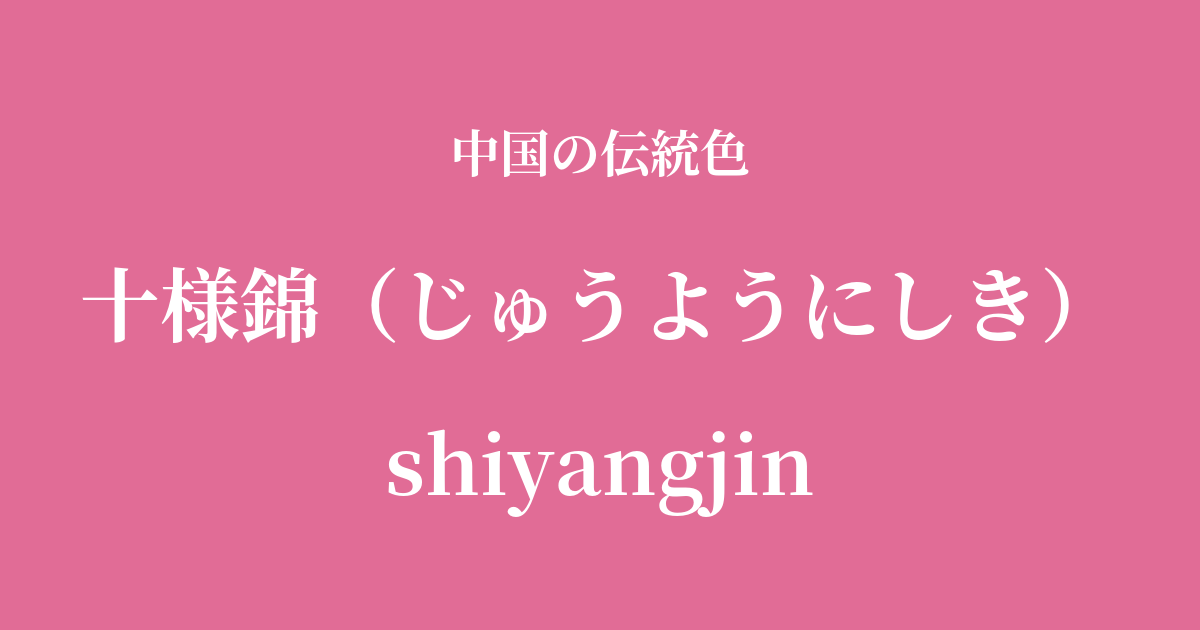
| Color name | Ten-style brocade |
|---|---|
| reading | Juuyou ni shiki |
| pinyin | shiyangjin |
| HEX | #E16C96 |
| RGB | 225, 108, 150 |
What is "Ten Styles of Destiny"? Origin and Etymology
Jūyō Nishiki is the name of a beautiful rose-pink color that is vibrant yet elegant. The name literally means "brocade woven with ten different patterns," representing a harmonious blend of diverse beauty.
The origin of these elegant colors is said to be traced back to Xue Tao, a renowned female poet of the Tang Dynasty. She was known not only for her poetry but also for creating beautiful colored paper. It is said that she used the pure water of Huanhua Stream in Chengdu to dye paper in various colors. This colored paper, known as "Xue Tao paper," was extremely popular among literati of the time.
The name "Jūyō Nishiki" (十様錦) is thought to have been chosen because it is one of the ten most beautiful colors in Xue Tao's paper, or perhaps it symbolizes the splendor of all ten colors combined. The colors created by this talented poet transcend mere pigments and possess a cultural aura.
Historical background of Toka Tsuta
The Tang Dynasty, when the Shiyang Brocade was created, was a particularly international and vibrant period in Chinese history. Diverse cultures and artifacts were brought to the capital city of Chang'an via the Silk Road, creating an open and dynamic atmosphere.
The aesthetic sensibilities of this era tended to value abundance and splendor. As exemplified by Yang Guifei, women considered plump figures beautiful and favored bold makeup and brightly colored clothing. Bright and vibrant pinks like those found in the Jūyō Nishiki fabric likely reflected the atmosphere of that era and were beloved by court ladies and literati.
The mid-Tang dynasty, in which Xue Tao lived, was a transitional period of social change following the An Lushan Rebellion. However, in the Shu region, such as Chengdu where she lived, a rich natural environment and a unique culture flourished. The birth of the Ten Styles Brocade can be seen as a color that emerged from the sophisticated cultural salons of the provinces, distinct from the trends of the big cities.
Ten styles in Chinese art and crafts
The colors of the Ten-Color Brocade are deeply connected to the clothing culture of the Tang Dynasty. These vibrant colors were favored in the garments called "jukun" worn by women of that time, and in the "hihaku" shawls that gracefully draped over their shoulders. The silk fabrics, dyed using advanced dyeing techniques, shone beautifully in the light, further enhancing the appearance of the women.
Furthermore, we can find colors reminiscent of the Ten Styles of Brocade in Tang Dynasty paintings, especially in "court lady paintings" depicting the daily lives of noblewomen. For example, the clothing of the women in works by Zhang Xuan and Zhou Fang effectively uses vibrant reds and pinks, offering a glimpse into the opulent lifestyle of the imperial court at that time.
Furthermore, the "Xue Tao paper" from which this color originates is itself a beautiful craft item linked to calligraphy. Poets sought to express the world of their poetry more richly by writing on this beautiful colored paper. There was an artistic relationship there where color became the background of the poem, and the poem breathed life into the color.
Ten-sama Ranshin De Ekishu, Yorai Shinji Enkarou.
Color scheme preview
This is to check the readability of the text when this color is used as the background.
Color scheme suggestion for Toka Tsuta
Moon white (#D6ECF0)
By combining it with Tsukishiro, a very pale blue reminiscent of moonlight, the splendor of Jūyō Nishiki is highlighted, giving it a pure and refined impression. It is a color scheme that evokes a fantastical and graceful atmosphere, like flowers blooming in a garden at night.
Matsuka Midori (#B0D235)
The combination with Matsuhana-ryoku, a bright green reminiscent of youthful pine needles, creates a vibrant color scheme that evokes the arrival of spring. The colors complement each other, giving a bright and cheerful impression.
Dingka (#C7A2C1)
Combining it with cloves, a pale purple reminiscent of lilac blossoms, creates an extremely elegant and feminine atmosphere. It's a sweet, romantic, and refined color scheme perfect for mature women.
Practical Scenes
In the world of fashion, the Jūyō Nishiki pattern is best used in statement pieces such as dresses, blouses, and skirts to fully showcase its splendor. It also works as an accent color, adding a touch of elegance to an entire outfit when incorporated into accessories like scarves, bags, and jewelry.
In interior design, incorporating this color into fabrics such as cushion covers, art panels, and rugs instantly brightens a space and creates an elegant atmosphere. Using it as an accent color in a simple space based on white, light gray, or beige creates a sophisticated impression.
In web and graphic design, using this color in women's brand websites, beauty-related content, and event announcements can convey an elegant and attractive image. Combining it with gold or silver elements can further enhance the sense of luxury.