
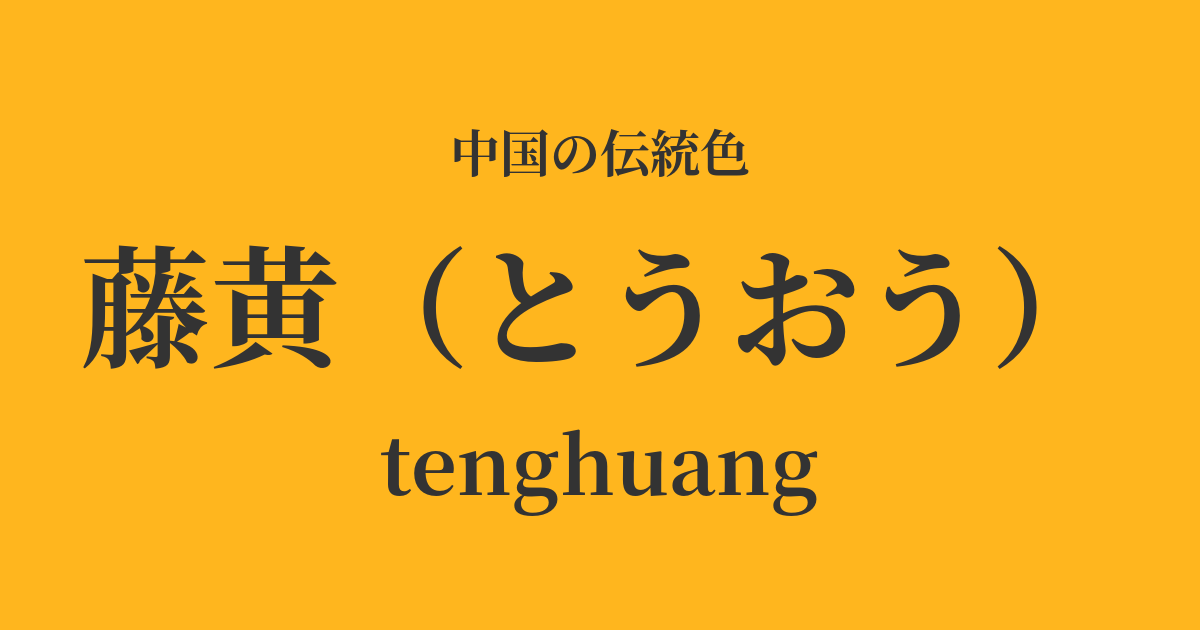
| Color name | Fujio |
|---|---|
| reading | Touou |
| pinyin | tenghuang |
| HEX | #FFB61E |
| RGB | 255, 182, 30 |
What is Fuji-ō? Origin and etymology
Touou is a vibrant, slightly reddish, radiant yellow. The name of this color comes from its raw material.
The main component is the sap of the Gamboge tree, a plant belonging to the Hypericaceae family that is native to Southeast Asia. When an incision is made in the trunk of the tree, a milky yellow resin oozes out. This resin is collected in bamboo tubes, dried, and hardened to become the pigment known as "Fuji-o" (literally, "wisteria yellow").
The kanji character "藤" (fuji) is used, but this has nothing to do with the color of wisteria flowers. There are various theories as to why it is used, such as because the plant from which it is made is vine-like, or because it originates from "籐国" (Tōkoku), the former production area. "黄" (ki) refers to the yellow color, as it looks. This pigment is easily soluble in water and is characterized by its beautiful, transparent color, but it is also known to be toxic.
Historical background of Fujioh
Violet was a valuable import that was brought to China via the Silk Road and other routes since ancient times. Its use is said to date back to the Tang Dynasty, and clear descriptions can be found in documents from the Song Dynasty onward.
Particularly during the Ming and Qing dynasties, lavender yellow was a favorite of many artists, including court painters. It was easier to handle than the mineral pigment orpiment (sekiō) that had been used previously, and produced a transparent, vibrant color, making it highly valued in landscape and bird-and-flower paintings.
Furthermore, lavender has a history of being used not only as a pigment but also as a medicine. Due to its strong laxative effect, it was used as a laxative, but its use was very limited because of its high toxicity. The Ming Dynasty pharmacopoeia "Compendium of Materia Medica" also contains descriptions of its medicinal effects and toxicity.
Euonymus in Chinese Art and Crafts
The vibrant yellow of the lavender yellow had a profound influence on Chinese art, particularly painting. In landscape paintings, it was used to depict the autumn foliage that colors the mountains and the shimmering sky at sunset. In meticulous paintings known as gongbi painting, this brilliant yellow was effectively used to depict the emperor's robes, vibrant flowers, and the halos of Buddha statues in Buddhist paintings.
Wisteria yellow was not only used on its own, but it could also be mixed with other pigments to create a wide range of colors. For example, when mixed with the indigo pigment "flower blue," it could create a vibrant green color (grass green), which is one of the basic color mixing techniques in Chinese painting.
In clothing culture, lavender yellow was primarily used as a pigment for painting and other decorative purposes. As a dye, it was not a primary material for dyeing fabrics because it did not fix easily, but its vivid color likely added splendor to ornaments and ceremonial objects.
Fuji Huang, Sanyu Southwest Banpo.
Color scheme preview
This is to check the readability of the text when this color is used as the background.
A color scheme proposal for wisteria yellow.
Flower blue (#005CAF)
The combination of lavender yellow and flower blue, when mixed together, creates a beautiful grassy green color, a traditional combination in Chinese painting. It allows for the expression of vibrant and harmonious color schemes reminiscent of lively natural landscapes.
Daihaku (#8C4D32)
By combining it with the reddish-brown ochre, the vibrancy of the wisteria yellow is highlighted, while the overall impression is one of calm warmth. It is a deep color scheme that evokes the scenery of autumn foliage and twilight.
Hot oil (#C72E6A)
The vibrant reddish-purple rouge is almost a complementary color to the lavender yellow, making each color stand out. It creates a glamorous and exotic atmosphere, resulting in a bold and striking color scheme reminiscent of celebrations and opulent decorations.
Practical Scenes
In interior design, incorporating wisteria yellow as an accent color brings brightness and vibrancy to a space. Using it in cushion covers, art panels, or small decorative items will give the entire room a more vibrant feel. In particular, the color contrast is beautiful when paired with dark brown wooden furniture or calm gray wallpaper.
In fashion, it's recommended to incorporate lavender yellow into accessories such as scarves, bags, and jewelry. Adding just one such item to a basic outfit of black, white, or navy will tighten up the overall look and give it a sophisticated impression.
In web and graphic design, its eye-catching vibrancy makes it effective for buttons, banners, and icons that you want to draw attention to. However, using it extensively can be too jarring, so it's best used as an accent. Combining it with deep blue or green allows for a highly visible and balanced design.