
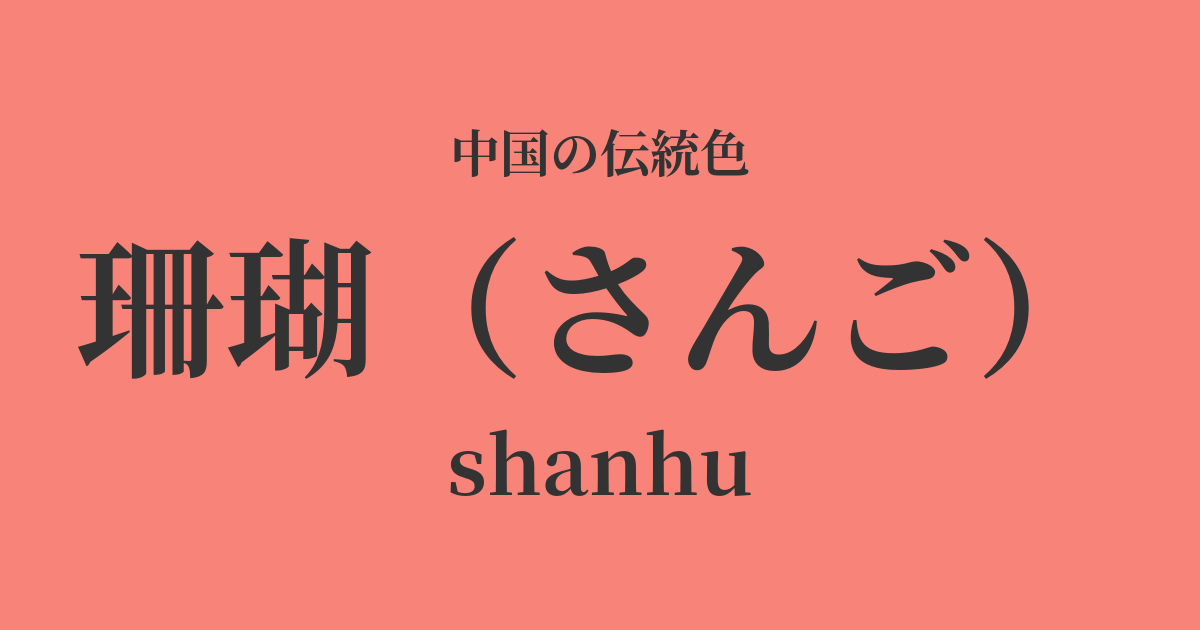
| Color name | coral |
|---|---|
| reading | coral |
| pinyin | shanhu |
| HEX | #F88379 |
| RGB | 248, 131, 121 |
What is coral? Origin and etymology
Coral color, as its name suggests, is a vibrant, life-giving reddish-orange color derived from the precious coral that inhabits warm seas.
Since ancient times, coral has been highly valued as one of the seven treasures in Buddhism, and those with a deep red color, in particular, have been considered extremely valuable as "red coral." The bright and vibrant hue of this color has captivated people's hearts and has been cherished in the world of ornaments and art.
As a color name, "coral" transcends mere material color; it is deeply rooted in culture as an auspicious color that brings the radiance of life, longevity, wealth, and happiness. Its warm hues bring vitality and joy to those who see them.
Historical background of coral
Coral has a long history in China, and was one of the precious treasures brought in through East-West trade via the Silk Road and other routes. In particular, during the Tang Dynasty, a rich international culture flourished, and it is said that coral, as a rare exotic item, became extremely popular among the aristocracy.
During the Ming and Qing dynasties, coral came to occupy an important position in court culture. The finest red coral was used to adorn the court attire worn by emperors and high-ranking officials, such as the "top pearl" adorning the crown and the "chaozhu" (breast ornament). This was because the vibrant red of the coral symbolized the status and authority of its owner.
Furthermore, in traditional Chinese thought, red is considered an auspicious color, believed to ward off evil spirits and bring good fortune. The red color of coral is associated with these beliefs, and it has been cherished not only as a beautiful ornament but also as a talisman to ward off evil and bring happiness.
Coral in Chinese Art and Crafts
In the world of Chinese art, a beautiful glaze known as "coral red glaze" is well-known. This technique was perfected at the Jingdezhen kilns during the Qing Dynasty, particularly during the reigns of Emperors Kangxi, Yongzheng, and Qianlong. By firing an iron-containing glaze at low temperatures, it produces a vibrant, matte reddish-orange color reminiscent of coral. Porcelain using this glaze was produced as a precious item for the imperial court.
In clothing culture, coral was also a beloved color for adding vibrancy. Hanfu and court attire were embroidered with auspicious patterns using silk threads in coral-like colors, giving the garments a vibrant and lively appearance. Furthermore, beads made from real coral were used in accessories such as hairpins, earrings, and obi decorations, elegantly enhancing women's attire.
Silk tree fig leaves, non-stone and non-qiong.
Color scheme preview
This is to check the readability of the text when this color is used as the background.
Coral color scheme proposals
Stone green (#66B79B)
By combining vibrant coral green with calming stone green, the colors complement each other, creating a color scheme that evokes the vitality of nature. A sophisticated calmness is born amidst the vibrancy, giving a refined impression.
Kyou Huang (#F7B977)
Combining warm colors like coral and apricot creates an overall impression of warmth and happiness. This combination is perfect for creating a friendly and cheerful atmosphere reminiscent of sunlight and ripe fruit.
Navy blue (#223A5E)
The vibrant coral color is toned down by a deep, calming navy blue, creating a highly dignified and dramatic impression. This color scheme evokes the mystery and luxury of coral floating in the night sea, leaving a lasting impression on the viewer.
Practical Scenes
In interior design, incorporating coral tones as accents in cushion covers, artwork, and small pieces of furniture brings warmth and vibrancy to a space. It's especially effective in natural spaces based on white, beige, and light gray tones, creating a sophisticated and elegant atmosphere.
In fashion, incorporating coral into items such as dresses, skirts, and scarves brightens the complexion and gives a healthy impression. While it's a particularly striking color in spring and summer, it's also effective as an accent color against darker tones in autumn and winter. It also pairs exceptionally well with gold accessories.
In web and graphic design, its eye-catching properties make it effective for use in banners and call-to-action buttons where you want to attract attention. Because it conveys a friendly and positive impression, it's also suitable for lifestyle, food, and beauty-related brand images.