| English name | Grayish Blue |
|---|---|
| Katakana | Grayish blue |
| HEX | #A2AEBB |
| RGB | 162, 174, 187 |
| Design Theme | Muted colors & earth tones |
Why is it a trend? (Background and reasons)
In recent years, web design has seen a return to minimalism and clean designs. Within this trend, there's a shift from bright, highly saturated colors to more eye-friendly, calming neutral colors. Grayish blue is attracting attention as one of the colors that symbolizes this trend.
In our information-saturated digital society, users unconsciously seek psychological comfort and tranquility. The calming grayish-blue hue reduces visual stress and provides a comfortable environment where users can concentrate on content. This "digital detox" aspect is why it's being adopted by many services.
This color possesses gender-neutral characteristics, not favoring any particular gender or age group. Therefore, it plays a crucial role in creating user-friendly and inclusive designs for modern web services targeting diverse user bases. It tends to be particularly favored in B2B SaaS and large-scale platforms.
Grayish-blue, a fusion of the "technology" and "advanced" image of blue and the "calmness" and "solidity" of gray, can be said to be a color that connects elements such as technology and nature, and the future and the present. This exquisite balance—advanced yet not too cold, and possessing a human touch—matches the modern brand image.
The psychological effects of design and UX
This color, combining the "sincerity" of blue and the "stability" of gray, instills a deep sense of trust and security in users. In particular, in UI/UX in fields where reliability is fundamental to the service, such as finance, healthcare, and security, it is expected to have a psychological effect of alleviating user anxiety and promoting a positive experience.
The understated and quiet tone creates an intelligent and sophisticated atmosphere. Combined with a minimalist layout free of unnecessary embellishments, it highlights the expertise and high quality of the content, enhancing the brand's authority.
Low-saturation, muted colors reduce visual stimulation and lessen eye strain. This makes it easier to maintain concentration, even on interfaces that users spend long periods of time looking at, such as dashboards and work tools.
Because it's a neutral color that isn't too assertive, it functions as a great supporting element that enhances other elements. It's excellent as a background color to maximize the appeal of vibrant accent colors and important photos/illustrations, and to clarify the information hierarchy.
Visibility testing (UI component example)
Practical usage (best practices)
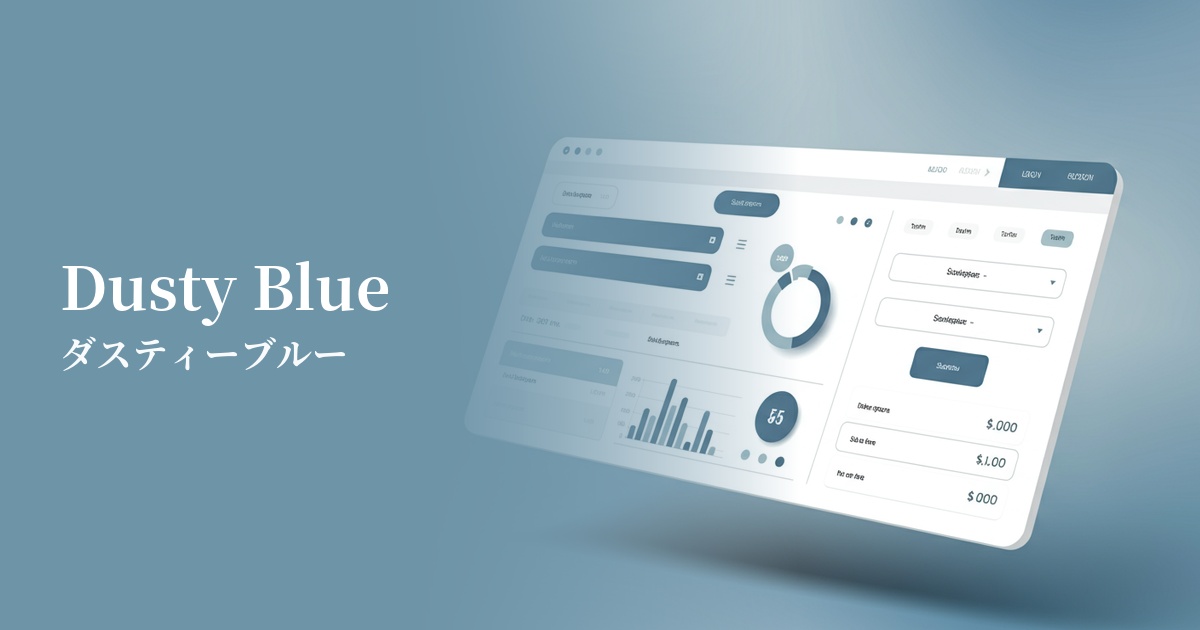
This color is ideal as the base color for SaaS dashboards and admin panels. Using it in sidebars and headers allows you to create a user interface that is less tiring to use over long periods, while still highlighting important information such as graphs and notifications.
This color is ideal as the main color for corporate websites where you want to convey a company's reliability and expertise. It's particularly effective for B2B companies and technology startups, helping them build a brand image that is both cutting-edge and grounded.
When the main background is white or off-white, using grayish-blue for CTA buttons and link text can attract user attention and encourage clicks without being too flashy. This is effective for conversion design based on trust.
Using it subtly as the background color for the entire site brings a sense of unity and a calm atmosphere to the page. It's a more effective technique when you want to create a softer, more sophisticated and luxurious feel than a pure white background.
Using this color for headings and body text, while ensuring a sufficient contrast ratio to guarantee readability, is one option. It softens the impression compared to solid black text, resulting in a more refined overall page design.
Recommended color scheme suggestions
Antique White (#FAEBD7)
The sophisticated impression of grayish-blue is gently softened by the warmth of antique white, creating a clean and comfortable space. This combination is recommended for minimalist portfolio websites and lifestyle media.
Sandy Brown (#F4A460)
The calmness of grayish-blue, combined with the natural, warm earth tone of sandy brown, creates an approachable and trustworthy impression. This color scheme is ideal for consulting and education-related services.
Coral (#FF7F50)
By using a calming grayish-blue base with vibrant coral accents, this design adds energy and a visual hook. Use it for CTA buttons and important notifications to effectively encourage user action.