
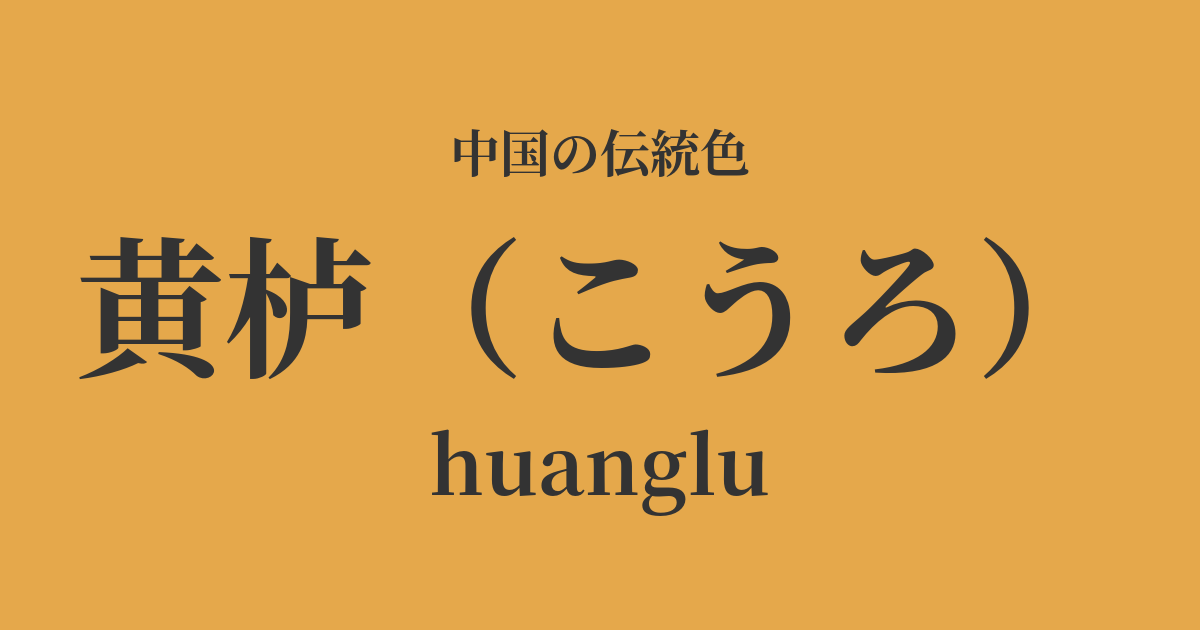
| Color name | yellow chestnut |
|---|---|
| reading | Kouro |
| pinyin | huanglu |
| HEX | #E5A84B |
| RGB | 229, 168, 75 |
What is Huangzhu? Origin and etymology
Kōro refers to a bright, vivid yellow with a reddish tint. As the name suggests, it originates from the color dyed using a decoction of the bark and heartwood of the Japanese wax tree (Toxicodendron succedaneum), a deciduous tree belonging to the sumac family.
This dye has been used since ancient times, producing warm, vibrant hues reminiscent of sunlight and ripe fruit. It is said that the name "kōro" became established because the character "櫨" in "黄櫨" can also be read as "ro".
Historical background of Huangzong
The color Huangsong gained particular historical significance during the Sui Dynasty. The first emperor, Emperor Wen (Yang Jian), reformed the previously ambiguous regulations regarding colors based on social status and designated Huangsong as the color of his own clothing.
Furthermore, he forbade his subjects and commoners from using this color in their clothing. This marked the beginning of the history of yellow becoming a "forbidden color" reserved exclusively for the emperor, and the yellow bell became a symbol of authority and nobility.
This idea was passed down to the later Tang Dynasty, and while it evolved into a more vibrant "ochre-yellow," yellow established its unshakeable position as the emperor's color. Huangsong is deeply etched in the history of Chinese color culture as the color that laid the foundation for this.
Yellow Banner in Chinese Art and Crafts
Yellow huang, as a color symbolizing the authority of the emperor, influenced the clothing culture of successive dynasties. In particular, during the Sui dynasty, it was used as the color of the dragon robe worn by the emperor, highlighting its nobility.
Furthermore, in the world of ceramics, "yellow glaze," which uses a yellow glaze, was reserved exclusively for the imperial court. The warm yellow color, like that of Huangsong, was applied to ceremonial vessels and the emperor's everyday tableware, signifying its high status.
In Buddhist art, yellow is sometimes considered a sacred color, similar to gold. Examples can be seen in the murals of Dunhuang, where majestic yellow pigments, reminiscent of the color Huangsong, are used to depict the robes or halos of Buddhas and Bodhisattvas.
Color scheme preview
This is to check the readability of the text when this color is used as the background.
Yellow Song's color scheme proposal
Navy blue (#19224D)
The deep, calming navy blue enhances the brightness and splendor of the yellow ochre. The beautiful contrast between the two colors makes them stand out, giving an impression of sophistication and intelligence.
Pilestone (#9D553D)
When combined with reddish-brown ochre, it creates a warm and natural harmony reminiscent of the abundant harvest and colorful foliage of autumn. It gives a calm and peaceful impression.
Jade (#33A679)
Adding vibrant green jade accentuates the life-giving nature of the yellow jade. This is recommended when you want to create an exotic, sophisticated, and glamorous impression.
Practical Scenes
When incorporated into interior design, it brings warmth and brightness to the entire space. Using it as an accent in fabrics such as cushions, curtains, and rugs gives the room a sophisticated feel. It pairs particularly well with wooden furniture.
In fashion, it has the effect of brightening the area around the face. Incorporating it into items made of glossy materials such as silk blouses and scarves further enhances the noble atmosphere of the yellow color. It adds depth and color to autumn outfits in particular.
In web design, using yellow as an accent color for buttons and headings makes it easier to attract the user's attention. By using a dark background color, the vibrancy of yellow stands out, creating an impression of sophistication and professionalism.