
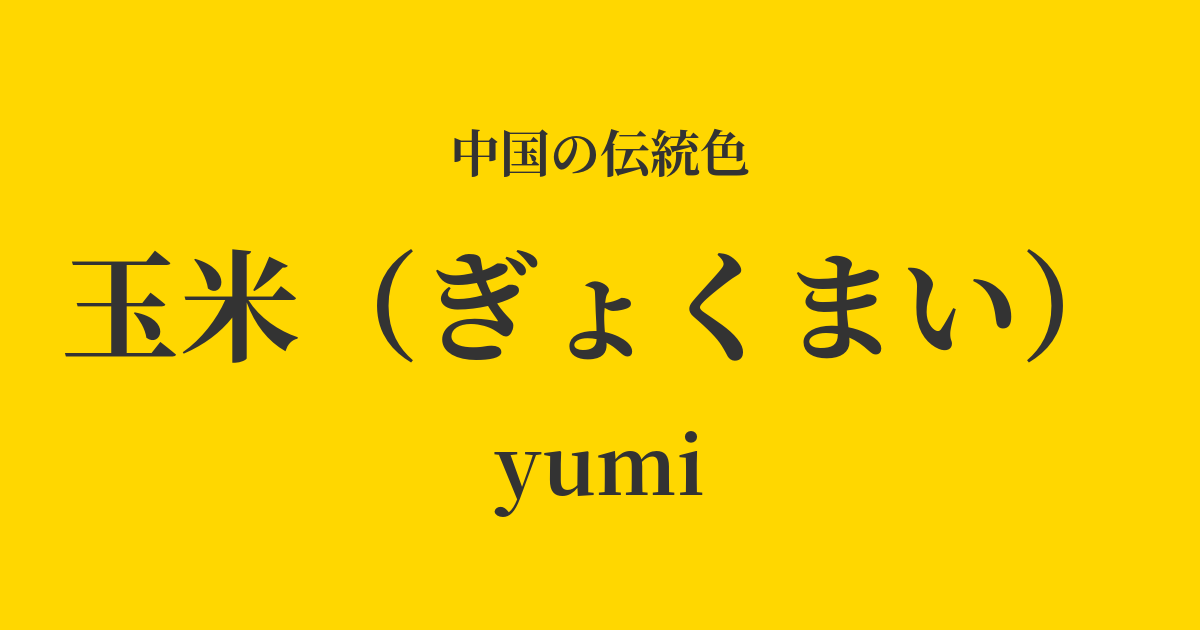
| Color name | Tamamai |
|---|---|
| reading | Gyokumai |
| pinyin | Yumi |
| HEX | #FFD700 |
| RGB | 255, 215, 0 |
What is corn? Origin and etymology
"Yu Mi" (玉米), as the name suggests, is a color name referring to the vibrant and beautiful golden color of ripe corn kernels. In Chinese, corn is called "Yu Mi" (玉米).
"Jade" has been considered the most precious treasure in China since ancient times, and has been used as a word to praise something beautiful and valuable. "Rice" means grain that sustains people's lives. The word "jade rice," which combines these two characters, carries the rich meaning of "grain as precious as jade."
These color names not only reflect the colors of plants, but also reflect positive human emotions such as gratitude for the bounty of the earth, wishes for abundance, and a vibrant radiance full of life.
Historical background of corn
Corn appears in Chinese history relatively recently compared to many other traditional colors. It is believed to have been introduced to China around the 16th century, during the late Ming Dynasty, via the Age of Discovery from its place of origin, the Americas.
Initially an unusual and introduced crop, corn's robust vitality and ease of cultivation led to its widespread adoption throughout China during the Qing Dynasty as an important food source that could grow even in mountainous areas and infertile soil. As a result, corn became deeply rooted in the lives of ordinary people and became a symbol of abundance and fertility.
Unlike the bright yellows such as "bright yellow" and "ochre," which were symbols of authority and whose use was permitted only to emperors and royalty, corn yellow has been loved as a more familiar and approachable yellow that originated from people's daily lives.
Corn in Chinese Art and Crafts
The color name "yellow" itself has a relatively short history, so it is rarely mentioned in ancient court paintings or ceramics. However, this kind of bright, vibrant yellow has long been cherished in the world of folk art.
"Nianhua," or New Year's pictures, which are displayed to celebrate the new year and invite good fortune, often depict golden corn or similar crops as symbols of a bountiful harvest and wealth. This vibrant yellow was also favored in paper cuttings (jianzhi) and embroidery created for celebrations and festivals, as a color that expresses joy and vitality.
In terms of clothing culture, these colors were distinct from the forbidden colors reserved exclusively for the emperor, and were freely incorporated into the clothing and ornaments of ordinary people, adding color and vibrancy to their daily lives.
Color scheme preview
This is to check the readability of the text when this color is used as the background.
Corn color scheme suggestions
Blue sky (#83A78D)
The combination with the calming green reminiscent of corn leaves and stalks evokes a sense of natural vitality and abundance. It creates a natural, reassuring, and warm atmosphere.
Ai (#184D8A)
It creates a beautiful contrast, like a clear autumn sky and a golden cornfield. The colors vividly complement each other, resulting in a modern and striking design.
赭石 (#A75347)
This warm and deep color scheme evokes images of the harvest season landscape and sunsets. Its somewhat nostalgic and simple yet rich emotional appeal makes it ideal for creating a comfortable space.
Practical Scenes
In interior design, corn yellow is an ideal accent color that brings warmth and brightness to a space. Incorporating it into cushions, curtains, or artwork will envelop the entire room in a cheerful and positive atmosphere. It pairs particularly well with natural wood and plants.
In fashion, it's a versatile accent color that adds vibrancy and energy to an outfit. Adding just one pop of color with a scarf, bag, or shoes instantly gives the entire look a lively feel. It's especially recommended to combine it with earth tones or denim.
In web and graphic design, it's effective when used for buttons and banners that you want to attract user attention. It's also suitable as the brand color for brands and services that you want to convey fun, creativity, and friendliness.