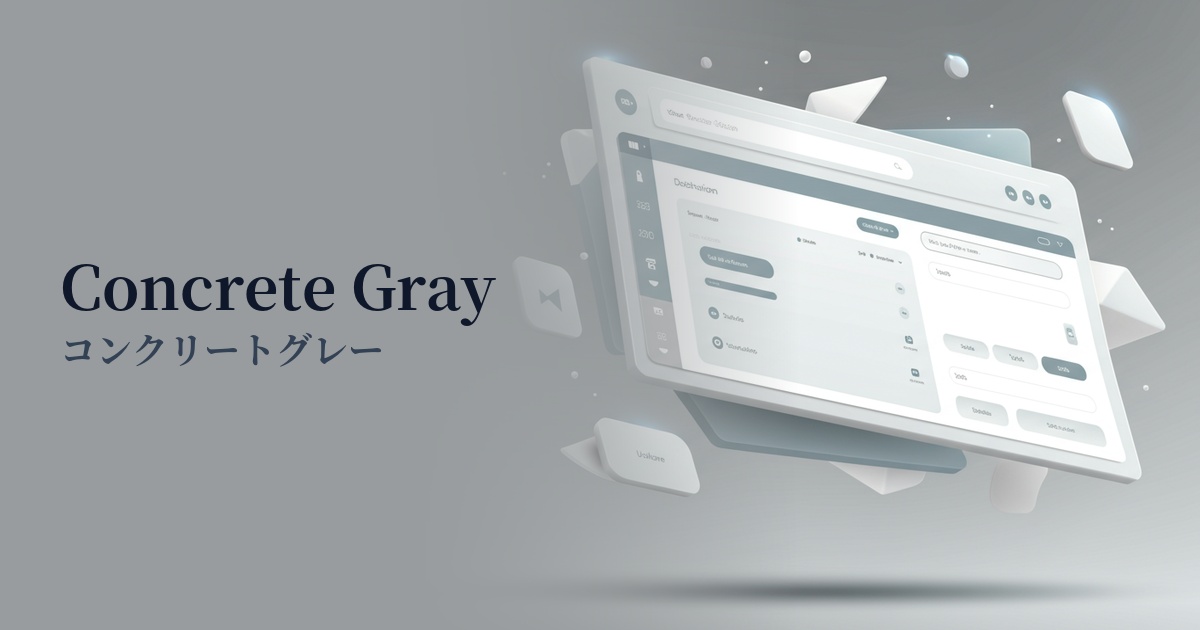
| English name | Concrete Gray |
|---|---|
| Katakana | Concrete Gray |
| HEX | #DCDCDC |
| RGB | 220, 220, 220 |
| Design Theme | Neutral & Minimal Background Colors |
Why is it a trend? (Background and reasons)
Design trends such as minimalism and brutalism are once again gaining attention in the world of the web. In an approach that strips away ornamentation and highlights the beauty of the structure itself and the content, the inorganic and neutral texture of concrete gray functions as an ideal background color.
In today's information-saturated digital environment, users unconsciously seek "quietness" and "spaces where they can concentrate." Calming colors like concrete gray reduce visual noise and provide users with mental peace. This makes it easier for users to deeply concentrate on content and tasks.
This color's greatest strength lies in its exceptional versatility, which allows it to enhance other colors. It can create a modern impression when paired with vibrant accent colors, or a natural atmosphere when combined with earth tones—it's incredibly adaptable. This flexibility, which allows it to suit any brand image, is why it's chosen by so many designers.
The psychological effects of design and UX
Concrete gray gives users a psychological impression of "calmness," "stability," and "solidity." This stems from the robust and unwavering image of concrete as a material. Therefore, it can be expected to provide users with an unconscious sense of security in UI design for fields where reliability is paramount, such as financial services and B2B SaaS.
From a UI/UX perspective, this color functions as a "quiet protagonist." By using it as a background color, visual stimulation is minimized, and the user's attention is naturally directed to foreground elements such as text, images, and call-to-action (CTA) buttons. This can lead to improved information transmission efficiency and conversion rates.
Furthermore, because it reduces glare compared to pure white (#FFFFFF), it helps reduce eye strain even during prolonged viewing. From an accessibility standpoint, paying attention to the contrast ratio with text color has the potential to provide a comfortable viewing experience for many users.
Visibility testing (UI component example)
Practical usage (best practices)
The most effective way to use it is to boldly adopt it as the background color for the entire website. It's especially ideal for creative portfolios where you want to showcase photos and typography, or for minimalist e-commerce sites that prioritize brand identity, as it provides the perfect canvas to make your content stand out.
In web application and dashboard design, it's recommended to use this color as a background color for card UIs or sections. When combined with white or even lighter gray, it creates a natural sense of depth and hierarchical structure between information blocks, allowing users to intuitively understand the screen layout.
Using concrete gray in navigation areas such as headers, footers, and sidebars clearly defines the boundaries with the main content area, stabilizing the UI's structure. This helps users stay on-site and understand their current location and structure without getting lost.
It's also effective to use it in auxiliary roles, such as indicating the inactive (disabled) state of a button, placeholder text in a form, or as a divider between UI elements. It blends seamlessly into the overall design while clearly showing the difference from the active state, providing appropriate feedback to the user.
Recommended color scheme suggestions
Dodger Blue (#1E90FF)
Combining a calm concrete gray with vibrant Dodger Blue creates an energetic accent within a modern and trustworthy impression. It's ideal for CTA buttons and link colors, and is effective wherever you want to capture the user's attention.
Sage Green (#9DC183)
By combining inorganic concrete gray with nature-inspired sage green, the design achieves a coexistence of urban sophistication and organic tranquility. It's ideal for expressing a comfortable and inviting world on sustainability and wellness-related websites.
Rosy Brown (#BC8F8F)
By adding warm Rosy Brown to the solid-looking concrete gray, you can create a soft and elegant atmosphere. It conveys sophistication while maintaining approachability, making it suitable for fashion, cosmetics, and lifestyle brand websites.