
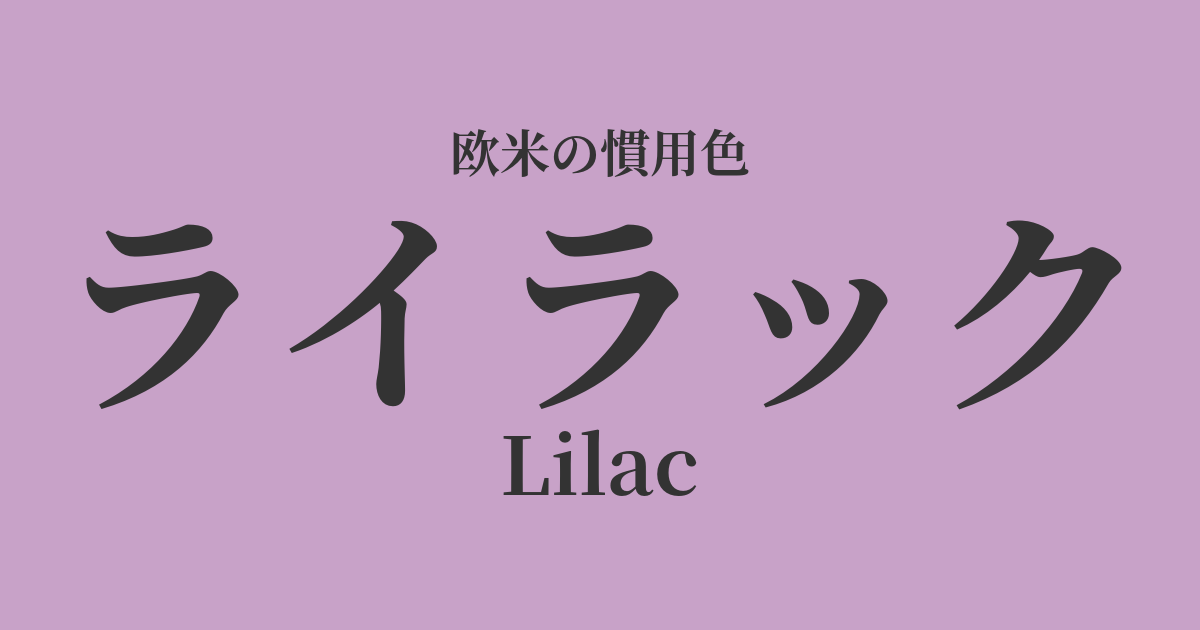
| Original English name | Lilac |
|---|---|
| Japanese notation | lilac |
| HEX | #C8A2C8 |
| RGB | 200, 162, 200 |
ライラックとは?由来と語源
ライラックは、モクセイ科の植物「ライラック」の花の色に由来する、淡く赤みがかった紫色です。その繊細で優雅な色合いは、春の訪れを感じさせ、多くの人々に愛されています。
英語の「Lilac」という名前は、ペルシャ語で「青みがかった」を意味する「līlak」または「nīlak」にそのルーツを持ちます。この言葉がアラビア語、スペイン語、フランス語を経て、17世紀初頭に英語として定着しました。
ライラックの花は、その甘く芳しい香りと美しい花姿から、古くから観賞用として親しまれてきました。花言葉には「初恋」「謙虚」「思い出」「若さの象徴」などがあり、色名自体にも同様の繊細でロマンティックなニュアンスが含まれています。
ライラックの歴史的背景と文化
ライラック色は、特に18世紀のヨーロッパで人気を博しました。フランスのロココ時代には、マリー・アントワネットをはじめとする貴族階級の女性たちが、この優雅な色合いをドレスや室内装飾に取り入れたと言われています。パステルカラーが流行したこの時代において、ライラックは洗練と高貴さの象徴でした。
19世紀のヴィクトリア朝時代には、ライラックは少し異なる意味合いを持つようになります。感傷や追憶の色と見なされ、未亡人が喪の期間の後半に着用する「半喪服(half-mourning)」の色として、黒やグレーに次いで用いられることがありました。これは、深い悲しみから少しずつ日常に戻っていく過程を象徴する色とされたためです。
20世紀に入ると、ライラックはよりモダンで洗練された色として再評価されます。特にアール・ヌーヴォーやアール・デコの時代には、その優美な色合いが芸術やデザインの世界で好まれました。現代においても、春を象徴する色、フェミニンでエレガントな色として、ファッションやインテリアなど幅広い分野で親しまれています。
デザインやアートにおけるライラック
印象派の画家たちは、光の移ろいや空気感を表現するために、ライラックのような繊細な中間色を巧みに用いました。クロード・モネの作品には、ライラックの花そのものや、風景の中に溶け込むライラックの色合いが効果的に描かれています。
ファッションの世界では、ライラックは春夏のコレクションで定番の人気色です。ドレスやブラウス、ニットなどに取り入れられ、ロマンティックで洗練された雰囲気を演出します。ウェディングドレスの差し色や、ブライズメイドのドレスの色としても選ばれることが多く、特別な日を彩る色として定着しています。
インテリアデザインにおいては、壁紙やカーテン、クッションなどのアクセントカラーとして用いることで、空間に優雅さと落ち着きを与えます。特に、寝室やリビングなどリラックスしたい空間に適しており、白やグレー、ベージュといったニュートラルカラーと組み合わせることで、上品で心地よい空間を作り出します。
Color scheme preview
This is to check the readability of the text when this color is used as the background.
ライラックの配色提案
Sage Green (#B2AC88)
ライラックの甘さをセージグリーンの落ち着いた色合いが引き締め、ナチュラルで洗練された印象を与えます。ボタニカルな雰囲気で、心安らぐ空間を演出したいインテリアやファッションにおすすめです。
Cream (#FFFDD0)
クリームの柔らかく温かみのある白が、ライラックの持つ優雅さとフェミニンな魅力を最大限に引き立てます。上品でロマンティックな、非常に優しい雰囲気の配色になります。
Silver (#C0C0C0)
シルバーのクールでメタリックな質感が、ライラックの繊細さにモダンで都会的なアクセントを加えます。甘すぎず、スタイリッシュで洗練された印象を与える組み合わせです。
Practical Scenes
インテリアデザインでは、ライラックをアクセントウォールやファブリックに取り入れると、部屋全体が明るくエレガントな雰囲気になります。白やライトグレー、淡い木目調の家具と合わせることで、洗練された北欧風の空間や、優雅なフレンチシックスタイルを演出できます。
ファッションにおいては、ワンピースやスカートで取り入れると、一気に春らしい華やかさと女性らしさを表現できます。より気軽に楽しむなら、小物で取り入れるのがおすすめです。バッグやスカーフ、パンプスなどにライラック色を選ぶと、コーディネートに上品な差し色を加えられます。
Webデザインやグラフィックデザインの分野では、ライラックは高級感や優雅さを伝えたいブランドイメージに適しています。特に、美容、ウェルネス、ブライダル、スイーツといったテーマのサイトで効果的です。メインカラーとして使うと柔らかい印象に、アクセントとして使うとデザインに繊細な奥行きを与えます。